For most of the recorded music era, a career depended on scarcity. There were only so many radio slots, so many shelves in the shop, so many studios, and someone else decided who got them. That world has gone. Anyone with a laptop can record, release, and reach every listener on the planet by Friday.
That’s the renaissance in the title, and it’s real. It’s also crowded, and the abundance that opened the door is what makes it hard to be heard once you’re through it. This guide is about what follows from that: five principles that separate the independent artists who build something lasting from the ones who release into silence.
What actually changed
Three things, and they’re worth being precise about.
The gatekeepers became systems. A label executive’s judgement has been replaced by recommendation algorithms, editorial teams and the collective behaviour of listeners. Those systems don’t know who you are. They respond to signals, which means they can be worked with by anyone who understands them.
The tools became free or nearly so. Recording, distribution, video, design, a direct line to fans, the analytics a label used to guard: all of it is available to an individual for the price of a subscription or nothing.
The middle disappeared. Fans can pay artists directly. Artists can talk to fans directly. Everything a label used to stand between now runs point to point, which is where most of the value lives.
The consequence is that what a label used to provide has been unbundled into jobs, and the jobs can be done by the artist. Whether they get done is the whole question. Release Music Like a Pro lists the jobs. The five principles below are what makes doing them sustainable.
1. Systems, so the career runs without you holding it in your head
The artists who last in the abundant era aren’t more talented. They’ve built structures that carry the work: a release process that repeats, a content rhythm that captures itself, a catalogue that’s registered, a calendar that shows the year. Jacob Collier’s early career is the well-known example: years of regular YouTube uploads and a steady flow of collaboration and teaching work, run as a practice rather than a series of one-offs, long before a Grammy.
You don’t need his talent to copy the shape. Map the week, find the tasks that repeat, template them, and keep the whole thing in one place. The Artist’s Operating System is the long version.
2. Being recognisably yourself, because nothing else is hard to copy
In a feed where anyone can generate anything, the one thing that can’t be reproduced is a specific person making specific work for specific reasons. Amanda Palmer built an independent career on exactly that: sharing the process and the setbacks openly, asking her audience directly, and making things that could only have come from her.
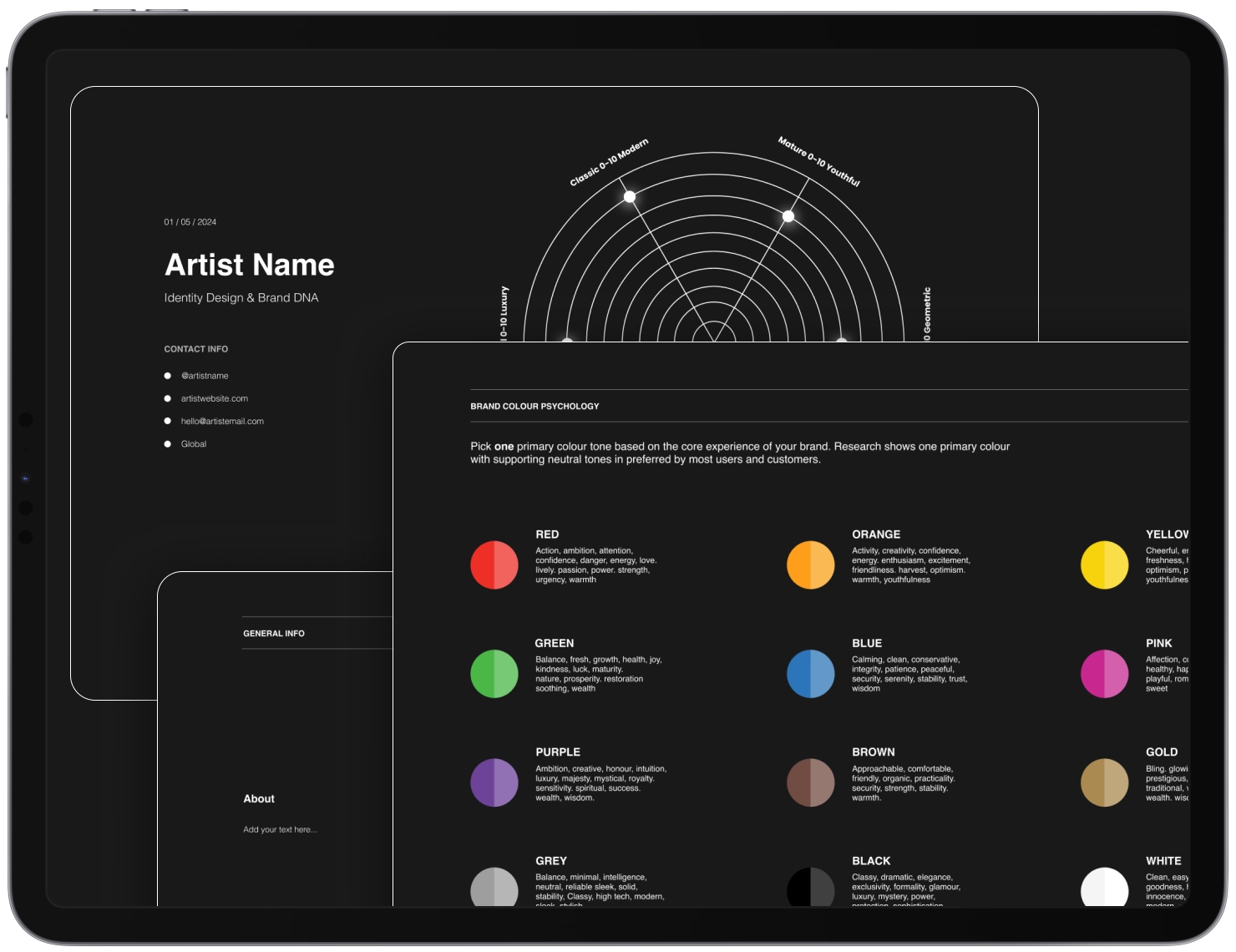
The practical version isn’t confession. It’s documentation: show the song being made, tell the story behind it, let people watch the work evolve. Decide once what you look and sound like across everything, so you’re recognisable in every room. The free Artist DNA template is a structured way to make those decisions and write them down.
3. Technology as an amplifier, never the point
Every tool in the renaissance can serve your work or replace it, and the difference is whether you decided. Use automation for scheduling, admin, research, first drafts of the pitch email. Use analytics to learn where your listeners are. Keep the song, the voice and the conversation with fans human, because that’s what people came for. On Music and Artificial Intelligence draws that line in detail.
The test for any tool: does it give you more hours for the music and the audience, or fewer?
4. Consistency, which is a creative act now
The old model rewarded the occasional masterpiece. The abundant one rewards showing up. A release every six to eight weeks, a content rhythm you can keep for a year, a weekly review of the system. Not because more is better, but because listeners and platforms both forget artists who disappear, and because the tenth time you run a process it works.
Consistency is only sustainable if it’s built: batched content, formats you can refill, a calendar you can see. The Seven Laws of Sustainable Content Creation is about keeping it up without burning out.
5. Value beyond the song
A song on a streaming service earns fractions of a cent per play. The same song at the centre of a small ecosystem earns a career: the show, the merch, the record sold directly, the sync, the workshop, the community that pays to be closer. The renaissance artist doesn’t sell music. They make music, and build everything else around it.
Map what you know and what you can make that people would pay for beyond the stream. Teaching, experiences, physical things, access. Test one. Build the system for delivering it. Then the next.
The ecosystem, not the empire
The old language for this was empire-building, and it’s the wrong image. What an independent artist builds is closer to a garden: a set of connected things that feed each other and mostly run on their own once planted. The song feeds the content. The content feeds the audience. The audience feeds the shows and the sales. The sales fund the next song.
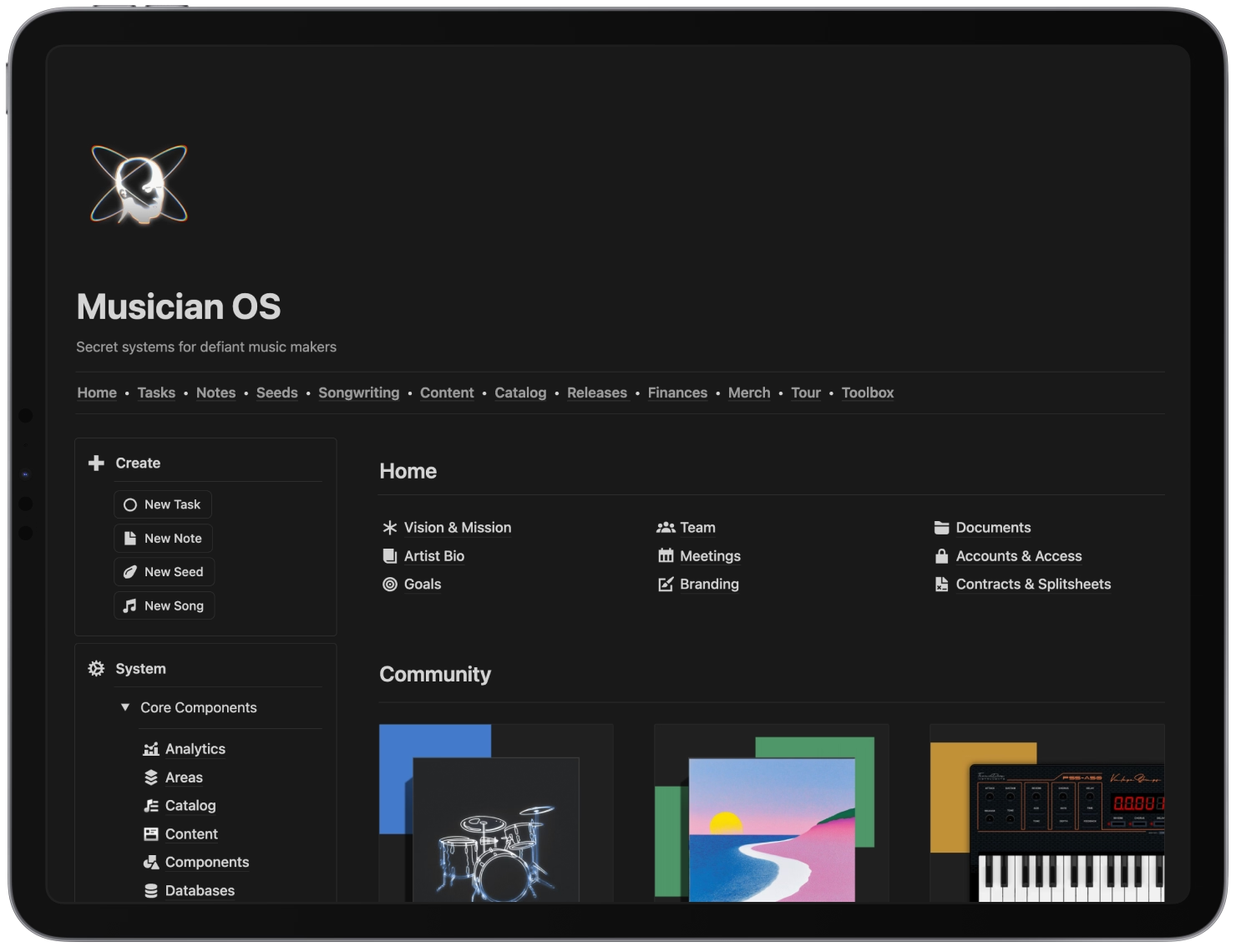
Musician OS is the version of that garden I built for my own career and now sell: songwriting, releases, catalogue, content, touring and finances as connected components. The Blueprint book that goes with it is free to read at /blueprint. Neither is required. The principles above work in any tool.
Where to start
- Audit where your career currently lives and which of the label’s jobs aren’t being done.
- Decide what you look and sound like, in writing.
- Map the value you could offer beyond the stream, and pick one.
- Build the smallest system that makes content and releases repeatable.
- Show up on a rhythm you can keep for a year.
The door is open. It was never the hard part. What you build on the other side of it is.
Frequently asked questions
Can you have a music career without a record label?
Yes, and in 2026 most working musicians do. Distribution, promotion, direct sales, rights registration and audience-building are all available to an individual for little or no money. What a label still provides is capital and a team. Without one, the artist supplies the plan, the systems and the consistency, and keeps ownership and the margin in return.
What does it mean to be an independent artist today?
It means running a small business whose product is your music and whose customers are your listeners. You own the recordings and the songs, you decide when and how to release, and you build the relationship with the audience directly. It also means you're responsible for the parts a label used to handle, which is why systems and habits matter as much as songs.
How do independent musicians make money beyond streaming?
Live shows, merchandise, direct sales through Bandcamp or their own site, sync licensing for film and TV, teaching and workshops, memberships or communities, and physical formats where the genre supports them. Streaming is usually the smallest of these per listener. The song is the centre; the income comes from everything built around it.
What matters most for building a fanbase online?
Being recognisably yourself, consistently, in a couple of places where your listeners already are, and giving people a reason to come back between releases. Systems make that sustainable, technology makes it cheaper, but the thing people follow is a specific human making specific work. Nothing else is hard to copy.