Most productivity advice for musicians is about time: block it, protect it, get up earlier. It misses something obvious. An hour at your best and an hour at your worst are not the same hour, and the work that matters only gets done in the first kind.
This guide treats creative performance as an energy problem. It shows you how to find when you’re actually good, how to sort the work by the energy it needs, and how to build the day so the writing and the decisions land in the right window while everything else fills the rest.
The myth of the midnight muse
The image of the artist working through the night has produced some great records and a lot of bad ones. The myth underneath it is that creative work should happen whenever inspiration strikes, regardless of the state you’re in.
The alternative isn’t rigidity. It’s noticing that you have natural rhythms, that they’re yours rather than anyone else’s, and that the work goes better when you meet them instead of fighting them. Some people are genuinely at their best at midnight. Many more are at their best at 9am and only work at midnight because nobody messages them then. A week of paying attention tells you which you are.
Map your energy for a week
For seven days, become a scientist of your own state. Three or four times a day, rate yourself from one to five across four dimensions:
- Creative energy: the ability to generate ideas
- Technical energy: the capacity for detailed, precise work
- Emotional energy: resilience and expressiveness
- Physical energy: whether the body is up for it
Note what you were doing, what you’d eaten, how you’d slept. By the end of the week, a shape appears. Most people find two or three high-creative hours, a longer medium stretch, and a tail. The surprise for many is where the peak sits: earlier or later than assumed, and shorter.
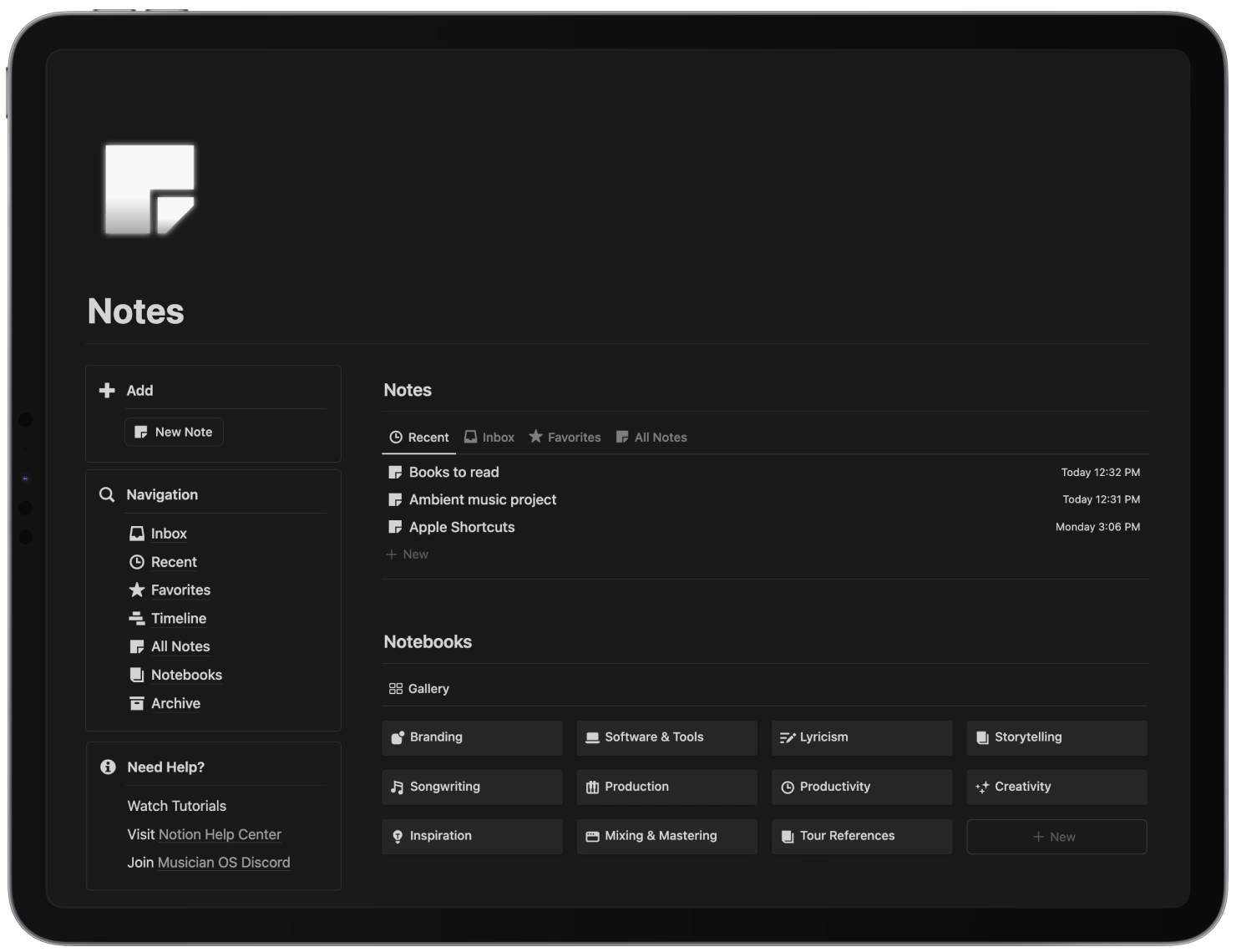
The free Notes template is an easy place to keep the log; so is a note on your phone. What matters is that you write it down rather than trusting memory, which is biased towards the nights that went well.
Sort the work by energy
Once you know the shape of your day, sort the work into three tiers.
Peak energy: the things only your best hours can do.
- Writing new material
- Recording vocals or the take that matters
- Final creative decisions: the mix, the arrangement, which single leads
- Strategic thinking about the career
Medium energy: real work that doesn’t need your best.
- Practice and rehearsal
- Content creation and editing
- Emails that need thought
- Arrangement tidying, comping, light editing
Low energy: maintenance.
- Filing and organising sessions
- Equipment upkeep
- Admin, invoices, routine replies
- Simple planning
The rule is simple and almost nobody keeps it: never spend a peak hour on a low-energy task. Replying to a booker at 9am, when 9am is your writing window, is the most expensive email you’ll send all week.
Build the day around the map
Instead of a time-based schedule, build an energy-first one:
- Reserve the peak for the one thing that most needs it. The 1-3-5 rule is a good shape for choosing that one thing the night before.
- Put technical work in the medium stretch.
- Let admin fill the tail. It’s what the tail is for.
- Leave recovery between intense sessions. A peak followed immediately by another peak isn’t two peaks. It’s one and a half.
If you’re a night person, the same structure applies in a different order. What doesn’t change is that the peak gets the work that matters.
Match the environment to the mode
Different spaces support different kinds of energy, and it’s worth knowing which is which for you:
- High-energy spaces: the studio, a quiet room with natural light, a tidy desk, outside. Places where one thing can happen.
- Medium-energy spaces: a café, the home office, a shared creative space, a practice room. Places with a little background hum.
- Low-energy spaces: anywhere you can multitask. The van, the train, a waiting room.
Save the high-energy spaces for high-energy work. Doing admin in the studio teaches your brain that the studio is for admin.
Four rules that keep it working
Conservation. Energy spent on the wrong task isn’t recovered. Direct the best of it deliberately.
Rhythm. Your rhythm is yours. Adopting someone else’s routine because it worked for them is a common way to make yourself worse.
Renewal. The peak only exists if you refill it. Exercise, time outside, real breaks away from screens, creative play with no output expected, sleep. These aren’t rewards for finishing. They’re how the finishing happens.
Momentum. When the flow arrives, protect it. Don’t schedule a call for the middle of your best hour. Don’t stop at a natural pause to check something. The session ends when it ends.
Where it goes wrong
- Waiting for inspiration instead of building the conditions that reliably produce it
- Pushing through a low on work that needs a high, then redoing it tomorrow
- Copying someone else’s rhythm and calling the mismatch a discipline problem
- Feeling guilty about the tail instead of using it for what it’s good for
Start this week
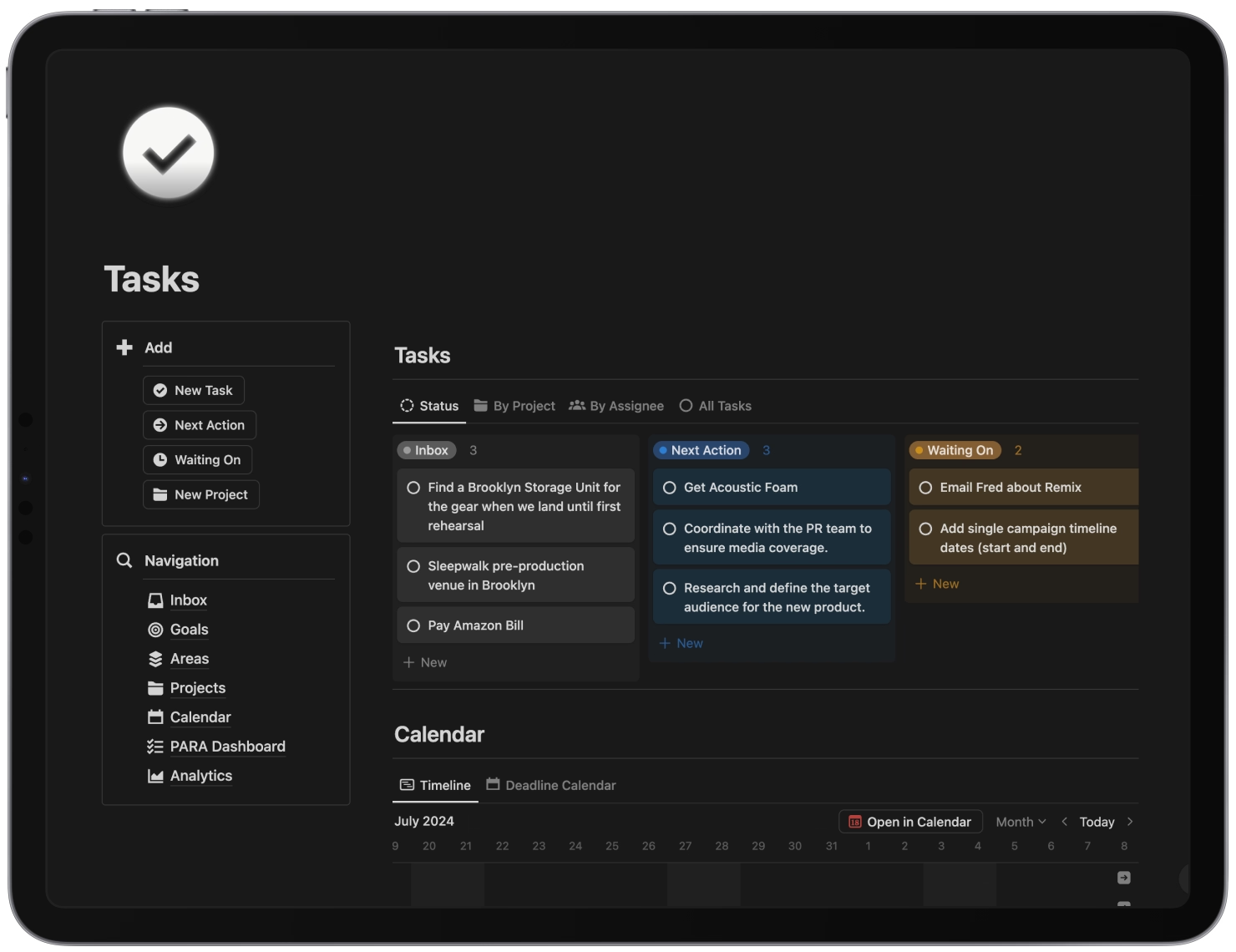
Begin the week-long map tonight. Sort tomorrow’s work into the three tiers and put the peak task in the peak window, even if it’s only an hour. Keep the tasks somewhere you can see them by tier; the Tasks template in Musician OS is built for prioritising like this, and a sheet of paper with three columns works too.
The aim isn’t to squeeze every hour. It’s to make your best hours count, and to stop apologising for the rest.
Frequently asked questions
What is creative energy management?
Planning work around when you have the right kind of energy for it, rather than around the clock. Most people have two or three hours a day of genuinely good creative attention, a longer stretch of medium attention, and a tail where only routine work is possible. Energy management means finding those windows, putting the writing and the decisions in the best one, and letting admin fill the rest.
How do I find my most creative time of day?
Track it for a week. Three or four times a day, rate your creative, technical, emotional and physical energy from one to five, and note what you were doing. By the end of the week a pattern appears, and it's often not the one you assumed. Then protect that window for the work that needs it most.
What should musicians do when their energy is low?
Low-energy tasks: filing sessions, tidying the studio, admin, routine replies, backing up. Not writing, not final mix decisions, not anything you'll have to redo tomorrow. Low energy isn't wasted time if the right work is waiting for it, and it's the best time to rest properly so the next peak is a real one.
Why do I feel more creative at night?
For some people it's genuine: their attention peaks late, and fighting it is pointless. For many it's the absence of interruptions rather than the time itself, which means a protected morning block with the phone in another room would work as well and cost less sleep. A week of tracking tells you which one you are.