For most of music history, an artist built a career one room at a time. You learned to read a pub, a club, a theatre, and you played each differently without changing who you were.
Social platforms are rooms too. Each has its own acoustics, its own crowd and its own unwritten rules, and the artists who do well online are the ones who’ve learnt to play each room instead of shouting the same set into all of them. This guide walks through the rooms as they stand in 2026, how to adapt one release across them, and how to know whether it’s working.
Pick the rooms before the set
The first decision isn’t what to post. It’s where. Your listeners are already concentrated somewhere, and Spotify for Artists, YouTube analytics and your social insights will tell you where. Start there.
Two platforms, done properly, plus the ones you own. Not five, done badly. Add a third only once the first two run without effort.
The rooms
Short-form video: TikTok, Reels, Shorts
This is the street corner. Nobody came to see you; you have three seconds to make them stop. It rewards immediacy over polish, and it’s the single biggest discovery engine for new music right now.
What works here: the hook of the song, in the first second, over something worth looking at. Process clips: the chorus being written, the take that landed. Trends used as a frame for your song, not as a costume. Text on screen, because most people watch without sound at first.
What doesn’t: announcements. “New single out Friday” with the artwork is a poster on a lamppost. Show the song instead.
TikTok, Instagram Reels and YouTube Shorts behave similarly enough that one vertical clip can serve all three, with small changes to caption and cover. Make the clip once, post it three times.
The neighbourhood venue, where the regulars are. The people following you here mostly already like you, which changes what the room is for: relationship, not discovery.
Stories are the chat between sets. Daily, unpolished, a poll or a question, the view from the van. The grid is the highlight reel: fewer posts, better ones, the record of what you did. Reels is the discovery lane described above. Lives are the backstage pass, worth doing around a release or a tour.
YouTube
The concert hall. Production value and patience both matter here, and it’s the room where longer pieces live: the full video, the session, the documentary about the album, the tutorial. YouTube content keeps working for years, where a short is finished in a week.
What works: series. A recurring format people can subscribe to in their heads: monthly studio updates, a song broken down each fortnight, the tour diary. Educational content if you can teach something, because it brings in people who’d never have found the music.
The conversation rooms: X, Threads, Discord
The after-hours bar where other musicians and industry people talk. Small audiences, but the right ones. This is where relationships with other artists, writers and curators get built in short exchanges, and where a community of actual fans can gather if you give it a room.
None of these will grow your listener count much. They can grow your network and your core, which is worth more per person than any other room.
The rooms you own
An email list and a website. No algorithm decides who sees them, they don’t change their rules, and they’ll survive whichever platform disappears next. Every other room should, at some point, point people here. A pre-save link, a ticket link, a “join the list” at the end of a video. This is the only audience you actually keep.
One release, played in every room
The mistake is copying one post everywhere. The move is adapting one idea to each room. Say you have a single coming out:
- Short-form: the hook, cut three ways, in the weeks before release
- Instagram: Stories walking through the artwork and the lyric, a grid post on release day, a live that weekend
- YouTube: the full video or a live session, plus a longer piece on how the song was made
- Conversation rooms: the story behind one line, the mix decision you argued about, a thread for people who noticed something
- Email: the proper version, with the link and the reason it matters, sent once
Same song, same story, five shapes. Each one behaves like it belongs in its room. The Three Circles of Social Media Content covers what to post between releases; this is the shape of a release week.
Sounding like yourself in every room
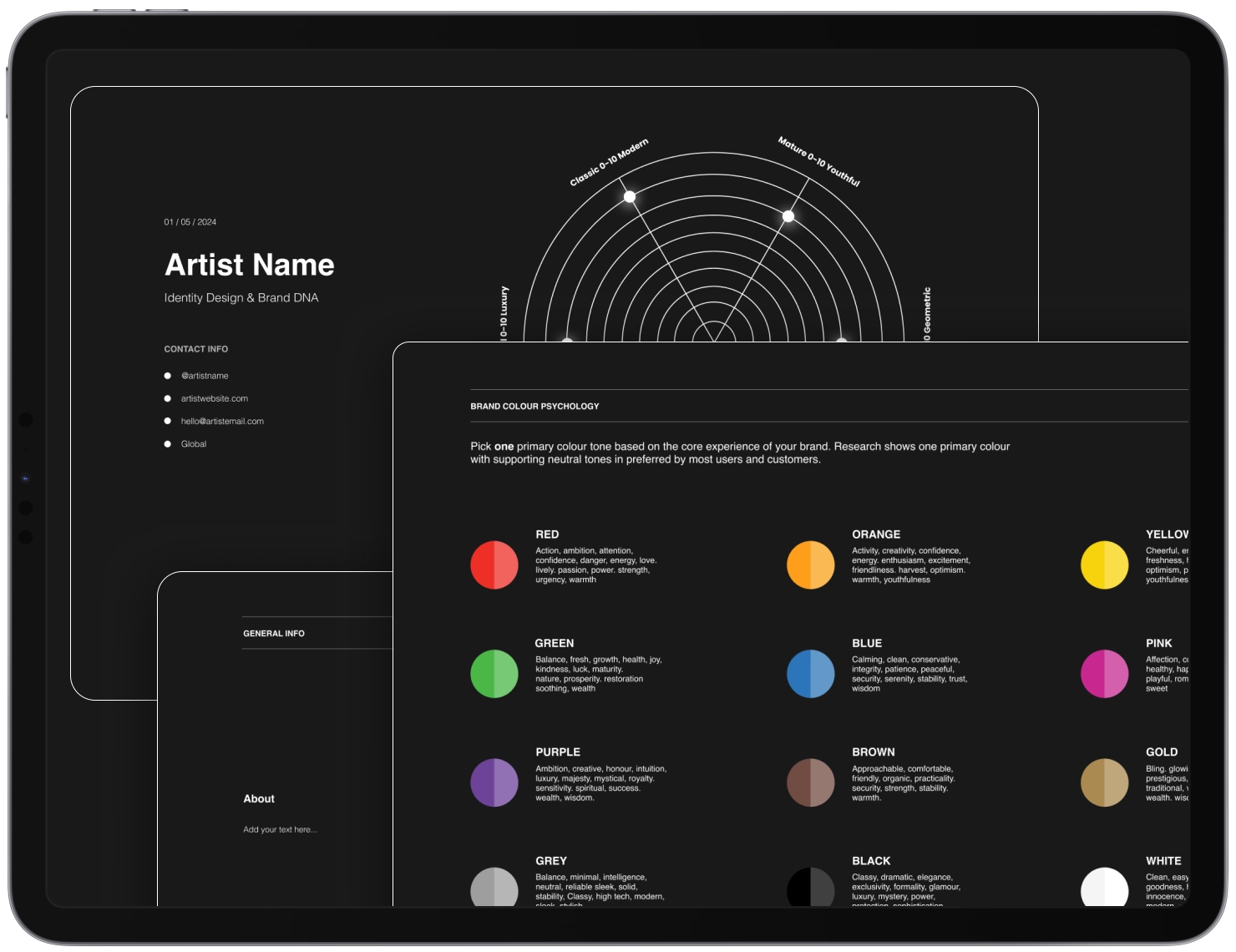
Adapting to a room isn’t becoming a different artist in each. The things that stay constant are what make you recognisable: how you look, the colours and type on everything, the way you talk, the recurring formats. Decide those once, on purpose, rather than improvising them differently on every post. The free Artist DNA template exists for exactly that decision: brand profile, visual direction, palette, typography and the story that ties them together, written down so you can hand it to a collaborator.
Once those are fixed, adapting is easy. The room changes the format. It doesn’t change the voice.
Playing the rooms without losing the music
Three practices make this sustainable:
- Batch. One afternoon a fortnight to cut and schedule, so the daily job is posting and replying, not producing. The 80/20/20 Principle explains why the time is worth it.
- Series over one-offs. A format you can fill every week is cheaper to make and easier to follow than a new idea each time.
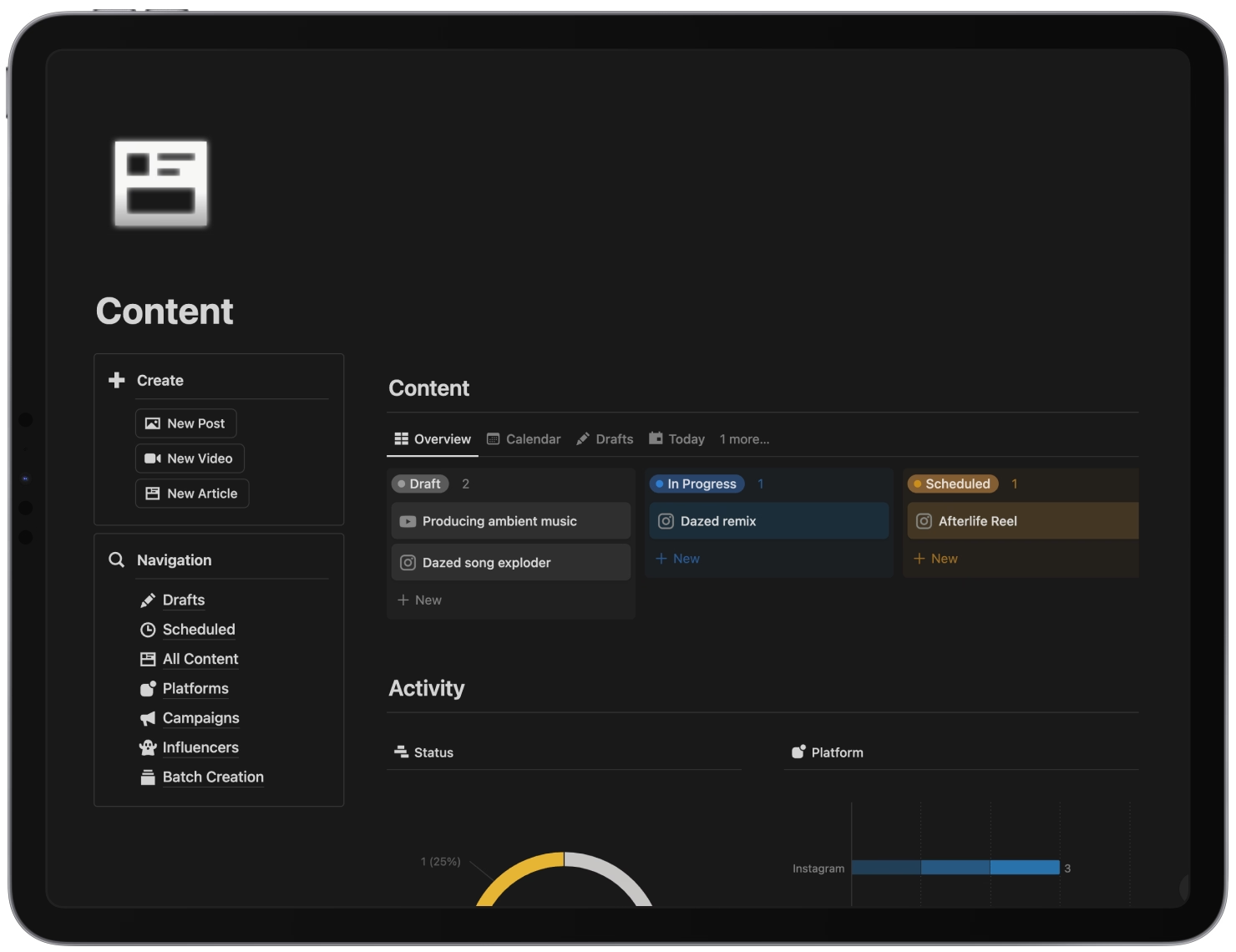
- A calendar you can see. What goes out where and when, next to how it did. The Content template in Musician OS does this in one place, with the post templates and campaign results alongside; a shared spreadsheet also works.
Measuring the rooms
Follower counts are the size of the room. They aren’t the show. Watch instead for:
- Saves and repeat listens on the songs you promoted
- Clicks through to the pre-save, the ticket, the list
- List growth, week on week
- Comments that quote lyrics, which mean the song landed
- People at the show, which is the only metric that can’t be faked
Quality of attention over quantity of it. Community over count. The artists who last online are the ones who treated each room as a place to be themselves in front of the people who’d come back, not a place to be seen once by everyone.
Starting this week
- Find out where your listeners are and pick two rooms.
- Write down what stays constant: look, voice, formats.
- Set up the rooms you own, even if the list has ten people on it.
- Batch one fortnight of content and post it.
- Check the numbers that matter in a month, and adjust the rooms, not the voice.
The digital stage isn’t a substitute for the real one. It’s the way people find out you’re playing.
Frequently asked questions
Which social media platforms should a musician focus on?
Two, chosen by where your listeners already are, plus the ones you own. For most independent artists in 2026 that means short-form video on TikTok or Instagram for discovery, YouTube for the work that deserves more than a minute, and an email list and website as the home base no algorithm can take away. Add a third platform only once the first two run without effort.
How often should a musician post on social media?
Often enough that a new listener finds something recent, and not so often that it costs you music. For short-form video, several times a week is a reasonable target; for YouTube, whatever cadence you can keep for a year. Consistency over months beats intensity over weeks, and a batch afternoon every fortnight makes consistency possible.
Should I post the same content on every platform?
Post the same idea, adapted to each room. A release might be a full video on YouTube, a process clip on TikTok, a performance and a story sequence on Instagram, and a proper note to your email list. Copying one clip everywhere is fine occasionally, but each platform rewards content that behaves like it belongs there.
How do I measure social media success as a musician?
By what changes behaviour, not by follower count. Watch saves and repeat listens on the songs you promoted, clicks through to the pre-save or the ticket link, growth on your email list, and how many people show up when you play. A thousand engaged followers who buy tickets are worth more than fifty thousand who scroll past.