Most releases that fail don’t fail loudly. The song goes up, a few hundred people hear it, and it’s quietly filed. The artist decides the song wasn’t good enough and moves on, when what actually happened was one of a small number of avoidable mistakes.
This guide is the list. Ten things not to do, why each one costs you, and the decision that avoids it. Most of them come down to timing, which is why the second half is about picking the date.
The ten mistakes
1. Releasing the week it’s finished
The master lands on a Tuesday and the song is out Friday week. No time to deliver to the distributor, no playlist pitch, no pre-save, no snippets. The song enters the platforms with nothing behind it, and platforms have nothing to respond to.
Instead: six weeks minimum from finished master to release, eight if you can. Finishing the song and releasing the song are different projects.
2. Announcing before there’s anything to hear
“New single, 24th of the month” with the artwork is a poster on a lamppost. Nobody knows what they’re being asked to care about.
Instead: lead with the sound. Post a snippet first, let people react, then attach the date to something they already like.
3. Picking a week you can’t win
Releasing the same Friday as a major artist in your genre, or in the December pile-up, or in the week of a festival everyone you know is at. The competition for attention is fiercest exactly when the people who could help are least available.
Instead: look at the calendar before you set the date. Quieter windows exist and they’re better for small releases.
4. Treating release day as the finish line
The announcement, the release post, then silence. A song’s window with the algorithms is a few weeks, and most of that gets wasted by artists who stopped on day two.
Instead: plan the fortnight after release before the release. Alternate versions, the parts you didn’t tease, fan clips, a live.
5. Running out of content mid-campaign
The first week was fine, then there was nothing left to post, so the posting stopped. This is the mistake above with a different cause.
Instead: build the content bank before you announce. Three or four cuts per hook point, batched in one week, plus a couple of spares for when something unexpected happens.
6. Sloppy metadata
The featured artist spelt two ways, an apostrophe that differs between the distributor and the PRO, a new ISRC for a track that was already out. Streams split across duplicate entries and royalties go unmatched.
Instead: one form of every name and title, used everywhere, and the same ISRC for the same recording every time. The royalties guide covers the codes.
7. Paying for playlist placement
Services that promise placement on playlists for a fee are selling either bot-driven playlists that will damage your account or nothing. Spotify treats paid placement as a violation and removes streams and songs over it.
Instead: pitch editorial through Spotify for Artists, build relationships with real independent curators, and put the money into ads aimed at your own listeners.
8. Releasing everything at once
Ten tracks on one Friday means one playlist pitch, one Release Radar moment and one week of attention for all of them. Nine songs never get heard.
Instead: singles first, then the record. Or a waterfall release, where each drop carries the previous tracks with it.
9. Skipping the pre-save and the pitch
They feel like admin. They’re the two cheapest signals you can send a platform before a release exists. A pre-save produces a cluster of day-one saves and follows; a pitch, even an unsuccessful one, puts the song in your followers’ Release Radar.
Instead: pitch at least seven days out, open the pre-save two to three weeks out, once people have heard a snippet.
10. Not planning the next one
The song comes out, the campaign ends, and the next release is a blank page eight months later. Whatever momentum existed is gone.
Instead: know what’s next before this one is out. A single every six to eight weeks is a rhythm most independent artists can sustain. The release calendar guide has the cadence.
Picking the date
Half the list above is about timing, so here’s how to choose a date that gives a release its best chance.
Work backwards from the master. Delivery to the distributor, then a week or more for the pitch, then two to three weeks of pre-save, with snippets running from six weeks out. If that doesn’t fit, move the date, not the plan.
Friday, usually. Platforms refresh editorial playlists and Release Radar on Fridays. It’s the convention, not a law, and a smaller artist can do fine on a quieter day. What matters is that the preparation fits.
Avoid the pile-ups. December, the week of a big release in your genre, the fortnight of a festival your audience is at.
Think in seasons if the song has one. A summer song in October is a summer song nobody hears.
Time it to your own audience. Your analytics show when your listeners are active. A release that goes live at midnight in one territory is already a day old by the time another wakes up, so the first push should follow the time zones where your listeners actually are.
The shape that avoids all ten
Six weeks before, the master is delivered and the content is banked. Four weeks before, the first snippet. Three weeks before, the pitch and the pre-save, then the date. One week before, the connecting clip and the reminder. Release day, the payoff and a day in the comments. The month after, the parts you didn’t show, and the next single already in the works.
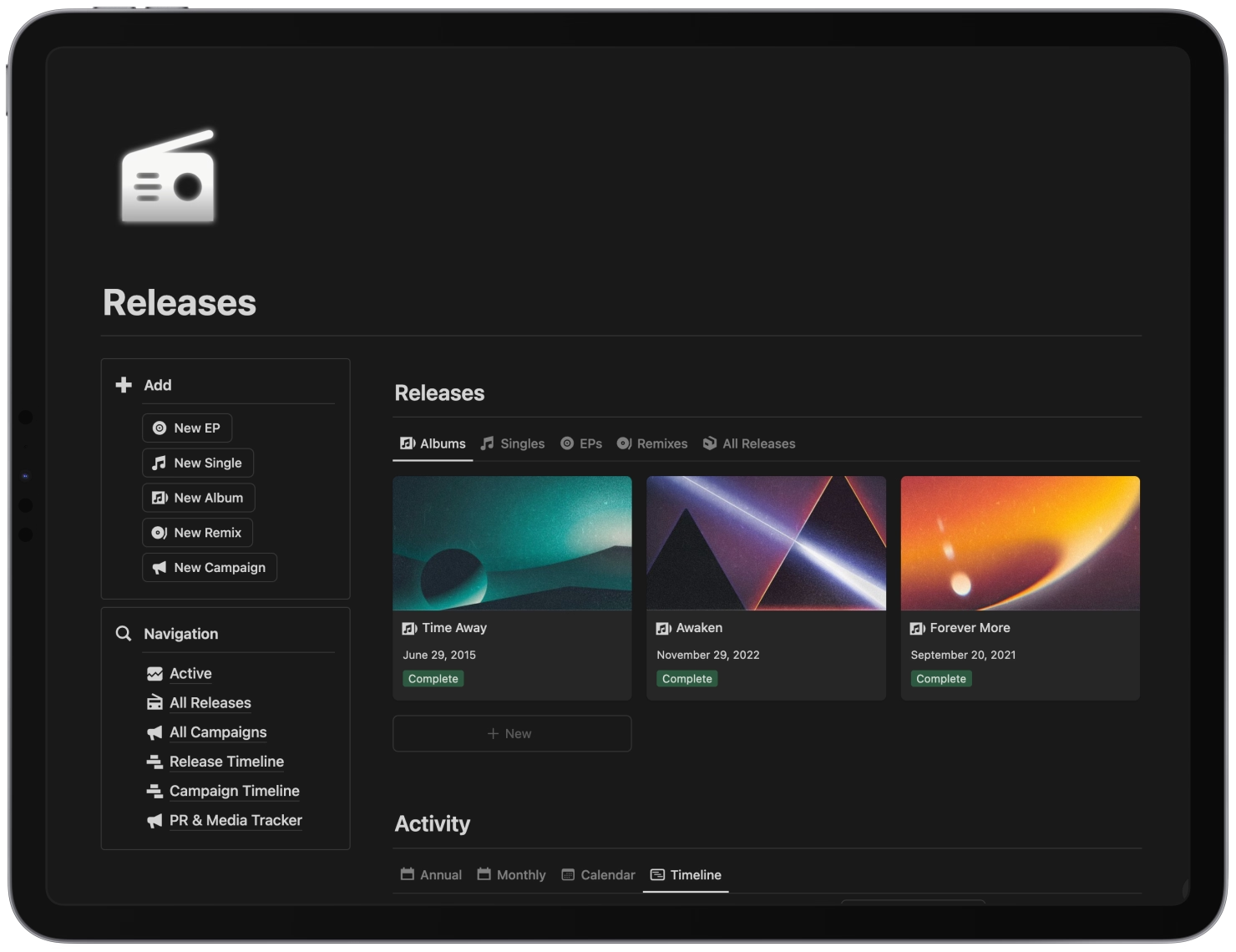
None of it is complicated. All of it needs to be decided before the date is. The Releases template in Musician OS lays that timeline out as tasks the moment you set a date, which is the simplest way to stop the first mistake on this list from causing the other nine.
Frequently asked questions
What is the best day to release music?
Friday is the convention, because streaming platforms refresh their editorial playlists and Release Radar on Fridays and the industry's chart week starts then. It isn't a rule. A smaller artist releasing on a quieter day can get more attention from their own audience, and what matters far more than the weekday is having six or more weeks of preparation behind the date.
Should I release music during the holidays?
Usually not, unless the song is seasonal. December is crowded with major releases and festive playlists, and the writers, curators and playlist editors you'd want to reach are away. Mid-January to March and September to early November tend to be quieter windows where an independent release has more room.
How many songs should I release at once?
One at a time, for most independent artists. A single gets its own campaign, its own playlist pitch and its own moment in Release Radar. Ten tracks released together share one of each. If you have an album, a run of singles leading into it, or a waterfall release where each drop includes the previous tracks, gives every song a chance to be heard.
What is the biggest mistake artists make when releasing music?
Releasing the week the master is finished. Without time to deliver to the distributor, pitch playlists, run a pre-save and post snippets, the song arrives with no signal behind it, and platforms have nothing to respond to. Almost every other release mistake is a symptom of not leaving enough time.