Most independent artists spend days on a mix and an hour on the clip that promotes it. Then the song comes out, gets a few hundred streams, and the conclusion is that the song wasn’t good enough.
Usually it was. The problem was the ratio. This guide is about a different ratio, one that deliberately doesn’t add up, and about how to make it possible without giving up the part of the job you actually like.
The old maths
You’ve heard the 80/20 rule: put most of your effort into the few things that matter, and a little into everything else. For a working musician that sounds like 80 percent on the music, 20 percent on the admin and the posting.
That split describes a career that already has an audience. For an artist trying to build one, it’s backwards. The music is necessary. It isn’t the bottleneck. The bottleneck is that nobody has heard it, and no amount of mixing fixes that.
The 80/20/20 split
Here’s the shape I’d suggest instead, and it’s the one I run:
- 80 percent on content. Everything that gets the music in front of people: clips, videos, the story around a release, the visual world, the posts, the replies.
- 20 percent on the music. Writing, recording, producing, mixing.
- 20 percent on optimisation. Looking at what worked, cutting more of it, dropping what didn’t, and letting that feed the next batch.
Yes, that’s 120 percent. It’s not a mistake. The 80 and the 20 for music overlap, because the best content is a record of the music being made. The hour you spend writing a chorus is also the hour you got the clip of the chorus arriving. Count it twice, because it is twice.
What the numbers are really saying is this: if growth is the goal, the promotion of a song deserves at least as much time as its production, and probably more. That’s the threshold most artists need to reset. The song took a month. The campaign around it can’t be an afternoon.
Why the ratio feels wrong
Because it’s not how any of us learned to do this. Musicians are trained to believe the work is the music and the rest is a chore. The rest is where the music finds people. Treating it as a chore means it gets the leftover hours, and leftover hours make leftover content.
There’s also a quieter reason. Making a song is private and feels like art. Making content is public and feels like asking. Nobody enjoys asking. But a clip of you finishing a bridge isn’t asking anyone for anything. It’s showing them something true, and it’s what most listeners want to see.
Making 120 percent possible
The ratio only works if content stops being a separate job. Three things make that happen.
Capture while you work
Set the studio up so documenting is automatic. A phone on a stand, recording, during every writing and tracking session. A running note on the desk for the moments worth cutting: the take that landed, the chord that changed the song, the argument about the tempo. Screenshots of the session at the end of the day.
None of this costs creative time. It costs a tripod and a habit. Later, in a batch, you cut content from the footage, and the raw material for a month of posts came from work you’d already done.
Build formats, not posts
A post is a one-off. A format is a shape you can fill again every week: “how this line got written”, “the mix before and after”, “the lyric I cut and why”, “sixty seconds of the session”. Decide on three or four formats that suit you, and stop inventing from scratch.
Formats compound. The fourth episode of something is easier to make and easier to watch than four unrelated posts. They also make batching possible: one afternoon a fortnight can produce two weeks of content if you’re filling shapes you already know.
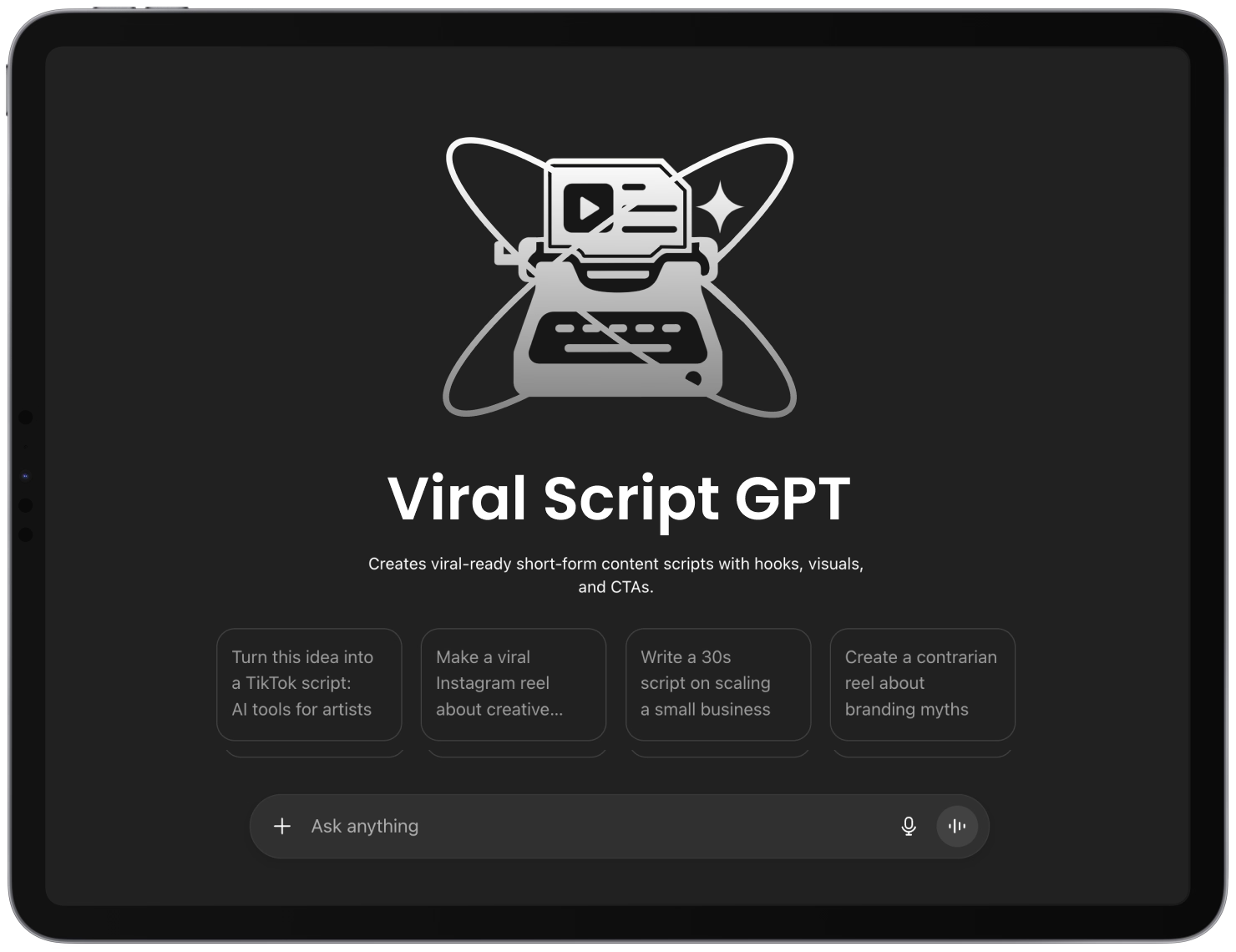
If scripting a short is the part that stalls you, the Viral Script GPT does the structure: hook first, visuals mapped to the beats, an ending that doesn’t sound bolted on. You bring the idea.
Close the loop
The third 20 percent is where most artists stop. Every clip you post is an experiment with a result attached. Which format got watched to the end. Which hook point got quoted in comments. Which release got saves, not just plays.
Look at that once a week, not every hour, and let it change two things. First, the content: make more of what held attention. Second, the music: if one section of a song is what everyone responds to, that’s information about what you do well, and it’s allowed to shape the next song. This isn’t chasing the algorithm. It’s listening to your audience, which musicians did long before there were dashboards.
What this looks like in a week
A rough shape, for an artist with a day job or a tour and a few evenings:
- Two sessions on music, with the phone recording and the note running. This is the 20.
- One batch afternoon cutting last fortnight’s footage into the formats, scheduling it, writing the captions. The bulk of the 80.
- Fifteen minutes most days posting, replying and watching what lands. The rest of the 80.
- Half an hour on a Sunday looking at the numbers and deciding what to make more of. The other 20.
The content hours outnumber the music hours, and yet the music didn’t lose anything. That’s the whole principle.
Keeping track of it
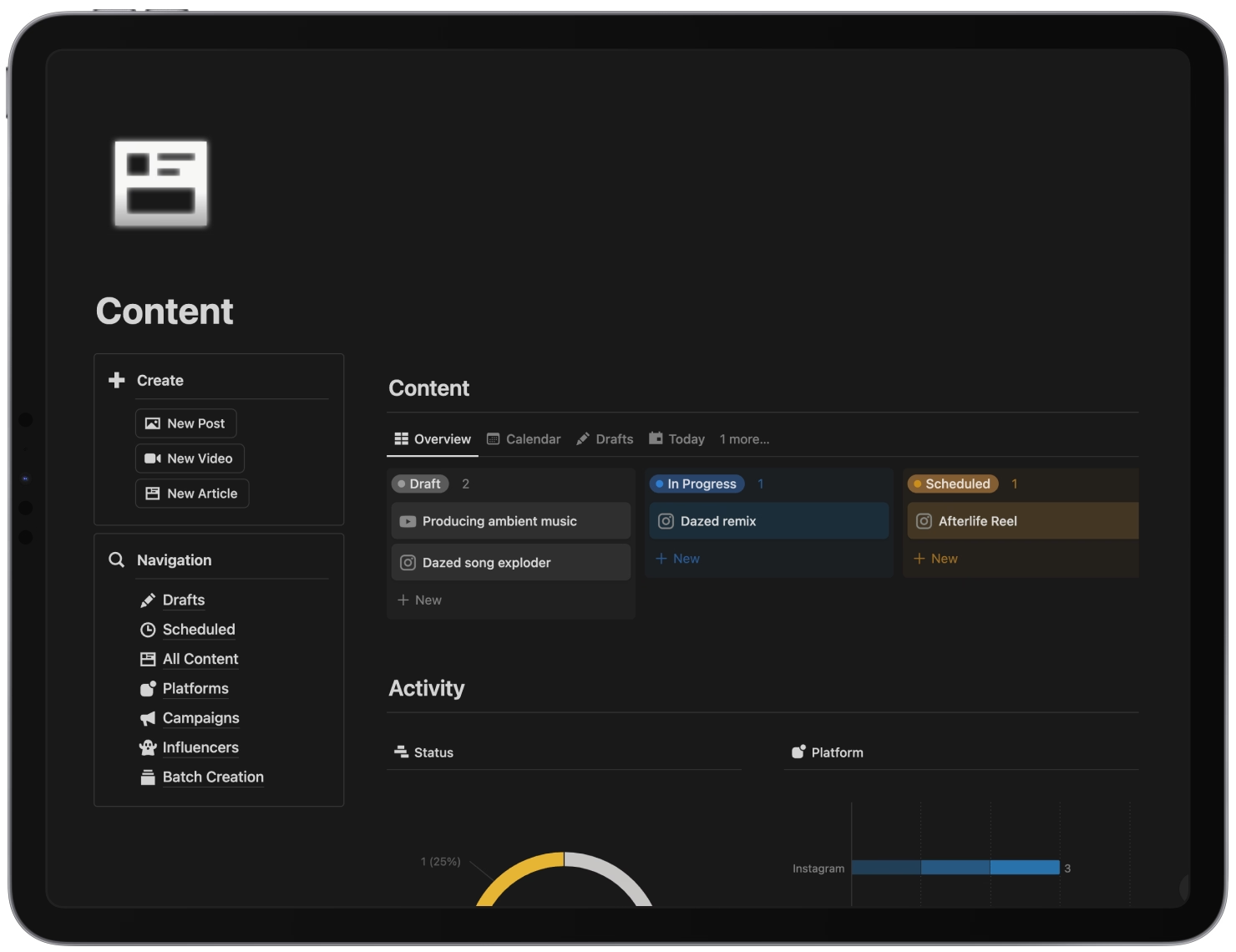
The ratio falls apart without somewhere to hold it: the footage, the formats, the schedule, and the results next to the posts that produced them. The Content template in Musician OS is built around that loop, with a calendar for what goes out, templates for the post types you repeat, and campaign dashboards that show how each push performed. A folder of clips and a spreadsheet of results does the same job if you keep it honest.
The question was never whether you can give 120 percent. Most independent artists already do. It’s whether the extra 20 is going into the music nobody hears, or into the reasons someone will.
Frequently asked questions
What is the 80/20/20 principle for musicians?
It's a way of describing how effort should be split for an independent artist who wants to grow: roughly 80 percent on content that gets the music in front of people, 20 percent on making the music itself, and a further 20 percent on studying what worked and improving the content. The numbers add up to 120 on purpose. Content and music overlap, because the best content is a record of the music being made, so the same hour often counts twice.
How much time should musicians spend on marketing versus making music?
More than feels natural. Most independent artists spend days on a mix and an hour on the clip that promotes it, then wonder why the song didn't travel. If growth is the goal, the promotion of a song deserves at least as much time as its production, and the artists who grow fastest usually spend more. The way to make that sustainable is to capture content while making the music, so the two aren't competing for the same hours.
How do I make content without it eating my creative time?
Document instead of produce. Keep a phone recording during writing and studio sessions, keep a running note of the moments worth sharing, and cut content from that footage later in a batch. Build a few repeatable formats and reuse them, so each post is a variation rather than a new idea. The goal is content as a by-product of the work, not a second job on top of it.
Does documenting the process count as content?
Yes, and it's usually the best kind. Process content shows how the song came to exist, which is what people actually connect with, and it needs no extra performance from you. A chorus being written, a take that finally lands, a mix decision explained in twenty seconds: those clips outperform polished announcements for most independent artists.