Nobody gets discovered any more. Or rather, the artists who look discovered were almost always running a release plan when the moment came, and the plan is what turned the moment into a career.
This guide is about that plan. It lists the jobs a label would do for a release, shows how an independent artist covers each one with a tool, a service or a habit, and lays out the timeline that ties them together. It’s written for an artist with a finished song and no label, which in 2026 is most artists.
What a label actually does
Strip the mystique away and a label does about seven things for a release:
| The label’s job | The independent version |
|---|---|
| Funding the recording | Your savings, a grant, a crowdfund, or a cheaper recording |
| Distribution to platforms | A distributor: DistroKid, TuneCore, CD Baby, Ditto, Amuse and others |
| Marketing and content | You, with a plan, or a freelancer per release |
| PR and press | DIY outreach, or an independent publicist for a single campaign |
| Playlist pitching | Spotify for Artists and Apple Music for Artists, plus independent curators |
| Rights and royalties | Your PRO, your neighbouring rights body, maybe a publishing administrator |
| The team and the deadlines | A system that holds the timeline and the tasks |
Everything on the right is available to anyone. The difference between an independent release that works and one that doesn’t is rarely access. It’s whether all seven jobs got done, on time, for the same song.
Where independent releases fail
Three patterns come up over and over:
The release wasn’t planned far enough ahead. The master is finished on a Tuesday and the song is out the following Friday. There was no time to pitch playlists, no pre-save, no teasers, and the song enters the platforms with no signal behind it.
The release was treated as a day, not a campaign. Announcement, release post, silence. A song’s algorithmic window is a few weeks. Promotion that stops on day two wastes most of it.
Hope stood in for a system. Upload, share the link, wait. Nothing about a release day is lucky. The songs that travel had pre-saves, playlist pitches, a content sequence and a follow-up plan, and those were all decided weeks earlier.
The three phases
A release is one campaign in three parts. The Three Phases of a Modern Music Release goes deep on the structure; this is the working summary.
Pre-release: six to eight weeks
- Deliver the master to your distributor as early as they allow. Delivery time is the bottleneck for everything else.
- Pitch editorial playlists through Spotify for Artists at least seven days before release, and through Apple Music for Artists. Even an unsuccessful pitch puts the song into your followers’ Release Radar.
- Run a pre-save campaign in the final two to three weeks, once people have heard a snippet.
- Post snippets in a sequence, second-best hook first, strongest hook once there’s attention. The Pre-Release Momentum Engine is the week-by-week version.
- Build the email list. Every platform can change its algorithm or disappear. The list is the only audience you own.
- Pitch press and independent curators with a short, specific note and a private link, two to three weeks out.
Release day and the first 48 hours
- Convert the attention you built. The pre-save cluster, the followers, the people who replied to snippets. Release day is for them.
- Post across platforms with different cuts, not the same clip four times. A performance on Reels, a process clip on TikTok, the full video on YouTube, a proper email to the list.
- Make it an event if you can: a live, a listening session, a small merch drop for the first supporters.
- Spend the day in the comments. Replies keep posts alive and tell platforms there’s conversation on the song.
Post-release: the weeks after
- Keep posting. The parts of the song you didn’t tease, fan clips, an acoustic or alternate version.
- Keep pitching. Independent playlists and sync opportunities don’t close on release day.
- Reply to everyone for the first fortnight. It costs nothing and it compounds.
- Start the next one. The best follow-up to a release is a release. Four to six weeks later is a good rhythm for singles, and a waterfall of singles into an EP or album is a strong shape for it: The Waterfall Music Release Strategy covers that.
The budget conversation
Independent artists usually budget in the wrong order: recording first, then whatever is left for promotion, which is often nothing. Flip it. Decide the promotion budget first, even if it’s small, and let the recording fit around it. A well-recorded song nobody hears is worth less than a decent recording with a month of promotion behind it.
Typical lines for a single, as of 2026: mixing and mastering, artwork, a video or visualiser, a small ad spend, maybe a publicist or a curator service, and merch if you’re making any. Some of those can be zero. The ad spend and the publicist are the ones that scale with ambition. Write it down per release and compare it with what the release earned six months later. You’ll learn more from three of those comparisons than from any guide.
A system, so the next one is easier
The reason labels can run releases reliably is not talent, it’s that they’ve done it a hundred times and have a checklist. You can have the same thing after one.
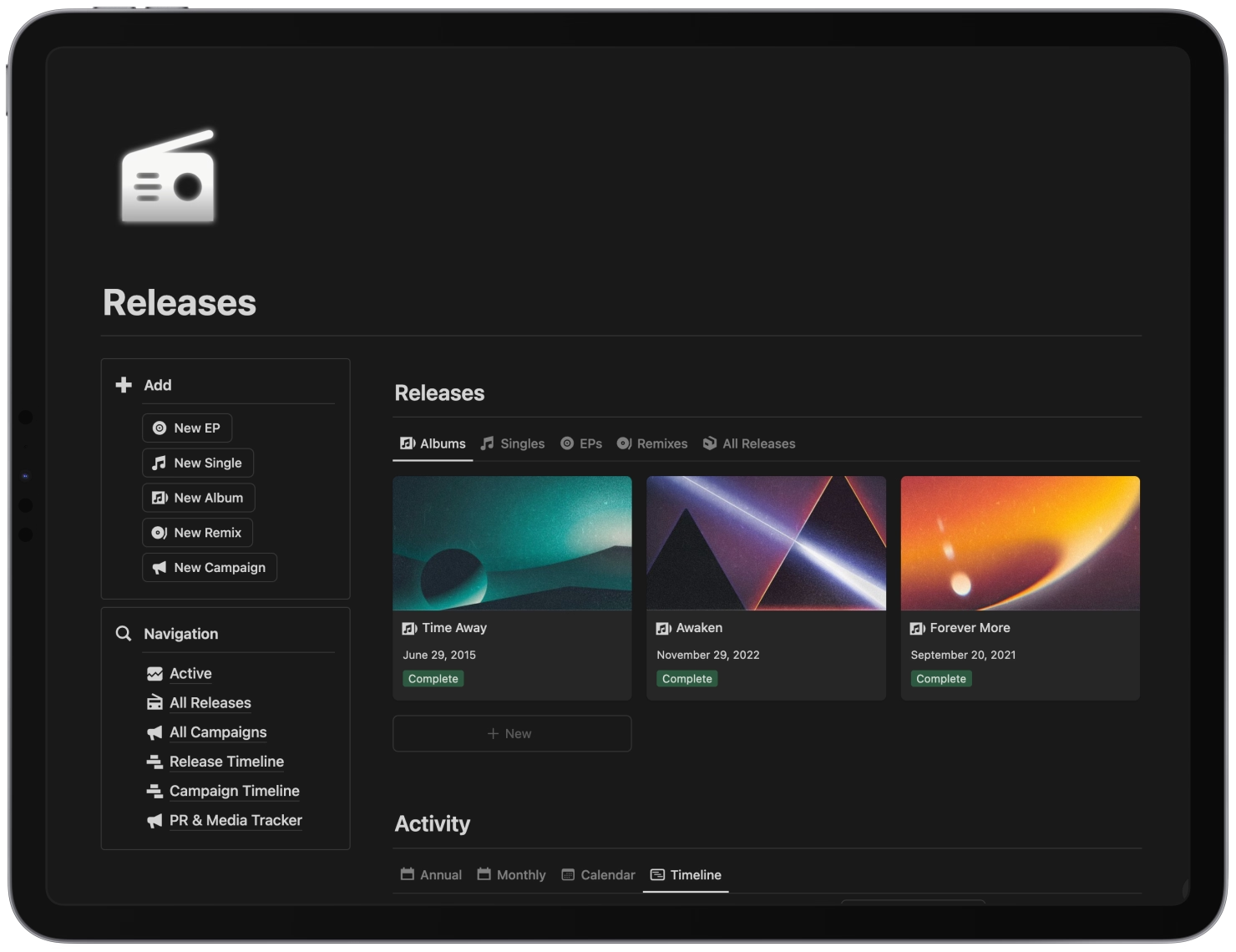
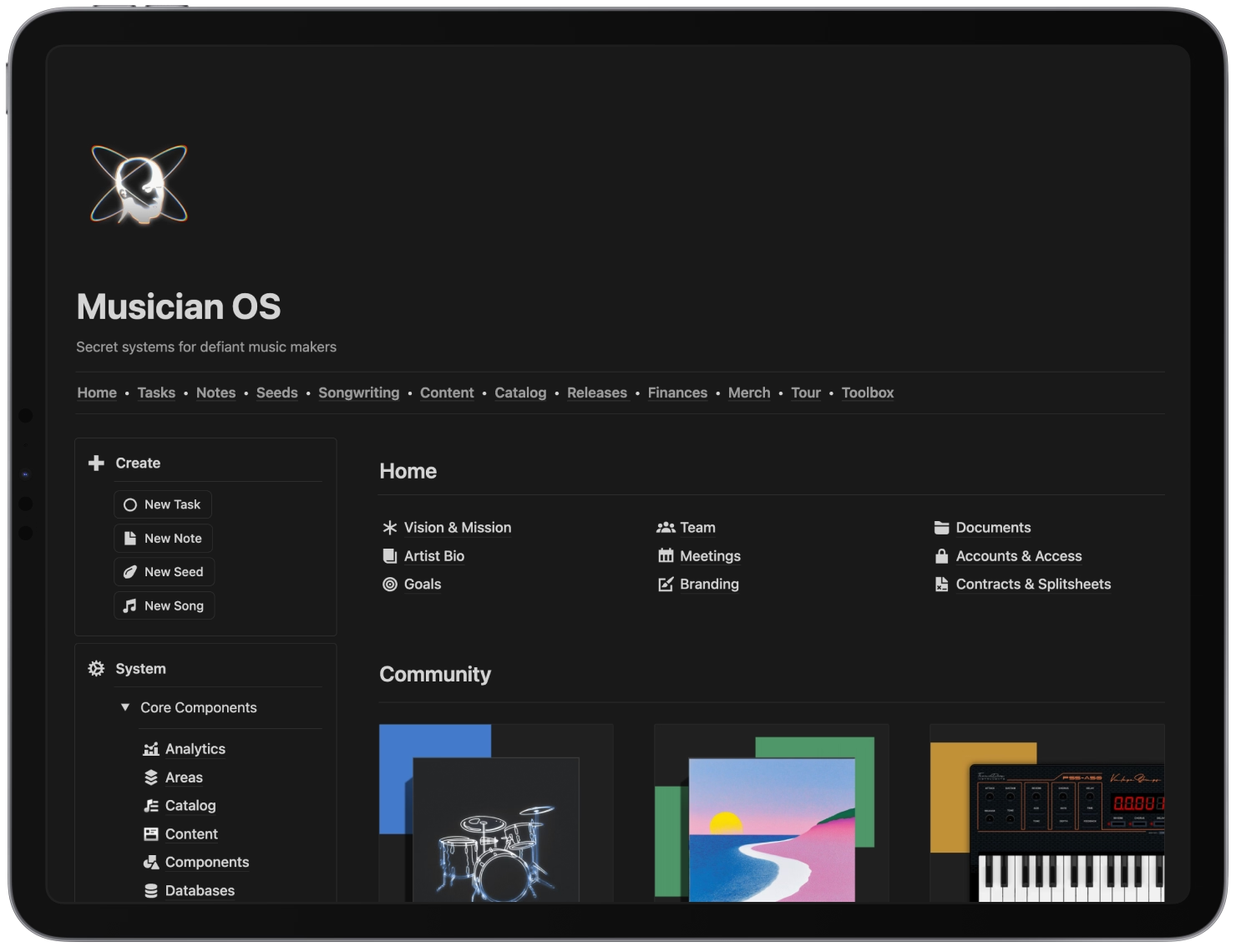
Write down every task from this guide with its week, run the release, then note what you’d change. That document is your release system. The Releases template in Musician OS is a pre-built version of it: set the date and the task automations lay out each phase against the deadline, with timeline views instead of a flat list. A spreadsheet with dated rows works too. What matters is that the second release starts from the first one’s plan, not from a blank page.
There has never been a cheaper time to release music without a label. It’s also never been more crowded. The artists who get through aren’t the ones who were found. They’re the ones who had a plan for the week the song came out, and the week after that.
Frequently asked questions
Do you need a record label to release music?
No. A distributor puts your music on every streaming platform for a small fee or subscription, and the other things a label does, such as marketing, PR, playlist pitching, rights registration and funding, can each be done yourself or hired per release. What a label really provides is money up front and a team. Without one, you provide the plan and the discipline, and you keep the masters and the margin.
What does a music distributor do?
A distributor delivers your audio, artwork and metadata to streaming and download platforms, collects the revenue those platforms pay for your recording, and passes it on to you. It usually assigns ISRC and UPC codes, offers pre-save links, and can deliver audio to TikTok and Instagram before the release date. It does not promote the release or register your songs with performing rights organisations; those are separate jobs.
How much does it cost to release a single independently?
The distribution itself costs little: a yearly subscription or a small per-release fee, depending on the service. The real costs are the recording, mixing and mastering, artwork, any video, and promotion, which can range from nothing to a few thousand dollars per single depending on how much you hire out. Set the promotion budget before the recording budget, because a finished song with no promotion money is the most common way an independent release fails.
How far ahead should I plan a release?
Six to eight weeks from a finished master to release day is the practical minimum. That covers distributor delivery, playlist pitching at least a week before release, a pre-save campaign, and enough teaser content for people to recognise the song when it arrives. Albums and lead singles need longer.