Content is part of the job now, and the part most likely to break you. The pressure to keep producing is what sends artists off social media entirely, usually with the music suffering on the way out.
These seven laws are about doing it for years, not weeks. They’re principles rather than tactics, which means they’ll still hold when the platforms have changed again. Building Creative Systems That Scale is the practical setup; this is why the setup looks the way it does.
1. The law of documentation
Be a witness, not a director. A director stages moments and it costs energy every time. A witness catches what’s already happening, and it costs a phone on a stand.
Your creative practice is already worth documenting. A song getting written, a take that lands, the argument about the tempo, the day nothing works. The skill isn’t inventing content. It’s noticing which of the things that happened today someone else would want to see, and having been recording when they happened.
Apply it: a permanent recording setup in the space, and a running note for the moments worth cutting. Nothing else changes about how you work.
2. The law of energy conservation
Never spend new energy on content when you can harvest energy you’re already spending. Every session, every rehearsal, every drive to a show is producing material. A system that captures it costs almost nothing. A system that requires you to make something separate every day costs everything.
Think of it as generating power from a river that’s already flowing, rather than burning fuel. The river is the music.
Apply it: batch the cutting into one weekly session. Reuse formats. Let one piece of work become several posts across weeks rather than making several pieces of work.
3. The law of resonant engagement
The goal was never to reach the most people. It was to reach the right ones in a way that stays with them. Ten thousand views that nobody remembers are worth less than two hundred people who felt something and came back.
Platforms count reach because it’s easy to count. You should count resonance: comments that quote a line, saves, messages, people who turn up.
Apply it: reply to everyone, properly, for the first day of every post. Make things for the people who are already there rather than for the algorithm that might bring strangers.
4. The law of value exchange
A relationship survives only if both sides get something. Your audience gives time and attention, which is the scarcest thing they have. If all you give back is announcements, the exchange fails and they leave.
The content that earns attention is the content that’s worth something on its own: a process people learn from, a story that moves them, a piece of knowledge they can use, a laugh. The promotion works because of everything around it.
Apply it: give first. Aim for most of what you post to be worth watching even if the viewer never buys anything. The Three Circles of Social Media Content puts a proportion on it.
5. The law of consistent evolution
Two things are true at once: your methods must change, and your voice must not. The platforms of five years ago aren’t the platforms of today, and the formats that work now will be gone in three years. What people follow across all of that is a recognisable artist with a consistent way of seeing.
The mistake in one direction is refusing to learn new formats. The mistake in the other is changing who you are for each one.
Apply it: translate, don’t transform. When a new platform or format matters, work out how your existing voice sounds there. Write down what stays constant so you can check.
6. The law of strategic patience
Growth that lasts is slow, then sudden. For a long time the work produces almost nothing visible, and then the accumulated audience, catalogue and skill start compounding. Almost everyone quits during the invisible part.
Viral moments are rainstorms: welcome, occasionally useful, not a water supply. The artists who last are watering the same ground every week for years.
Apply it: judge the strategy over quarters, not weeks. Track the things that predict staying power (repeat listeners, saves, list growth, people at shows) rather than the ones that spike. Decide in advance what a year of this looks like, so a bad month doesn’t end it.
7. The law of artistic priority
The music comes first, and content is a record of the music being made. That order can’t flip. The moment the posting schedule dictates the writing, or a song gets shaped for a fifteen-second clip it didn’t want, the content is eating the thing it was supposed to serve.
Rings in a tree are a record of growth. The tree wasn’t growing in order to make rings.
Apply it: protect the making time first, then fit content around it. If they conflict, content loses. A feed that goes quiet for a fortnight because a record was being finished is a feed doing its job.
Putting them to work
Audit your current practice against the seven:
- Are you documenting or manufacturing?
- Where is the energy going, and is any of it wasted on things capture would have caught?
- Are you measuring reach or resonance?
- What does your audience get from a typical week of your posts?
- Has your voice stayed constant while the formats changed?
- Are you judging this over the right timescale?
- Is the music still first?
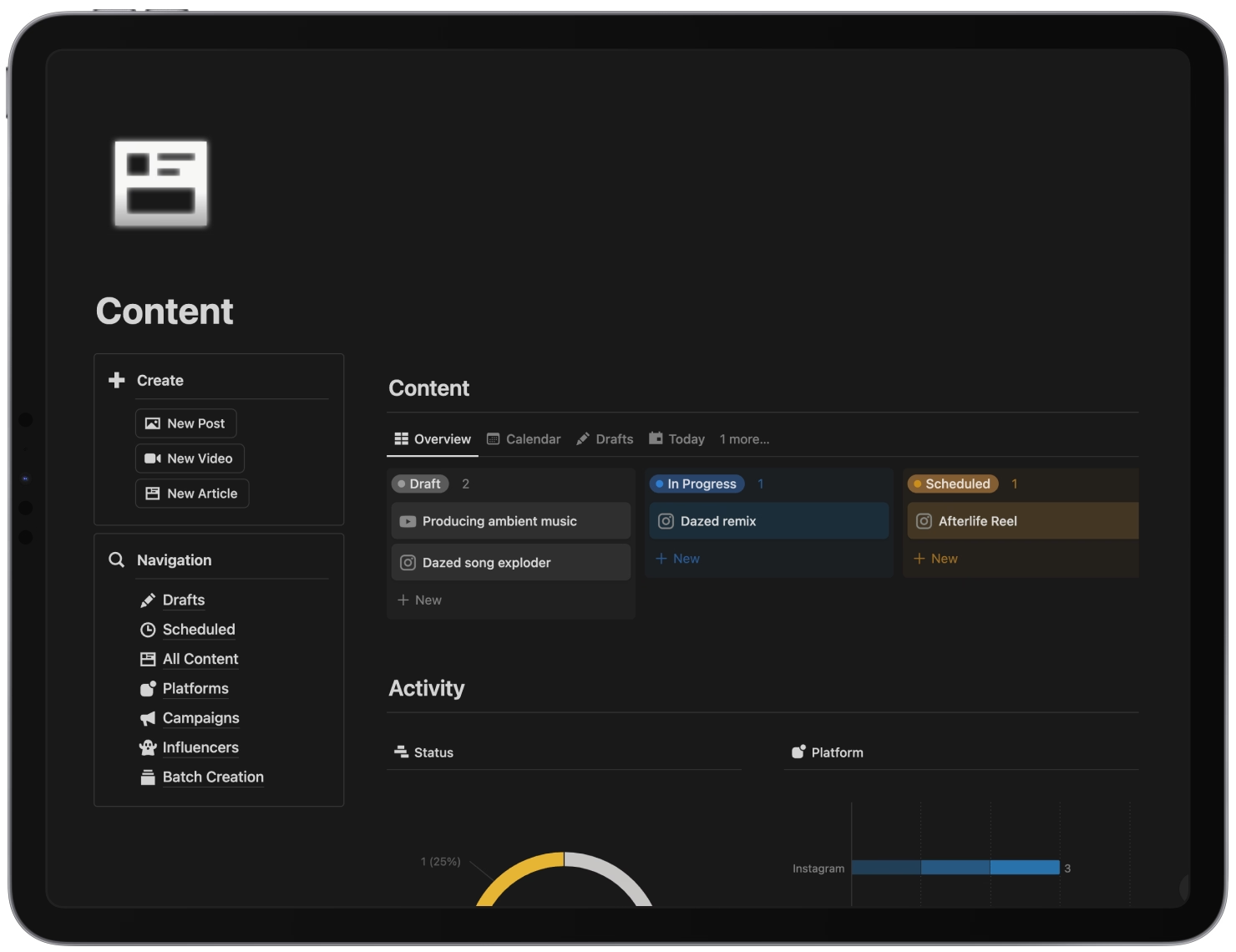
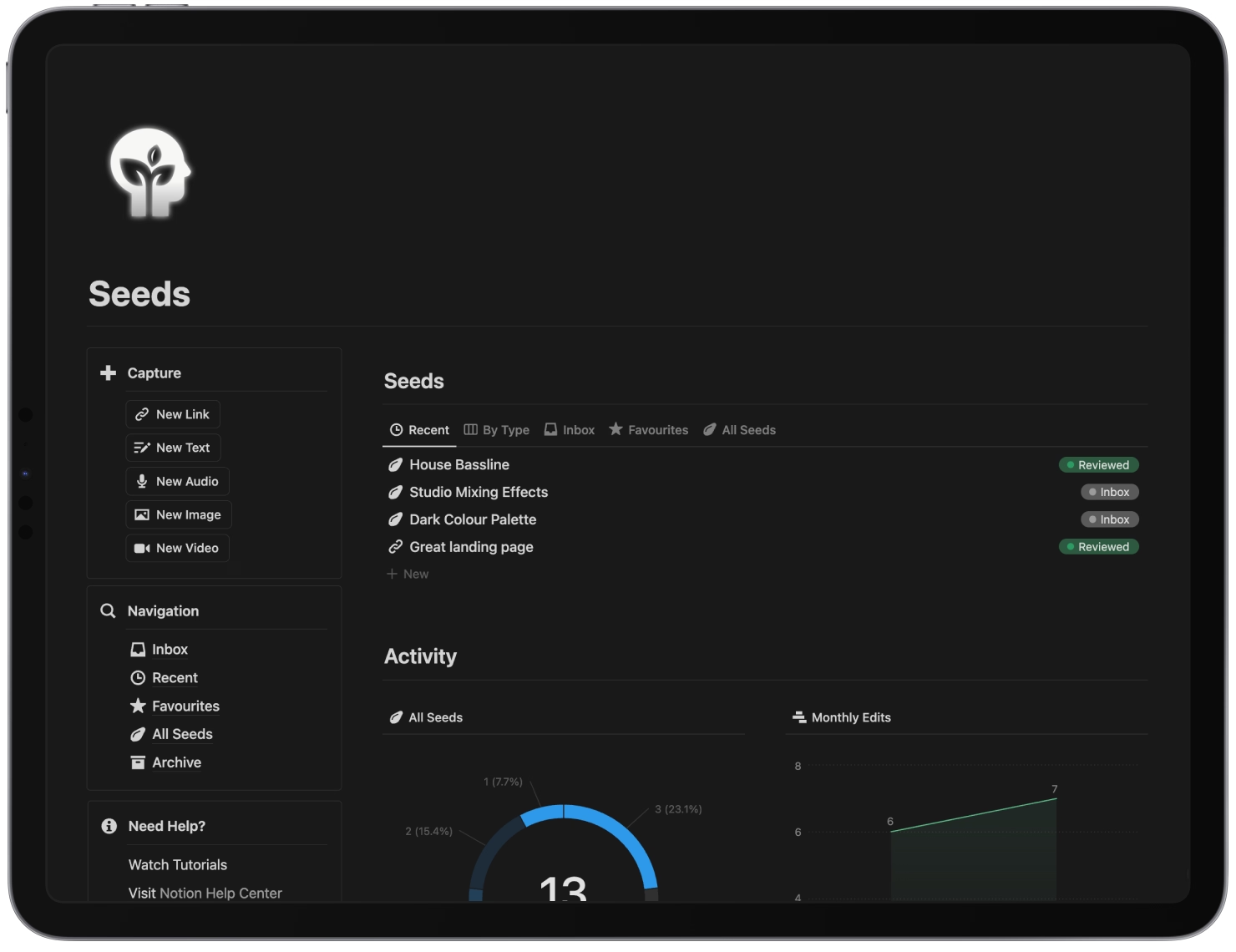
Then change one thing. The capture setup, the weekly batch, the reply habit, the proportion of promotion. The Content template in Musician OS is where the calendar, the formats and the results live in one place, and the free Seeds template is the capture side for ideas. Neither is required. The laws work in a notebook, because they were never about tools. They’re about doing this in a way you can keep doing.
Frequently asked questions
How do musicians avoid content burnout?
Stop manufacturing content and start documenting the work. Capture during sessions with a phone on a stand, cut posts in one weekly batch, reuse a few formats rather than inventing daily, and keep promotion to a small share of what you post. Burnout comes from treating content as a separate job. It's sustainable when it's a by-product of the music.
Is it better to document or create content?
Document, most of the time. A record of a song being made needs no extra performance, reads as real, and comes out of hours you were already spending. Created content, like a tutorial or a concept video, has its place as a monthly hero piece, but a feed built on documentation is the one an artist can keep for years.
How long does it take to grow an audience as a musician?
Years, in most cases, with growth that looks like nothing for a long time and then compounds. A viral moment can accelerate it but rarely builds it. Judge the strategy over quarters, not weeks, and measure the things that predict staying power: repeat listeners, saves, list growth, people at shows.
Should content come before music?
No. The music is the reason any of the content matters. Content should come out of the work and support it, never replace time spent on the songs. If the posting schedule is eating the writing time, the schedule is wrong, not the writing.