Every song you release is two pieces of property, and each one earns money in different ways, from different organisations, on different timelines. Most independent artists collect from one of those pieces and assume that’s the whole picture. It isn’t.
This guide is the map. It covers what a royalty actually is, the streams of income a song generates, where to register so each stream can find you, when the money arrives, and how to track down the money that doesn’t. It is written for artists who own their own work. If you have a label or publisher, the same map applies, but some of the collecting is done on your behalf.
One caveat up front: the organisations and rates in here are correct as of 2026 for Australia, the UK and the US, but they change. Check anything that matters to a specific decision.
Two copyrights, not one
The thing you need to understand before anything else is that a released song contains two separate copyrights:
- The composition. The song as written: melody, chords, lyrics. Owned by the songwriter(s), or a publisher if one has been signed. This is the “publishing” side.
- The sound recording. The specific recorded performance of that song, often called the master. Owned by whoever paid for the recording, which for most independents is the artist. This is the “master” side.
If you write and record your own music, you own both. If you record a cover, you own the recording but not the composition. If a co-writer helped with the lyrics, you share the composition but may own the recording outright.
Each copyright earns its own income, through its own organisations. That’s why registering with your distributor alone leaves money on the table: the distributor only deals with the recording.
What the composition earns
Performance royalties
Paid whenever the song is performed in public. That includes radio, TV, live venues, streaming (a stream counts as a performance as well as a reproduction), bars, gyms and shops with licensed background music.
Collected by performing rights organisations (PROs): APRA AMCOS in Australia and New Zealand, PRS for Music in the UK, ASCAP, BMI, SESAC or GMR in the US, SOCAN in Canada, GEMA in Germany, and so on. You join one, in your home country, and it collects from the others through reciprocal agreements.
Two things people miss:
- Live shows count. Your PRO will pay you for your own set if you tell it what you played. APRA has live performance returns, PRS has its gigs and clubs form, BMI and ASCAP have live submission tools. A headline tour with unreported setlists is unclaimed money.
- There’s a writer share and a publisher share. If you have no publisher, some societies pay you the whole amount and some hold the publisher share until a publisher claims it. Ask your PRO which it does. In the US it’s normal to register a small publishing entity of your own so the publisher share has somewhere to go.
Mechanical royalties
Paid whenever the song is reproduced: a stream, a download, a vinyl pressing, a CD. Historically a physical-format royalty, now overwhelmingly a streaming one.
Who collects it depends on where you are. In Australia and the UK, the mechanical society is bundled with the PRO (the AMCOS in APRA AMCOS; MCPS alongside PRS), so joining one covers both. In the US, streaming mechanicals are collected by The MLC (Mechanical Licensing Collective), which is a separate registration from your PRO. Register your songs there directly or through a publishing administrator.
Per stream, mechanicals are small. Across a catalogue and a few years, they are real money, and unregistered mechanicals sit in unmatched pools until someone claims them.
Sync fees
A one-off fee for using the composition in film, TV, advertising, games or online video. Negotiated directly, or through a sync agent or library. There’s no society for this: nobody collects it for you.
Sync often pays twice. The composition owner gets a sync fee, the recording owner gets a master use fee, and if you own both you get both. Then the broadcast generates performance royalties on top, provided the production files a cue sheet, which you should confirm.
What the recording earns
Streaming and download revenue
The largest income line for most independent artists, and the one you probably already collect. Platforms pay the recording owner a share of revenue per stream. Your distributor (DistroKid, TuneCore, CD Baby, Ditto, Amuse and others) collects it and passes it on, minus whatever their fee or subscription is.
This is where most of the money is per stream, which is why streaming royalties can dwarf publishing royalties for the same play. Publishing catches up on radio, in venues and in sync.
Neighbouring rights
Paid when the recording (not the composition) is played in public or broadcast. Radio, TV, venues, shops. Collected by PPCA in Australia, PPL in the UK, and SoundExchange in the US.
The US is the odd one out: terrestrial radio there doesn’t pay recording owners at all, so SoundExchange covers digital radio and non-interactive streams (satellite radio, Pandora-style stations, webcasters). Elsewhere, radio play pays both copyrights.
Neighbouring rights pay performers as well as owners. If you played on a recording you don’t own, you are still owed a performer share. Session musicians and featured artists should register too.
Master use fees and Content ID
The recording side of sync (see above), plus YouTube Content ID, which pays a share of advertising revenue when your recording is used in other people’s videos. Most distributors offer Content ID as an add-on. It pays little unless a song takes off in user-generated content, at which point it can pay a lot.
Who collects what: a quick reference
| Income | Copyright | Australia / NZ | UK | US |
|---|---|---|---|---|
| Performance | Composition | APRA | PRS for Music | ASCAP, BMI, SESAC, GMR |
| Mechanical | Composition | AMCOS (with APRA) | MCPS (with PRS) | The MLC |
| Sync fee | Both | Direct or agent | Direct or agent | Direct or agent |
| Streaming revenue | Recording | Your distributor | Your distributor | Your distributor |
| Neighbouring rights | Recording | PPCA | PPL | SoundExchange (digital only) |
| Content ID | Recording | Via distributor | Via distributor | Via distributor |
Elsewhere, the shape is the same: one PRO, one mechanical body (often the same organisation), one neighbouring rights body, one distributor.
The identifiers that tie it together
Royalties are matched to you by codes, not names. Get these right once and most matching problems never happen:
- ISRC identifies a recording. Your distributor assigns one per track. Use the same ISRC for the same recording everywhere, including when a single is later included on an album or in a waterfall release.
- ISWC identifies a composition. Your PRO assigns it when you register the work.
- IPI number identifies you as a writer or publisher. Issued when you join a PRO; needed for every registration and split sheet.
- UPC identifies a release (the single, EP or album as a product).
Mismatched metadata is the single most common reason royalties go astray. A featured artist credited as “feat.” on one platform and “ft.” on another, a title with a different apostrophe, a co-writer registered under a stage name at one society and a legal name at another. Pick one form of every name and title and use it everywhere.
Splits: agree them at the session
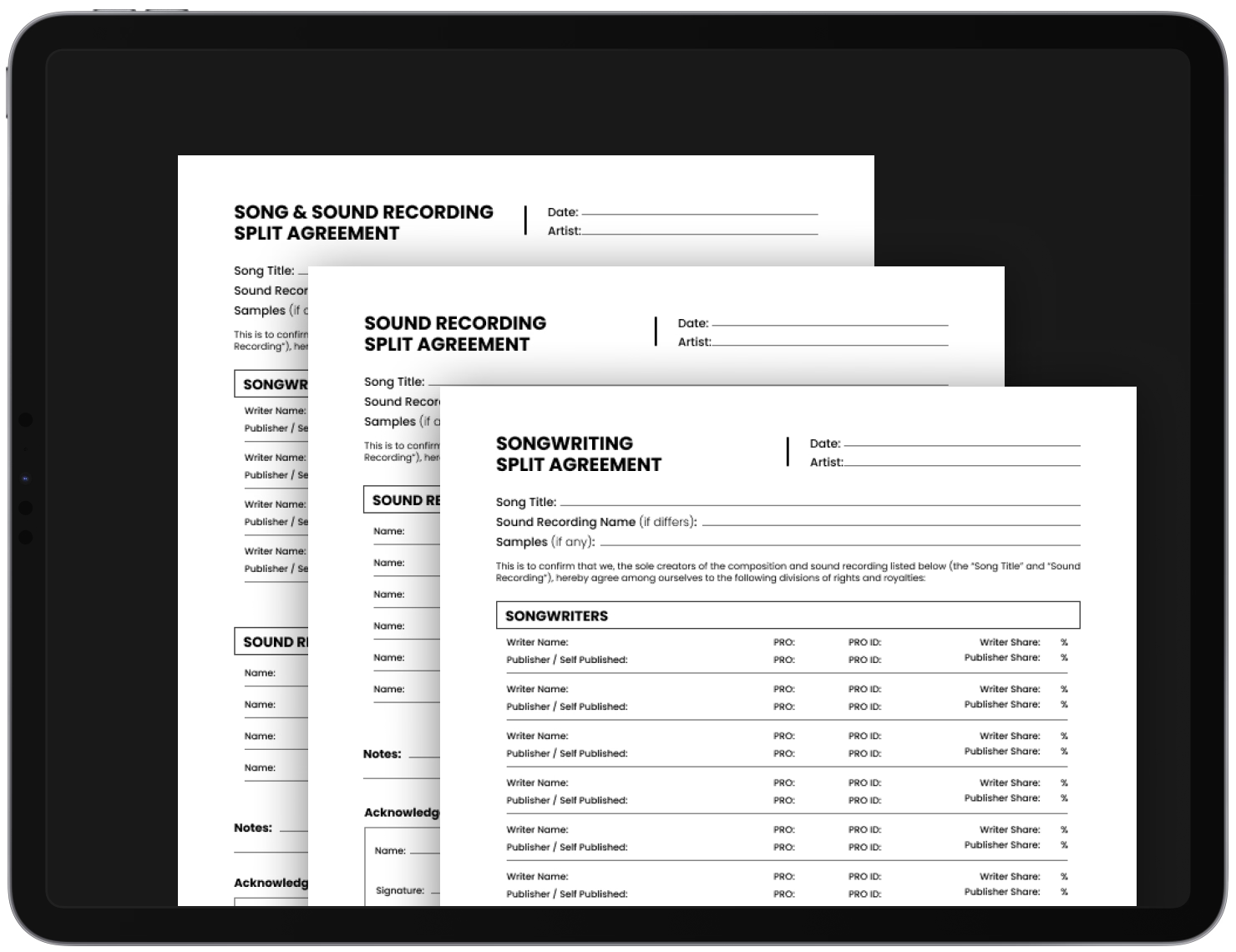
If anyone else contributed to a song, decide the percentages before it’s released, and write them down. A signed split sheet is what your PRO and distributor will ask for if there’s ever a dispute, and it stops a friendly disagreement becoming an ugly one two years later when the song is on a TV show.
Two separate splits, because there are two copyrights: who wrote the composition, and who owns the recording. A producer might have 20% of the recording and none of the song, or a piece of both. A topline writer might have half the song and none of the master. There are free split sheet templates for exactly this, covering songwriting, sound recording, and both together.
Do you need a publishing administrator?
You can register everything yourself, and for a small catalogue in one country that’s fine. Where it gets hard is international collection: your PRO collects abroad through reciprocals, but slowly and with lower matching rates, and mechanicals in some territories don’t flow back at all unless someone claims them locally.
Publishing administrators (Songtrust, Sentric, the publishing tiers of some distributors, and others) register your songs with societies worldwide and chase what’s owed, in exchange for a share of publishing income. As of 2026 that share is typically around 15 to 20 percent, sometimes with a setup fee. Read the term and the termination clause.
A rough rule: if you have meaningful streams outside your home country, or a song in sync, an administrator usually earns its fee. If you have a few thousand streams a month at home, it usually doesn’t yet.
You give up no ownership with an admin deal. A publishing deal, where a publisher takes a share of the copyright itself in exchange for an advance and active pitching, is a different decision and a much bigger one.
When the money arrives
The gaps between a play and a payment are long enough that most artists never connect the two. Roughly, as of 2026:
| Source | Frequency | Lag from the play |
|---|---|---|
| Distributor streaming revenue | Monthly | 2 to 3 months |
| PRO performance royalties | Quarterly | 6 to 12 months |
| Mechanicals (MLC, AMCOS, MCPS) | Quarterly or monthly | 3 to 9 months |
| Neighbouring rights | Quarterly or twice yearly | 6 to 18 months |
| International via reciprocals | With your PRO’s statements | 12 to 18 months |
| Sync fees | On signature or use | Whatever the contract says |
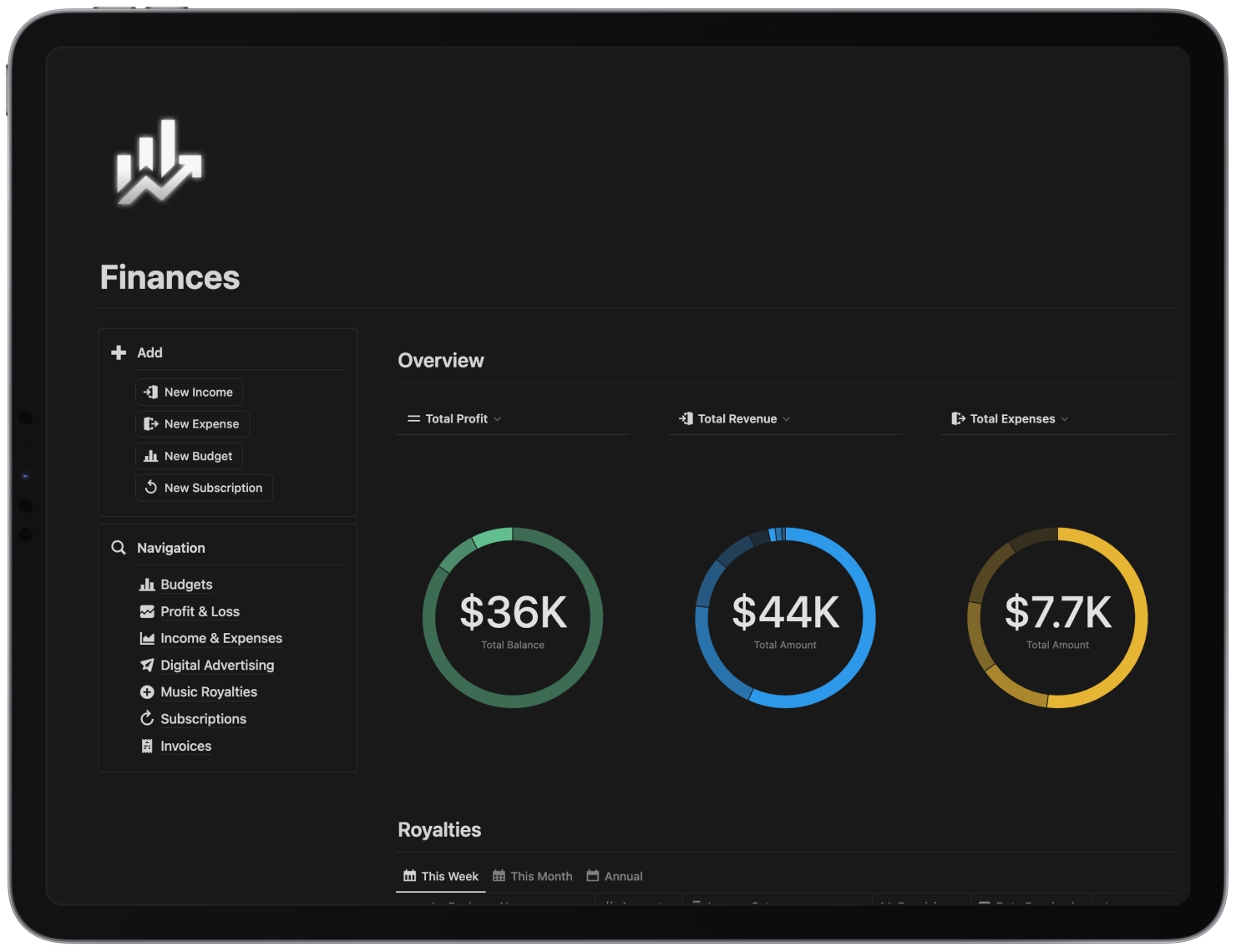
Two habits make this manageable. First, keep one running record of what was released when and what happened to it: which songs went on radio, which tour you played, which month the stream count jumped. Second, when a statement lands, check it against that record for the period it covers, not for last month. A big March means a PRO statement in the following year should show it. If it doesn’t, that’s a claim.
Finding the money that went missing
Money goes astray in predictable ways. Work through these before assuming you’ve been underpaid:
- You never registered. The most common cause by a long way. Every song, at your PRO, with all the writers and correct splits. Check by searching the society’s public works database for your titles.
- The metadata doesn’t match. Compare the writer names and titles on your distributor to those at your PRO. Fix whichever is wrong and ask the society to re-match.
- Live sets weren’t reported. Submit setlists for past shows. Most societies accept claims going back a year or more; ask.
- A cue sheet was never filed. If your song was on TV or in a film and no performance royalties followed, ask the production company for the cue sheet and send it to your PRO.
- The publisher share is sitting unclaimed. Ask your PRO whether they’re holding a publisher share for your works, and how to claim it as a self-published writer.
- Unmatched mechanicals. In the US, search The MLC’s public database for your songs. Unmatched royalties are held for a period before they’re distributed by market share to everyone else, so the clock is running.
- Neighbouring rights were never claimed. Registering with PPCA, PPL or SoundExchange is separate from your PRO. Many artists with radio play have never done it.
Keep a note of every claim you lodge, the date, and who you spoke to. Societies are slow but generally honest, and a paper trail gets things resolved.
A catalogue you can actually manage
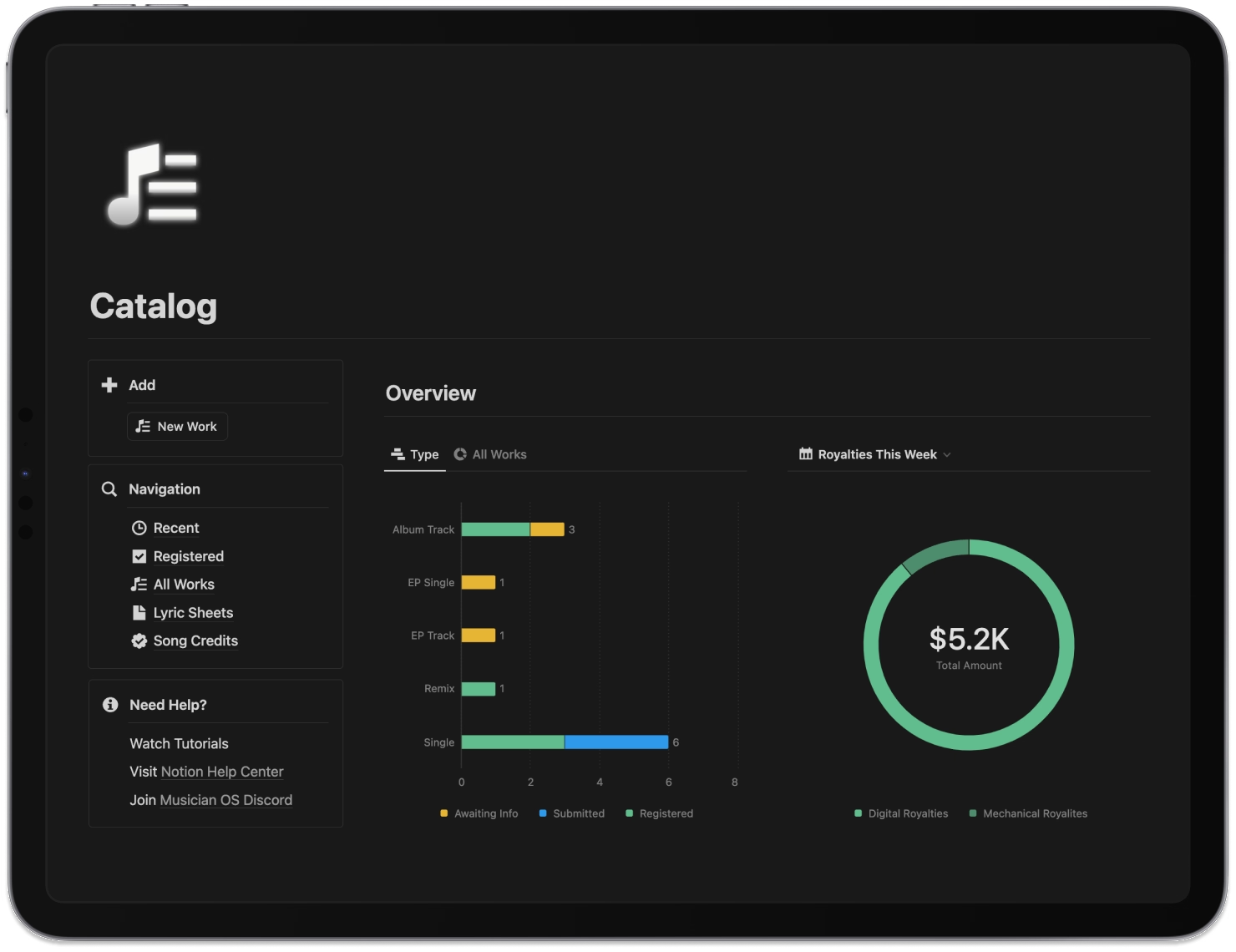
None of this works if the information lives in your head, your inbox and three spreadsheets. The minimum is one record per song holding the title, writers and splits, ISRC and ISWC, release date, distributor, registration status at each society, and a note of where it’s been placed or played.
Build it once, add each new song as it’s released, and the annual royalty check-up becomes an hour rather than a weekend. The Catalog template in Musician OS is built for exactly that record, with royalty positions held against each song rather than buried in statements. A spreadsheet works too, as long as it’s the only one.
Where to start this week
- List every song you’ve released and every co-writer. Confirm the splits in writing with anyone you haven’t.
- Join your PRO if you haven’t, and register every song. In the US, register with The MLC as well.
- Register with your neighbouring rights body, both as owner and as performer.
- Submit setlists for every show in the last twelve months.
- Pick one form of every name and title and check it matches across your distributor and your PRO.
That covers the large majority of what an independent artist is owed. The rest, international collection and sync, is worth an administrator once the catalogue earns enough to justify one.
Frequently asked questions
What are the main types of music royalties?
A song earns money through two separate copyrights. The composition (the written song) earns performance royalties, mechanical royalties and sync fees. The sound recording (the master) earns streaming and download revenue through your distributor, neighbouring rights when the recording is played in public or on radio, and its own sync fee. Most independent artists own both copyrights, which means they need to be registered in two different places.
Where do independent musicians register to collect royalties?
As a songwriter, join the performing rights organisation for your country (APRA AMCOS in Australia and New Zealand, PRS for Music in the UK, ASCAP, BMI or SESAC in the US) and, in the US, The MLC for streaming mechanicals. As the owner of the recording, use a distributor for streaming revenue and register with your neighbouring rights body (PPCA in Australia, PPL in the UK, SoundExchange in the US). Sync deals are negotiated directly or through a licensing agent.
How long do music royalties take to arrive?
Distributor streaming revenue usually lands two to three months after the month the streams happened. Performing rights organisations pay quarterly, and a play typically reaches your statement six to twelve months later. Money collected abroad and passed between societies can take twelve to eighteen months. If a big month never shows up on a statement roughly a year later, that is the moment to investigate.
Why are my publishing royalties lower than my streaming royalties?
Streaming platforms pay the recording owner far more than the songwriter for the same play, because the mechanical and performance rates paid for the composition are set by licensing rules and are small per stream. Publishing income catches up when a song is played on radio, in venues, on TV or in sync, where the composition earns more than the recording. Both matter, and they are collected by different organisations.