Releasing an album in one go made sense when an album was an object. On streaming, a ten-track drop is ten songs sharing one playlist pitch, one week in Release Radar and one moment of attention, after which nine of them are never heard.
The waterfall release is the most common answer to that. This guide explains what it is, why it works on streaming platforms, how to sequence it, the technical details that make or break it, and the trade-offs, because it isn’t right for every record.
What a waterfall release is
Instead of releasing an album at once, you release it as a series of growing collections. Each new single comes out as a release that also contains the tracks before it:
- Week 1: Track A, as a single
- Week 7: Tracks A and B, as a two-track release
- Week 13: Tracks A, B and C
- Week 19: the full EP or album, with every track
Because each previously released track keeps its ISRC and metadata, platforms treat it as the same recording. Its streams, saves and playlist placements carry into the new release. By the time the full record arrives, the first single might have four months of streams behind it, and the album page shows those numbers from day one.
Why it works on streaming
Every drop is a new release. Platforms respond to each release with the same machinery: a pitch window, Release Radar for your followers, and a fresh look from the algorithms. One album gets that once. A four-step waterfall gets it four times over four months.
Every track can be a lead single. Each drop has a new song at the top, with its own campaign, its own snippets, its own moment.
The catalogue reinforces itself. Someone who finds track C on a playlist lands on a release page that also holds A and B. New listeners are pushed into the older songs automatically, which a standalone single can’t do.
The attention lasts months, not a week. A four- or five-month campaign with a release every six weeks keeps you in feeds and in Release Radar the whole way, instead of one loud week and a long silence.
Sequencing the tracks
The order of the waterfall is a decision about audience, not just taste.
Lead with the most immediate song. The first single is doing the hardest job: reaching people who don’t know you. It should be the one that works fastest for a stranger, which isn’t always the one you’re proudest of.
Second, the most distinctive. Once there’s some attention, show the thing that’s only yours.
Third, the one that hits hardest. The emotional centre, for the listeners who are now paying attention.
Then the record, with the remaining tracks arriving together as the payoff.
Think of the sequence as a story told over months. Each drop should make the next one make sense.
The technical rules
This is where waterfalls go wrong, and it’s all metadata.
Reuse the ISRC. The International Standard Recording Code identifies a recording. Every previously released track on a new waterfall release must carry exactly the same ISRC it had before. That’s what tells platforms it’s the same song and rolls its streams and placements forward. A new ISRC creates a duplicate with a count of zero.
Fresh UPC per release. The UPC identifies the release as a product. Each step in the waterfall is a new product and gets its own.
Identical metadata. Title, capitalisation, apostrophes, featured artist credits, writer and producer credits. A single mismatch can create a second entry on a platform, splitting streams between them. Copy from the previous release rather than retyping.
Check your distributor. DistroKid, TuneCore, CD Baby and most others support reusing ISRCs as of 2026, but the process differs, and some charge per release, which is worth knowing across four or five of them. Ask before you plan the dates.
Spacing. Four to eight weeks between drops. Under four and the previous single hasn’t had its run; over eight and you’re rebuilding attention each time.
Marketing each drop
Every step in the waterfall is its own release and deserves its own campaign, scaled to the song.
Two to three weeks before each drop: snippets of the new track, the date, a pre-save, a pitch through Spotify for Artists at least seven days out.
Drop week: the payoff content, the list, the comments, curators.
The weeks between: connective content. The story that links the last song to the next, an acoustic version, the fan clips. The point of a waterfall is that there’s no dead air.
The Pre-Release Momentum Engine covers the per-drop campaign in detail. Run it four times, smaller each time if you need to, and keep the content bank for the whole record built before the first single.
Playlists across the waterfall
Each drop is a new pitch opportunity, which is one of the strategy’s quietest advantages. Pitch every step through the editorial forms. Approach independent curators one song at a time over the campaign rather than sending them a record; a relationship built over four emails is worth more than one cold pitch with ten tracks attached. And keep your own playlists updated so each new song sits among the older ones and the artists your listeners already follow.
The trade-offs
A waterfall isn’t free, and it isn’t right for every record.
The album day is smaller. By the time the full record lands, most of it is already out. If the album as an event matters to you, or to your press plan, a singles run into a cold album release keeps that moment intact.
Fans can feel milked. Four releases containing mostly the same songs can look like padding if the drops aren’t meaningful. Each step needs a genuinely new song at the top and something worth saying about it.
Platforms display it differently. Some show every step as a separate release on your profile, which can look cluttered. Some distributors let you retire earlier steps; others don’t. Look at how a waterfall from an artist you admire appears on your platforms before you commit.
It’s four campaigns, not one. Cheaper than four separate singles, but more sustained work than a single drop, and the metadata discipline has to hold across all of it.
For most independent artists releasing an EP or a first album on streaming, the trade is worth it. For a record with a strong concept and a press angle around the whole thing, it may not be.
Running it without losing track
A waterfall is a set of releases sharing tracks, codes and dates, over months. It needs one place where all of that lives: which ISRC belongs to which track, which UPC to which step, what’s been pitched where, and what’s due when.
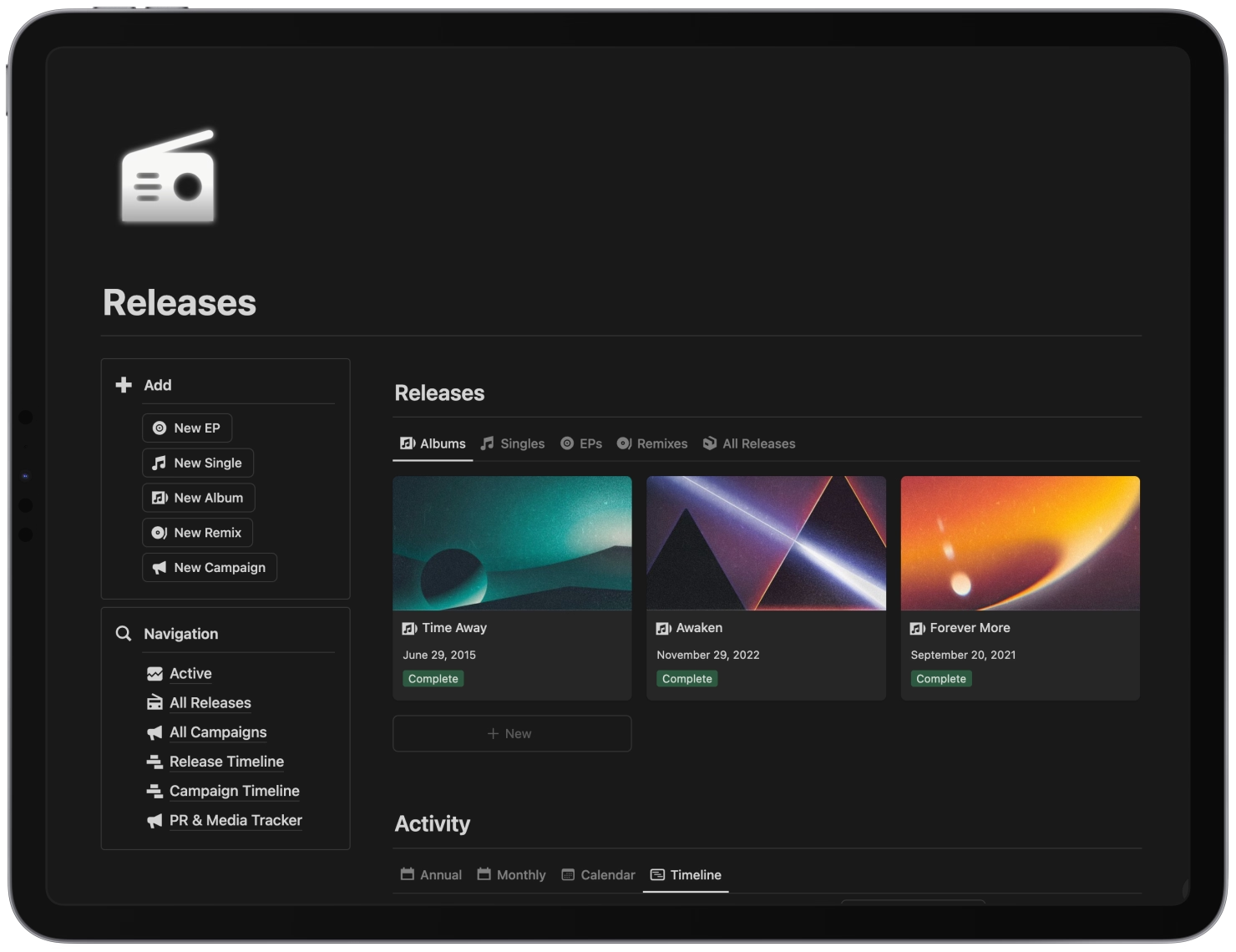
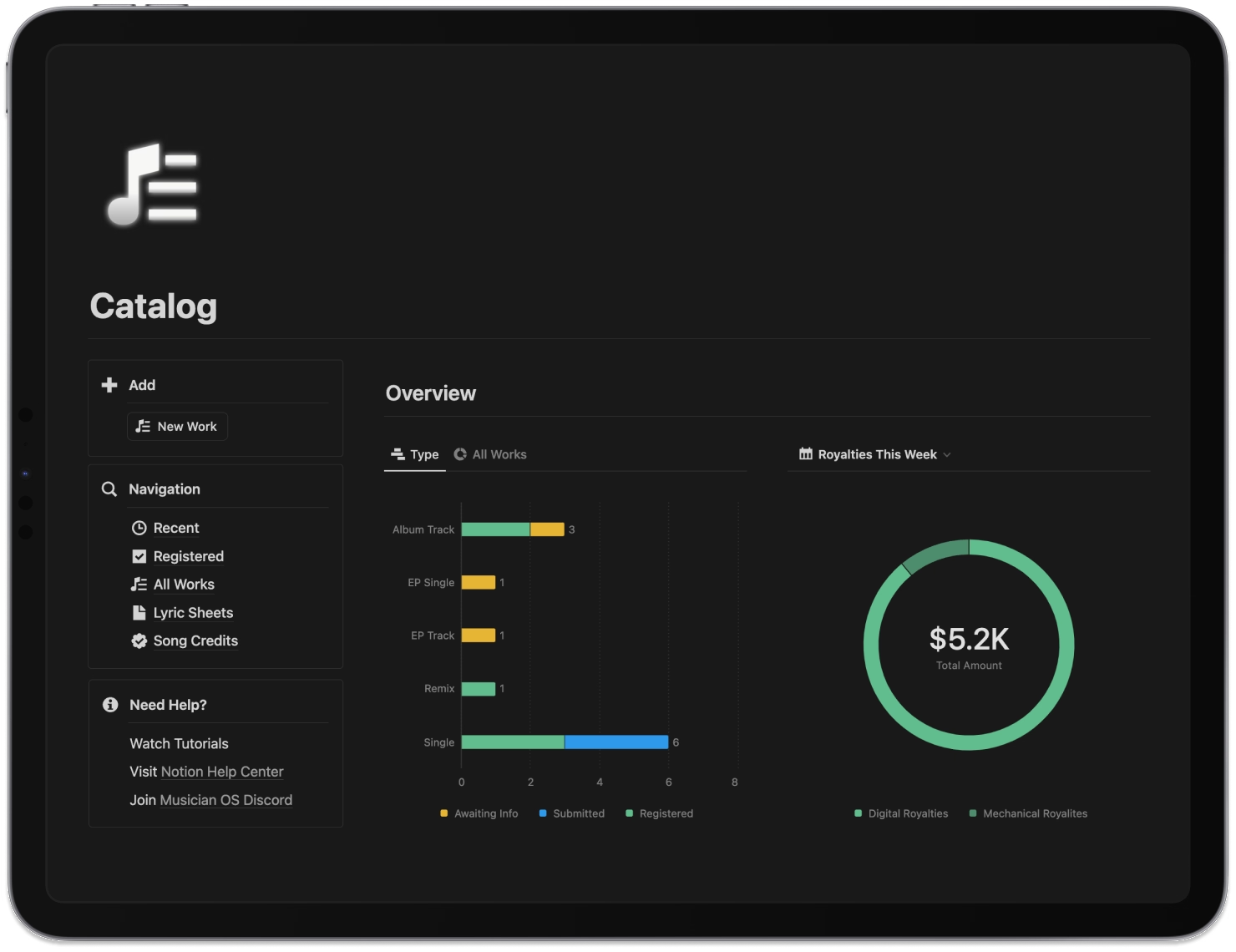
The Releases template in Musician OS handles each step as its own release on a shared timeline, with the task automations per phase, and the Catalog template holds the codes and credits so each step copies from the last instead of retyping. A spreadsheet with a row per track and a column per release does the same job if it’s kept honest.
Then the only question left is the one that matters: which track leads, and what story the next four months tell.
Frequently asked questions
What is a waterfall release strategy?
A way of releasing an EP or album where each new single is released as a growing collection that includes the previous tracks. Track A comes out alone; six weeks later a two-track release contains A and B; then A, B and C; and finally the full record. Because each track keeps the same ISRC across every release, its streams and playlist placements carry forward, and the final album arrives with a stream count already behind it.
Why do artists use waterfall releases?
Because streaming platforms respond to each new release with a fresh round of Release Radar, editorial pitching and algorithmic attention. A waterfall turns one album into four or five of those moments spread across months, gives every track a chance to be a lead single, and sends every listener of the newest song straight into the older ones on the same release page.
Do I need the same ISRC for a waterfall release?
Yes. The ISRC is what tells platforms that the track on the new release is the same recording as the one already out. Reuse the exact ISRC and identical metadata for every previously released track, and their streams, saves and playlist placements roll into the new release. A new ISRC creates a duplicate with a count of zero.
Which distributors support waterfall releases?
Most major distributors do as of 2026, including DistroKid, TuneCore, CD Baby and others, but each handles reused ISRCs differently and some charge per release, which adds up across a waterfall. Check your distributor's process for reusing an ISRC before you plan the sequence, and give each release a fresh UPC.