Streaming turned releases from events into a rhythm. An album every three years worked when a record was a physical object in a shop. Now, an artist who disappears for eighteen months is starting again with the algorithms and with most of their listeners.
That doesn’t mean more is better. It means the gap matters. This guide gives a cadence that works for most independent artists, a plan for the month after each release, and a way of laying out the year so the calendar serves the music instead of eating it.
A cadence that holds
| Release | Gap | Why |
|---|---|---|
| Singles | Every 6 to 8 weeks | Long enough to run a full campaign for each, short enough that listeners and platforms don’t forget you |
| EPs | Every 6 to 8 months | A destination for a run of singles, and a reason for press and playlists to look again |
| Albums | Every 12 to 18 months | If albums are part of your plan. Most independent albums do best as the end of a singles run, not a cold drop |
| Content between releases | Weekly or fortnightly | Videos, alternate versions, remixes, the story behind the last song |
Genre bends this. Electronic and dance producers often release faster because tracks are quicker to finish. Bands and singer-songwriters usually go slower because they aren’t. Pick the version of this table you can keep for a year, then keep it. Consistency beats intensity: four singles eight weeks apart do more than four singles in a month followed by silence.
Each release is one campaign, not one day
A release calendar isn’t a list of Fridays. Each date on it is the middle of a campaign that starts six weeks before and runs a month after.
Before
Snippets in a sequence, a playlist pitch at least a week out, a pre-save once people have heard something, press and curators approached with a private link. The Pre-Release Momentum Engine is the week-by-week version.
The 30 days after
Platforms don’t judge a song in its first day. They watch whether it keeps getting saves and repeat listens over weeks. Give them something to watch:
- Week 1: the full push. Release content, the day in the comments, curator outreach, the email to the list.
- Week 2: an alternate version. Acoustic, live, a lyric video, the demo.
- Week 3: the song inside other content. A studio breakdown, the story of one lyric, fan clips reposted.
- Week 4: a remix, a collaboration, or something the audience does: a cover challenge, a stem drop, a vote on the next single.
Four weeks, four reasons to press play again. Then the next single’s first snippet goes out, and the calendar rolls on.
Working in seasons
A calendar of releases every six weeks forever is a treadmill. The artists who last don’t run it flat; they run it in seasons, and they put the seasons on the calendar.
- Writing season. Few or no releases. Content is process, not promotion.
- Release season. The singles run and the record. Content is the campaign.
- Live season. Tour or a run of shows, ideally timed after the record so there’s something to play and someone to play it to.
- Quiet season. Deliberate, dated, and told to your audience as a plan rather than an absence.
Three things make the seasons sustainable. Batch the content in the writing season so the release season is posting, not producing. Outsource the piece you can’t sustain, whether that’s artwork, video editing or pitching; doing all of it yourself is how the calendar collapses. Schedule the break before you need it. A gap you announced is a season. A gap you fell into is a stall.
Laying out the year
Start with the anchor: the album, the EP, the tour. Put that date down. Work backwards from it to the singles that lead in, six to eight weeks apart. Then work backwards from each single to its own deadlines: master delivered six weeks out, artwork and content bank five weeks out, pitch and pre-save three weeks out.
Now look at what you’ve got. If the master for single two is due the same week single one comes out, the calendar is too tight, and it’s better to know that in January than in the week it happens. Move dates until the deadlines don’t stack, then add the seasons around them.
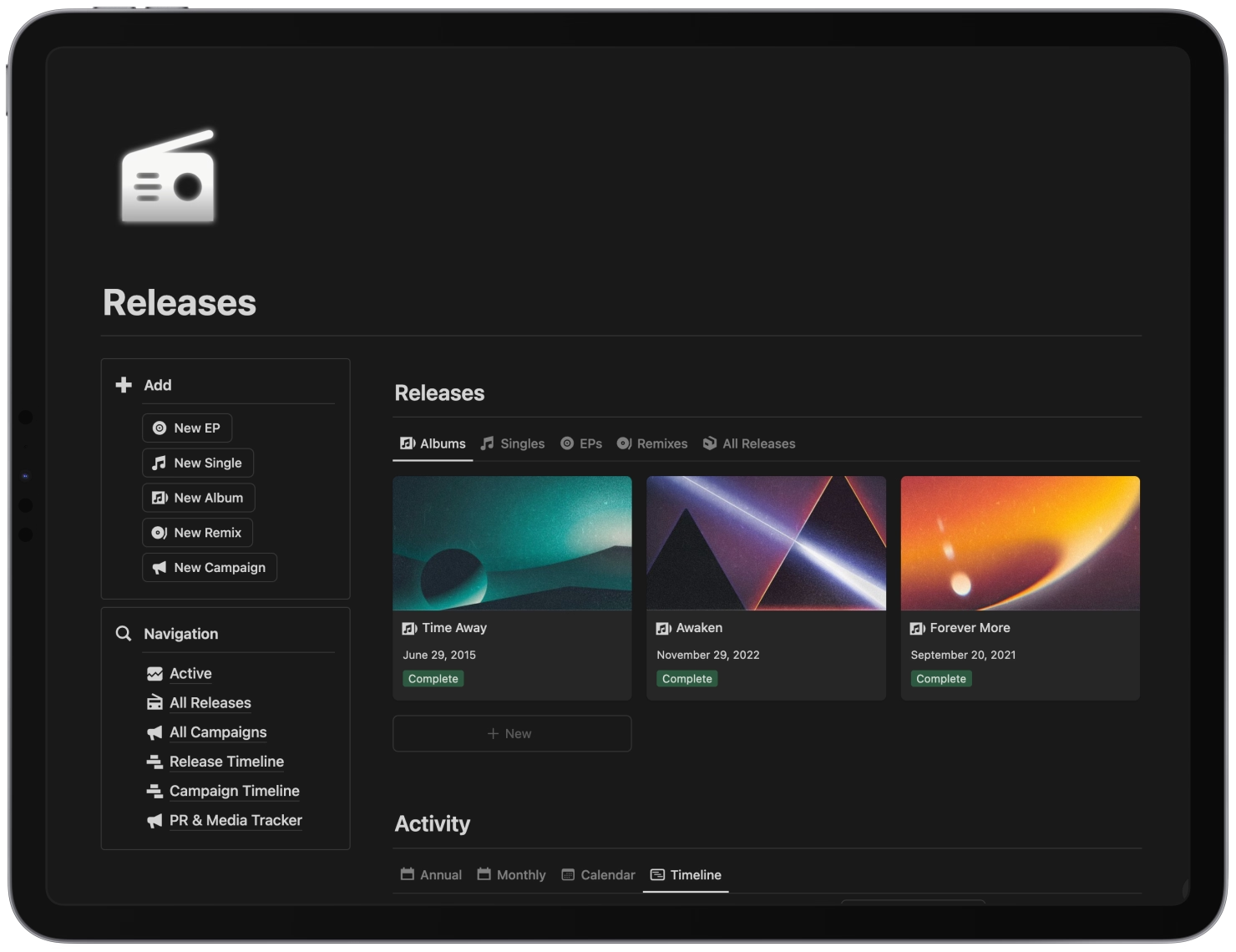
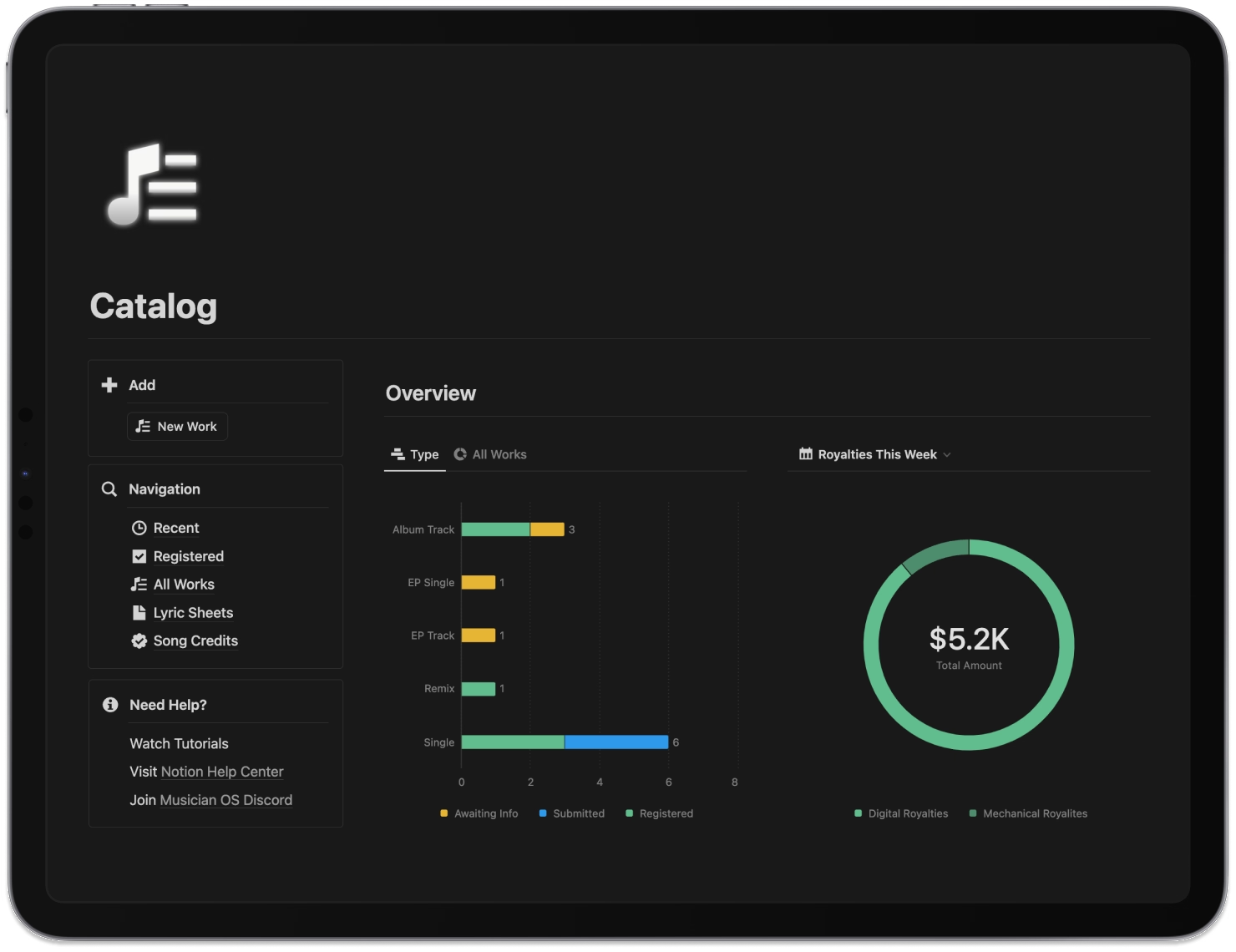
The result is twelve months you can see at once, with every release date, every deadline behind it, and the gaps on purpose. The Releases template in Musician OS holds exactly this: each release as a timeline against its date, the deadlines as tasks, and the whole year in one view. The Catalog template keeps the record of what’s already out, which is what the next year’s calendar starts from. A wall calendar and a spreadsheet work too. The point is that you can see the year.
Timing isn’t everything in music. But an artist who can see their next twelve months is one who releases on purpose, and that’s most of what a sustainable career is.
Frequently asked questions
How often should an independent artist release music?
A single every six to eight weeks is a rhythm most independent artists can sustain, with an EP every six to eight months and an album every twelve to eighteen if albums are part of your plan. Electronic producers often release faster; bands and singer-songwriters often slower. The exact number matters less than keeping the gap consistent, because platforms and listeners both respond to an artist who keeps showing up.
Should I release singles or an album?
Singles, for most independent artists, with the album as the destination they lead to. Each single gets its own campaign, playlist pitch and Release Radar moment, where an album released cold gets one. A run of three or four singles into an album, or a waterfall release where each drop includes the previous tracks, gives every song a chance.
What is a release calendar?
A dated plan of everything you'll put out over the next six to twelve months: singles, EPs, albums, and the videos, alternate versions and content between them. It works backwards from each release date to the deadlines behind it, so the master, the artwork, the pitch and the content bank are all due before they're needed rather than the week of the release.
How do I keep a release schedule without burning out?
Batch the content in advance, outsource what you can't sustain, and plan breaks into the calendar rather than taking them by collapse. Work in seasons: a writing season, a release season, a touring season, and a quiet one. A calendar with a deliberate gap in it is sustainable. One without a gap is a countdown.