Anyone can put a song on every streaming platform in an afternoon. That’s the good news, and it’s also why distribution looks like a technical step to tick off. It isn’t. How a song is delivered, tagged, timed and followed up decides whether it reaches fifty people or fifty thousand, and it decides whether you own any of the relationship with them afterwards.
This guide covers distribution as a system: what a distributor does and doesn’t do, how to choose one, the metadata and timing rules, the channels you should own beside streaming, the numbers worth watching, and how to make each release teach the next. It’s how we’ve approached releases with TORA, and it’s written for an artist doing this without a label.
What a distributor does, and doesn’t
A digital distributor delivers your audio, artwork and metadata to streaming and download platforms, collects the money those platforms pay for the recording, and passes it on. Most also assign ISRC and UPC codes, provide pre-save links, deliver audio to TikTok and Instagram, and offer add-ons like YouTube Content ID and lyrics delivery.
What a distributor doesn’t do: promote the song, register it with your performing rights organisation or neighbouring rights body, build your audience, or collect publishing income. Some sell those as extra services; none of them happen by default. A distribution plan has to include the parts the distributor leaves out, and the royalties guide covers the collection side.
The three ways distribution fails
Nobody hears the song. Luminate’s reports have put new tracks arriving on streaming services at over 100,000 a day since 2023. Quality doesn’t rise on its own through that. A song delivered with no plan around it is a song delivered to a warehouse.
The audience lives on a platform you don’t control. A career built entirely on one platform’s algorithm is one policy change from a bad year. It happens to artists regularly and it’s rarely their fault. The defence is owning some of the relationship, not hoping.
Everything goes through one channel. Streaming pays the recording owner fractions of a cent per play; figures commonly cited in 2026 sit around a third to half a cent on Spotify, varying by country and listener type, before the distributor’s cut. On its own, that rarely supports anyone. Artists who last spread income across streaming, direct sales, physical, sync, live and merch, and distribution is where that spread starts.
Choosing a distributor
The pricing models, as of 2026:
| Model | How it charges | Suits |
|---|---|---|
| Subscription | A yearly fee for unlimited releases, keep all the revenue | Artists releasing several times a year |
| Per release | A fee per single or album, sometimes plus a small percentage | Artists releasing rarely |
| Revenue share | Free or cheap to upload, a percentage of earnings | Artists who want bundled services and low upfront cost |
| Selective or label-style | Application only, a percentage, with marketing and support | Artists with traction who want a partner |
Beyond price, compare:
- Delivery speed and reliability. How far ahead do they need the release to guarantee it’s live everywhere on the date, and do they deliver to editorial pitching in time.
- Reused ISRCs. Essential for a waterfall release. Some make it easy, some don’t.
- Analytics. Depth varies from a monthly total to daily per-platform, per-territory data.
- What happens if you leave. Does the music stay up, and do you keep the ISRCs.
- Extras you’ll actually use. Content ID, lyrics, pre-release delivery to TikTok, cover licensing, publishing administration.
Read the terms. Then pick the one that’s cheapest under a realistic version of your next two years, not the one with the best homepage.
Metadata: the unglamorous part that decides everything
Every platform matches, recommends and pays based on the data attached to the audio. Get it right once and most problems never happen:
- Consistent names. One form of your artist name, every featured artist’s name, every title, used identically everywhere, down to the apostrophes.
- Full credits with roles. Writers, producers, performers, engineers. Platforms increasingly surface credits, and they feed royalty matching.
- Codes. The ISRC per recording, the UPC per release, your IPI from your PRO on the writer credits, and the ISWC once the work is registered.
- Genre and subgenre. Chosen from what the platforms actually use, not what you’d call it.
- Explicit flags, language, release dates correct on every track.
Inconsistent metadata is the most common reason a catalogue underperforms without anyone noticing: streams split across duplicate entries, royalties held as unmatched, songs recommended to the wrong listeners. It’s also the cheapest thing to fix.
Timing
Delivery isn’t the release date. Work backwards:
- Six weeks out: master and assets delivered to the distributor, so the release is live in the platforms’ systems and eligible for pitching.
- At least seven days out: the Spotify editorial pitch, and the Apple Music equivalent.
- Two to three weeks out: pre-save open.
- Release day: midnight local in each territory, rolling west from New Zealand.
Around that, avoid the crowded weeks, think about seasons if the song has one, and decide deliberately whether every platform gets the song on the same day. Exclusive windows, such as a Bandcamp-first release for fans, are legitimate for some genres and pointless for others.
Assets per platform
Each platform wants something different from the same song: vertical clips for TikTok and Reels, a canvas loop for Spotify, synced lyrics for Apple Music, a visualiser and Shorts for YouTube, artwork at every size, a short and a long bio. Platform-Specific Music Release Strategies has the per-platform detail. Make them all before the campaign, in one batch.
The channels you own
This is the part of distribution most guides skip, and the part that protects you.
- An email list. The only audience that survives every platform change. Every other channel should point here at some point.
- Direct sales. Bandcamp, your own site, or both. Fans who buy directly pay more per listener than any stream and tell you who they are.
- A community space. Discord, a group chat, a members’ area. Small, but it’s where superfans gather and where the next release starts.
- Physical, where it fits. Vinyl, cassette, CD. Pointless for some genres, the main income for others.
- Sync. A song licensed to a show pays a fee up front and performance royalties after, and it’s a channel most independents never open. A licensing agent or library is one email.
None of these are as easy as a streaming upload. All of them are worth more per person, and none of them can be switched off by someone else.
The month after
Distribution isn’t done when the song is live. The first month is when platforms decide what the song is:
- Week 1: daily content, curator outreach, the comments, the list, a first look at where listeners came from.
- Weeks 2 to 4: more of what worked, alternate versions, cross-pollination from the platform where the song is strongest to the ones where it isn’t, and a collaboration or two with artists whose listeners overlap yours.
Support the algorithms honestly: real saves, real playlist adds, real conversation, off-platform content that sends people to the song. Anything that fakes those signals gets songs removed.
The numbers worth watching
You don’t need a dashboard of everything. You need a handful of measures per release, in one place:
- Saves per stream. Intent, not just exposure.
- Followers gained. The audience for the next release.
- Source of streams. Your profile, editorial, algorithmic, other playlists. It tells you what worked.
- Territories. Where the song landed, which feeds touring and pitching.
- Direct sales and list growth. The owned channels, tracked beside the platforms.
- Income by channel, six months later, which is the only figure that says whether the release paid.
Spotify for Artists and Apple Music for Artists are free and essential. Chartmetric or Soundcharts add cross-platform and competitive data if you’re at the stage where that changes decisions. Your distributor’s own analytics fill the gaps.
Make each release teach the next
The compound effect in distribution is real, but it isn’t magic. It’s a review. After every release, write down what worked and what didn’t per platform, compare the numbers against what you expected, and change one or two things for next time. The third release run this way will be noticeably easier than the first; the tenth will be reliable.
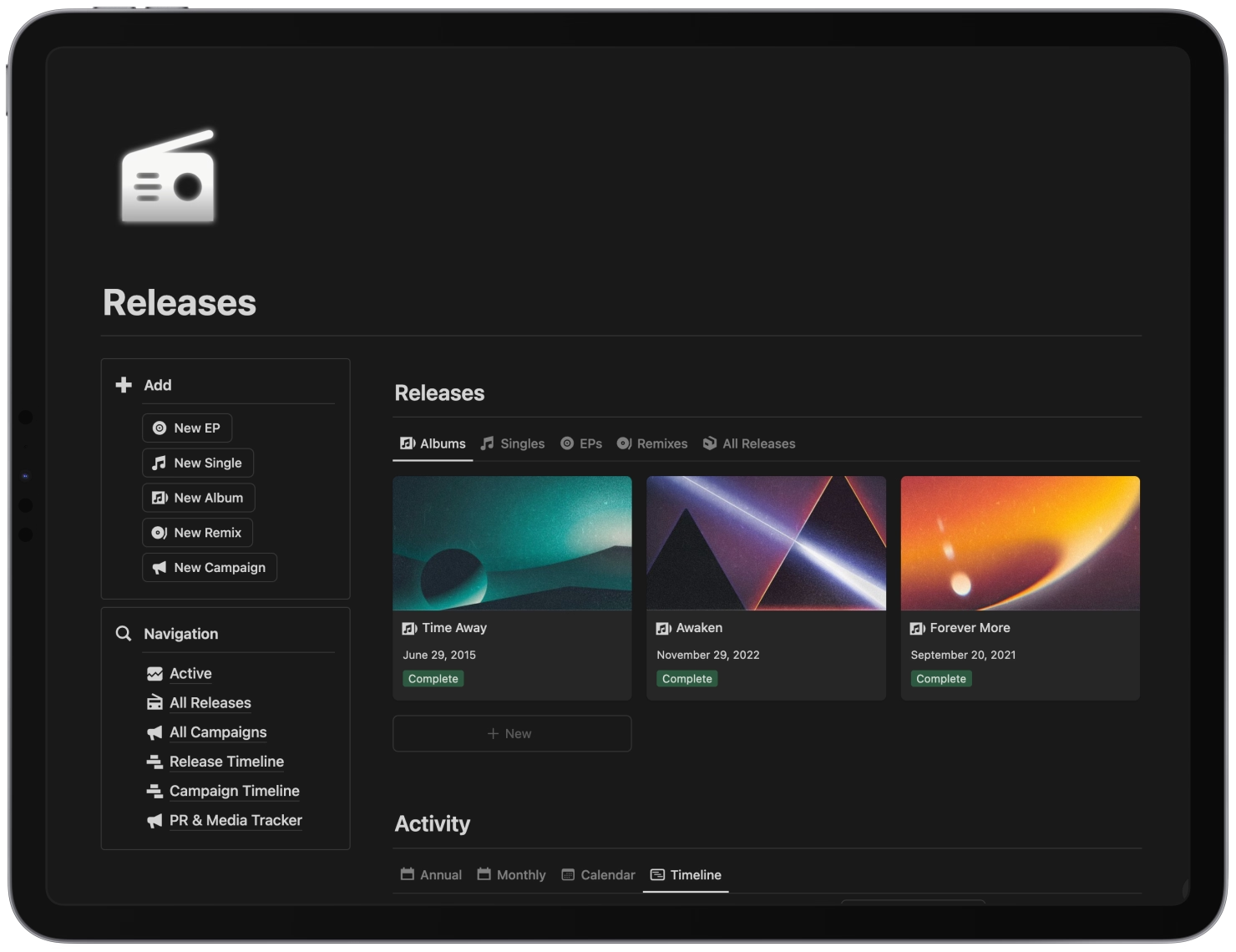
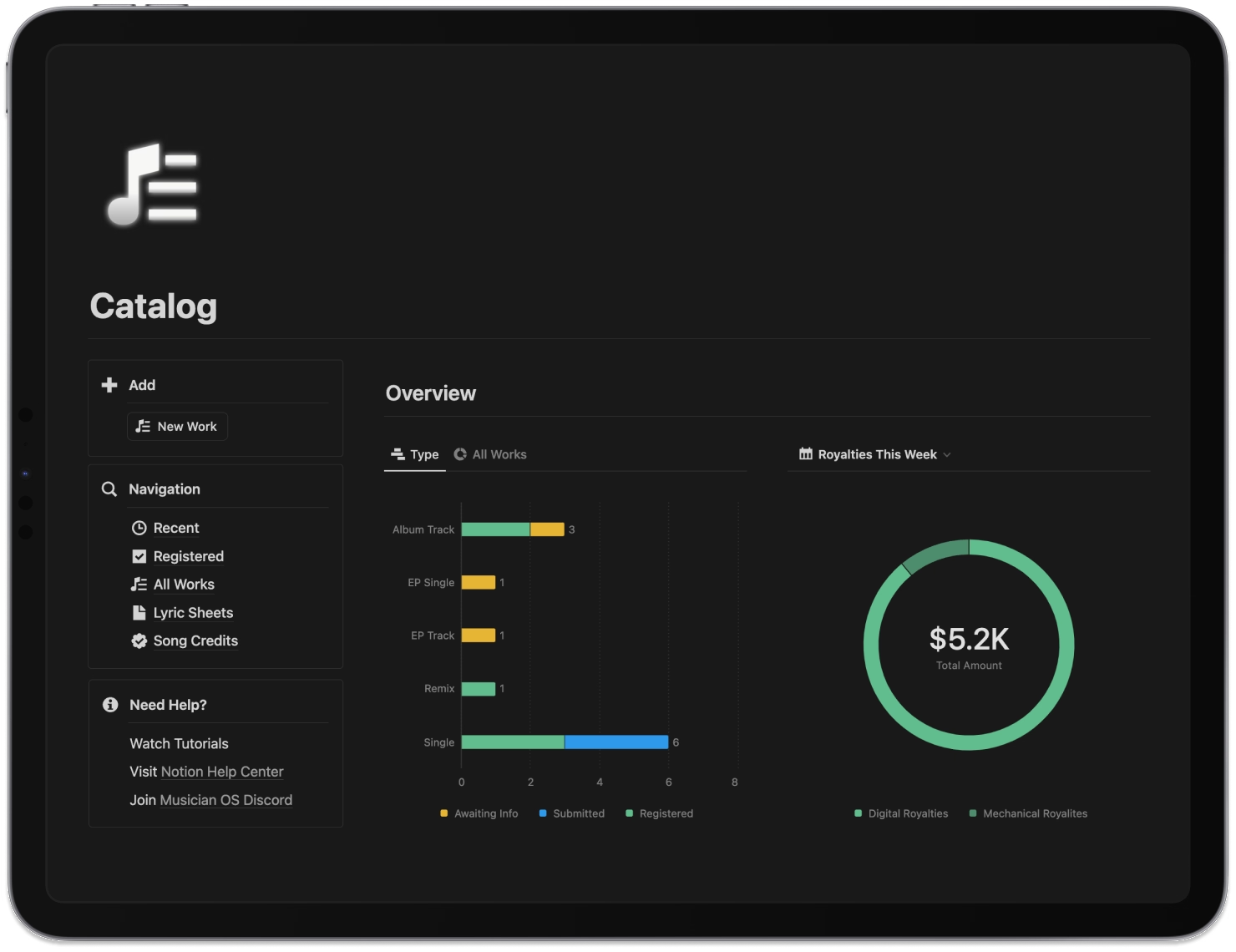
The Releases template in Musician OS holds the timeline, the per-platform checklist and the review for each release; the Catalog template holds the codes and credits so the metadata is copied, never retyped. A folder and a spreadsheet work if they’re kept. What doesn’t work is starting from a blank page every time.
The gatekeepers who used to decide whether a song was heard are mostly gone. What replaced them is a set of systems that respond to preparation. Build the preparation once, and distribution stops being the thing that happens to your music and becomes the thing you do with it.
Frequently asked questions
What is music distribution?
Distribution is how a recording gets from you to the places people listen. A digital distributor takes your audio, artwork and metadata, delivers it to streaming and download platforms, collects the revenue those platforms pay for your recording, and passes it on. It doesn't promote the song, register it with performing rights organisations, or build you an audience. Those are separate jobs that a good distribution plan includes.
Which music distributor is best for independent artists?
It depends on how much you release and what you need around the upload. As of 2026, subscription distributors suit artists releasing often, per-release fees suit artists releasing rarely, and revenue-share distributors suit artists who want services bundled in and don't mind paying a percentage. Compare fees under a realistic scenario for your output, check delivery speed and how they handle reused ISRCs, and read what happens to your music if you stop paying.
How much does Spotify pay per stream?
There's no fixed rate. Spotify pays rights holders a share of revenue based on their share of streams, which works out to fractions of a cent per stream and varies by country and whether the listener pays. Figures commonly cited in 2026 sit somewhere around a third to half a cent per stream to the recording owner, before the distributor's cut. Streaming income on its own rarely supports a career; it works as one channel among several.
How do I keep control of my audience as a musician?
Build channels no platform mediates: an email list, direct-to-fan sales through Bandcamp or your own site, and a community space like Discord. Every streaming and social platform should point people towards one of those at some point. Platforms change their rules and their algorithms; your list doesn't.