The green room is nothing like the one you imagined. The couch has a history. Dinner is a veggie tray with a grey dip. You’re three weeks in, wearing the same jeans for the fourth day, and the van smells like fast food, stale beer and the decisions that led you here.
That’s the part nobody posts. It’s also the part that decides whether a tour builds a career or ends one, because the artists who come home in one piece aren’t the most talented ones. They’re the prepared ones.
I’ve spent more than a decade on the road with TORA, from headline runs and festival circuits to support tours with RUFUS DU SOL, Bob Moses, Oh Wonder and Giant Rooks, and the lesson has been the same every time: what you pack, how you organise it and the systems you set up before leaving home decide almost everything. This guide is the packing and preparation side of touring. The Ultimate Independent Touring Guide covers routing, budgets, booking and promotion; this is what goes in the van and how it’s run.
Why first tours become last tours
Most first tours lose money and most of the losses are avoidable. They come from a gap between what artists think touring involves and what it actually involves, and the gap has predictable causes:
The fantasy focus. Weeks on the setlist and the stage outfit, nothing on inventory, daily budgeting or sleep. The applause is imagined in detail. The 2am load-out isn’t.
The DIY delusion. The idea that disorganisation is somehow more authentic, and that planning belongs to corporate acts. The opposite is true. The independent artists who last are meticulous, because nobody else is going to be.
The experience paradox. You need touring experience to tour well, and you can’t get it without touring. What veterans know, they learnt expensively. The point of a guide like this is to skip the expensive part.
The isolation effect. On the road, small problems compound fast. Forgetting spare strings at home is nothing. Forgetting them when the nearest shop is three hours away and you’re on stage tonight is a show.
The ROADMAP checklist
Seven categories, covering everything a tour needs that most artists forget. It scales: the same list applies to a van and dive bars or a bus and theatres. Only the quantities change.
- Resilience: the spares and backups for when things break
- Organisation: the systems that keep the tour running when everyone’s exhausted
- Artist care: the health kit, because you’re the one thing that can’t be replaced
- Documentation: the paperwork that solves problems before they start
- Merch: the inventory and payment systems for the tour’s main profit line
- Artisan tools: the gear that makes your show yours in any room
- Personal comforts: the small things that keep you human
Resilience
The difference between a tour-ending disaster and an annoying afternoon is redundancy:
- Backups. A nightly backup of tour documents, recordings and content. Two physical drives in two different bags, plus one person responsible for cloud uploads whenever there’s Wi-Fi.
- Emergency cash. A few hundred, split between two trusted people, separate from the operating budget. Not for drinks. For the mechanic who doesn’t take cards.
- Alternate routes. For any drive over three hours, know the alternative and a possible overnight stop in case of closures, weather or the van.
- A maintenance kit for your specific rig. Guitarists: strings, batteries, a winder, wire cutters, gaffer and electrical tape, a multi-tool, spare cables, a soldering iron if anyone can use one. Drummers: heads, sticks, gel, keys, tape. Electronic acts: spare cables for every connection, a backup of the set on a second device.
Organisation
Physical order becomes mental clarity at 2am:
- Colour code. Each person gets a colour. Their cables, adapters and cases get a strip of that tape. Load-out sorts itself.
- Laminated checklists for arrival, soundcheck and load-out. When you’re running on autopilot, the list isn’t.
- One way to pack the van. Photograph the correct configuration and put it on everyone’s phone. No more tetris at midnight.
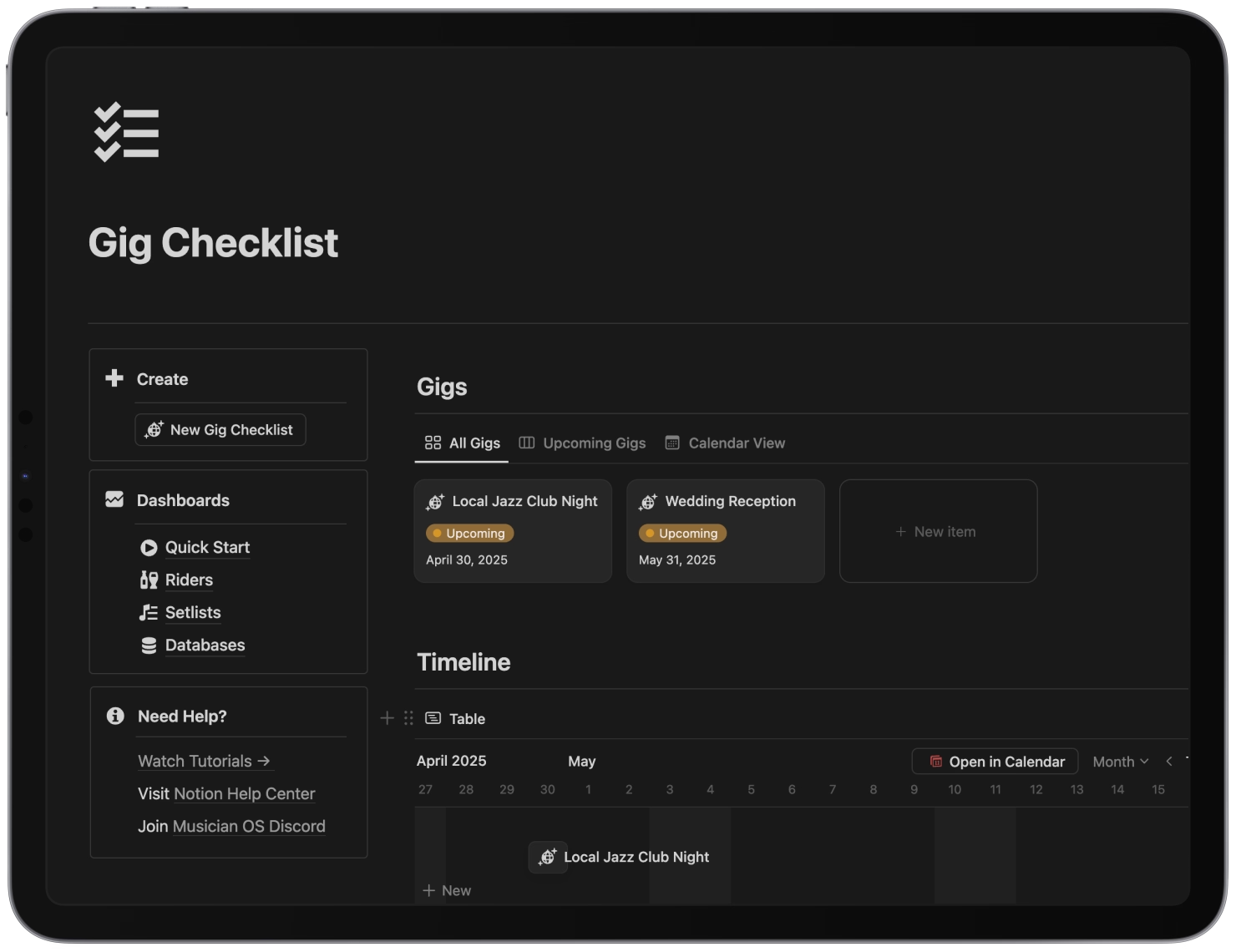
- A card per venue: load-in instructions, parking, promoter contact, nearest hospital, where to eat. Made before leaving, read on arrival. The free Gig Checklist template holds this per show, with gear status and venue details stored against the room rather than in a thread.
Artist care
Your instrument needs maintenance. You need more:
- A vocal kit, in its own bag, labelled: throat spray, tea, lozenges, a steam inhaler, whatever works for you. Packed first.
- A medication kit before symptoms arrive: pain relief, antihistamines, decongestants, something for stomachs, antacids, sleep aids, plasters, antiseptic, blister care.
- An immune routine you actually keep. Tour asks more of a body than normal life.
- Sleep tools. Good earplugs, an eye mask, and something to black out a window. Bin bags and tape work.
- A water target, marked on a bottle, because dehydration is the quiet tour-killer.
On small tours, the show that gets cancelled is almost always a lost voice or an exhausted band. Both are mostly preventable, and both are cheaper to prevent than to survive.
Documentation
The paperwork you hope never to need and can’t play without:
- Contracts and confirmations, digital and printed, with set times, payment and technical requirements highlighted.
- Insurance: vehicle, equipment, travel and health, for everyone.
- An emergency sheet: contacts for each person, allergies, medical conditions, plus your booking agent, lawyer if you have one, and key industry contacts.
- An equipment inventory with photos, serial numbers and replacement values. This is what makes an insurance claim or a police report possible after a theft.
- Medical resources per stop: urgent care and a 24-hour pharmacy, looked up before you go.
- International: passports, visas or work permits, carnets if you need them, and the tax paperwork some countries require before paying a foreign artist.
Keep it all in one shared folder everyone can open offline, plus one printed set.
Merch
For most independent tours, merch is the profit:
- Count in and count out, every night, in a shared sheet that keeps running totals. This is the whole system; everything else is detail.
- Consistent signage, made before the tour, with bundle prices to lift the average sale.
- Two ways to pay. Card readers die. Have a second device and a second person who can process.
- A standard display, photographed, so the table looks the same in every room.
- Weather protection for outdoor shows and rooms that leak.
- A banking routine. Cash counted, stored safely, banked when possible, documented for tax.
The Merchandise template in Musician OS is built to be worked from the table on a phone, with stock levels, low-stock alerts and sales logs feeding reports. A spreadsheet does it if the counting habit holds.
Artisan tools
The things that make the show yours regardless of the venue’s PA:
- A small stage kit. Portable lighting, a backdrop, one or two visual elements that travel and make every room look like your show.
- Signature sound elements. The mic, the DI, the pedal that defines your sound. Bring it even if venues have one.
- Content tools. A camera or a phone with a stand, a small mic, a tripod, and a per-show capture checklist so tour content happens without anyone thinking about it.
- A backup rig for anything electronic that the show can’t run without. A laptop that can replace the main system in five minutes.
- Fan connection materials. An instant camera, picks or sticks to hand out, a sign-up sheet for the list.
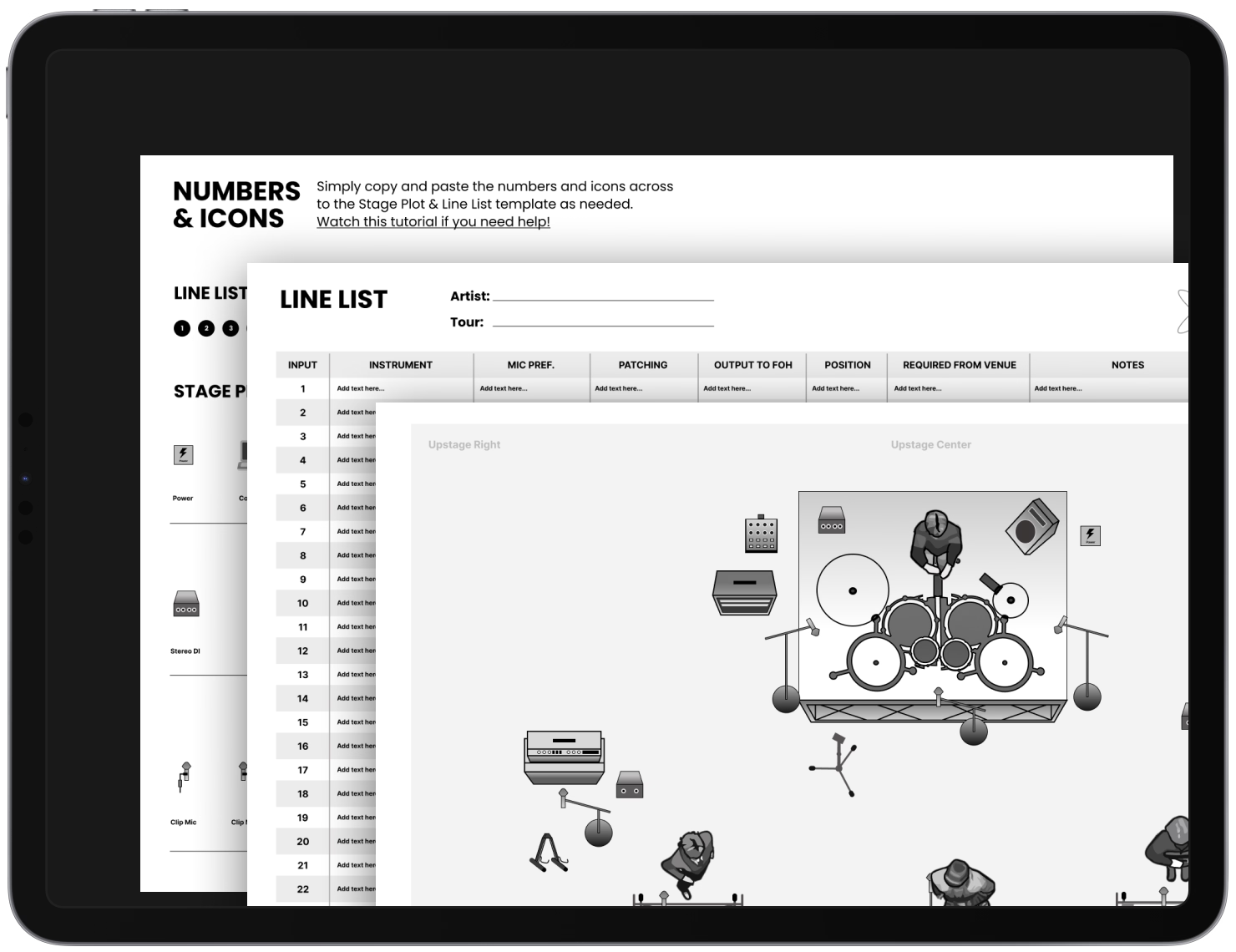
Send venues a technical rider an engineer can read in thirty seconds: an input list and a stage plot, drawn, not described.
Personal comforts
The small things that keep you a person:
- Something from home. A photo, a scent, an object. Anonymous hotel rooms are easier with one thing in them that’s yours.
- Privacy tools. Good headphones, a book, a blanket that marks your corner of a shared space.
- Off-duty clothes, separate from stage wear. Slides you can put on and feel finished for the day.
- A hobby that isn’t music. Sketching, a game, a puzzle. Something that gives the brain somewhere else to go.
- A tour journal. For processing the road, and for the content it turns into later.
Roles, so it all actually happens
A list nobody owns is a list nobody does. Before the tour, assign each ROADMAP category to a person: someone owns backups, someone owns merch counts, someone owns the medical kit, someone owns documents. Small teams can double up. What matters is that when something goes wrong, everyone knows who has the thing.
Before the next tour
- Audit your last tour against the seven categories and find where you were exposed.
- Build the checklists and the shared folder before dates exist.
- Assign the roles.
- Write down the pre-tour, on-tour and post-tour routines so the next run starts from this one.
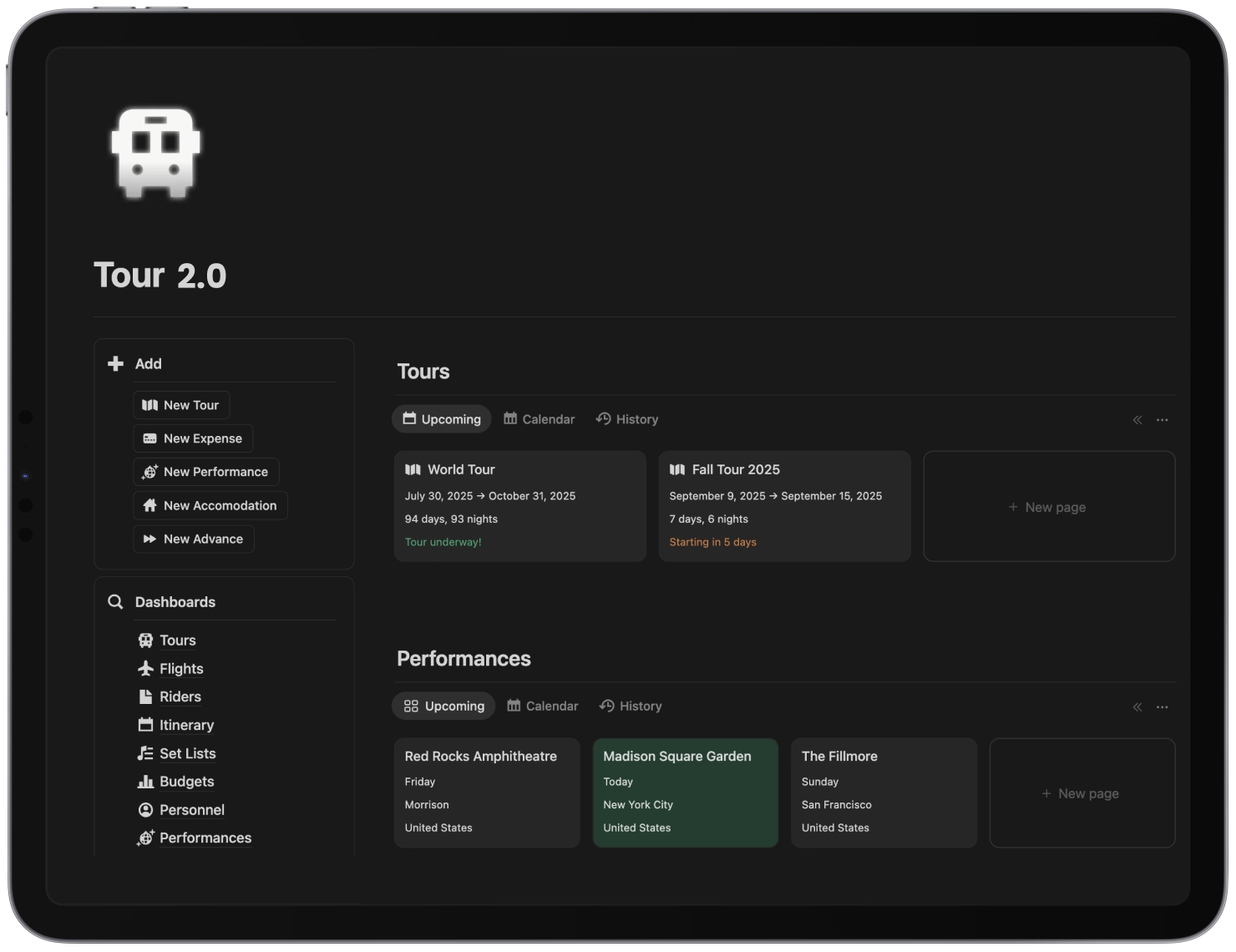
- Set up the tools you’ll use every day: the per-show checklist, the merch count, the budget. The Tour 2.0 template holds the dates, riders, gear cases, crew payments and budget together, and it’s what we use; a well-kept folder and spreadsheet do the same job if the habits hold.
Touring is the most demanding and the most rewarding part of a music career at once. It’s where real fans are made and where you find out who you are as an act. Those things only happen if the infrastructure underneath them holds. Pack for the tour you’ll actually have, not the one on Instagram, and the road becomes what it’s supposed to be.
Frequently asked questions
What should a musician pack for a tour?
Beyond instruments and stage clothes: spares for everything that can break (strings, cables, batteries, heads, a multi-tool), a health kit built around sleep and voice, printed and digital copies of every contract and insurance document, an equipment inventory with serial numbers, merch with a counting system and two ways to take payment, and a few small things from home. Most first-tour disasters come from what wasn't packed, not what was.
How do you stay healthy on tour?
Protect sleep and the voice before anything else. Earplugs, an eye mask and something to black out a window make any room sleepable. Carry a vocal kit and a basic medication kit before symptoms start. Fix a daily water target and a real meal before the show, not after midnight. Most cancelled shows on small tours are a lost voice or exhaustion, and both are mostly preventable.
How do bands keep track of merch on tour?
Count every item in before doors and out after the show, every night, and log the numbers somewhere shared. Use two payment methods so a dead card reader doesn't end sales, keep price signs consistent, and bank cash as you go. Merch is usually the margin on an independent tour, and untracked merch is where that margin disappears.
What documents do I need on tour?
Every venue contract or confirmation with set times, payment and technical requirements highlighted; proof of vehicle, equipment and travel insurance; an emergency contact sheet for everyone in the party including medical notes; an equipment inventory with serial numbers and photos; and, for international runs, passports, visas or work permits and any tax paperwork. Keep it all in a shared folder and one printed copy.