Musicians are asked to be four people: the artist, the performer, the marketer, the small-business owner. The usual result is that the artist gets whatever hours are left after the other three, which is none.
Time blocking fixes the order. You put the creative block on the calendar first, in the hours you’re actually good, and fit everything else around it. This guide is the mechanics: how to find those hours, where the other kinds of work go, and how to run a session so the block produces something. A Guide to Peak Creative Performance covers the energy mapping this depends on; Building Sustainable Creative Habits covers the daily minimums. This is the calendar.
The myth of the chaotic artist
There’s a persistent idea that structure and creativity are enemies, and that scheduling a writing session will kill whatever was going to happen in it. It’s led a lot of talented people to resist any order at all and to write less than they could have.
The opposite is closer to true. Structure doesn’t constrain creativity. It creates the space where creativity can happen, by guaranteeing the space exists. A blocked morning is a morning nobody can take from you.
Your rhythm
Attention doesn’t run flat across a day. It rises and falls in cycles of roughly ninety minutes, with a peak of focus and then a dip that needs recovery. Everyone’s cycles sit at different times, which is why copying someone else’s routine mostly fails.
Work with the cycles rather than through them. That means two things: find the hours when your peaks are highest, and shape sessions around the ninety-minute rhythm instead of grinding across it.
The four blocks
1. Golden hours
Everyone has a window when creative work is easiest: melodies arrive, lyrics write themselves, the arrangement makes sense. For some it’s dawn. For some it’s midnight. It’s rarely where you assume, so track it for a week before you decide.
Once you know, those hours are protected. They need:
- Every distraction removed, phone in another room
- The same environment, so starting is automatic
- Tools ready before the block begins
- A clear intention: what this session is for
Nothing else goes in the golden hours. Not the booker, not the post, not the “quick” email. This is the block the rest of the calendar exists to protect.
2. Administrative rhythm
The business side of a music career is real work, and it goes badly when it’s done in scraps between creative moments. Give it blocks, and split it in two:
High-focus admin: budgets and finances, contracts, strategy, marketing plans. These need a good hour, just not a creative one. If you write at night, mid-morning might be perfect for this.
Low-focus admin: email, posting, filing, routine correspondence. These go in the dips, with a timer, so they don’t expand.
Matching admin to energy is most of the trick. The wrong task in the wrong hour costs twice: the task goes badly and the good hour is gone.
3. Connection cycles
Music is communal, and the relationships that carry a career need time on purpose rather than time left over:
- Real replies and conversation with fans
- Collaboration sessions with other artists
- Industry relationships, kept warm
- Community: the group, the scene, the people who show up
Block it, and approach it with the same intention as the creative work. A scheduled hour of genuine replies is worth more than a day of scrolling that felt like engagement.
4. Learning loops
The industry and the tools change constantly, and artists who stop learning stagnate creatively or technically. A regular slot for:
- Studying a production technique
- Pulling apart a record you love
- A new instrument, a new skill
- Keeping up with how the platforms work now
An hour a week, protected like the others, compounds into a very different musician in two years.
The 90-minute rule
Inside the blocks, work in cycles. A default session:
- Ninety minutes, focused. A clear goal, tools ready, no interruptions.
- Fifteen minutes off, properly. Move, drink water, go outside. No screens.
- A second ninety, either more creative work or a switch to admin, depending on where the energy is.
Two good cycles is a very productive day. Four is rare and usually means the last one was worse than it felt. If you’re deep in something when the timer goes, keep going: the rule serves the work, not the other way round. But if you’re grinding, stop. The block after the break is better than the one you’d have forced.
Buffers
The most common objection to blocking is that inspiration doesn’t keep to a timetable. It doesn’t, and the fix is buffers: unscheduled time around the creative block that can absorb the overflow when a session is going well, or take the hit when it isn’t. A calendar with no slack is a calendar you’ll abandon the first week something runs over.
A template, not a timetable
Blocking works for musicians only if it’s a shape you can move rather than a fixed grid. Decide what a good day contains (a golden block, an admin block, a connection window, a learning slot) and then place them wherever the week allows. On a tour day the golden block might be an hour of writing in the van and the admin block a settlement sheet after the show. On a studio week the golden block is most of the day. The shape holds. The times don’t have to.
Starting
- Track your energy for a week and find the golden hours.
- Block them, and tell the people who need to know.
- Place admin in the dips, split by focus.
- Add connection and learning once the first two hold.
- Protect the creative block fiercely. Everything else can move.
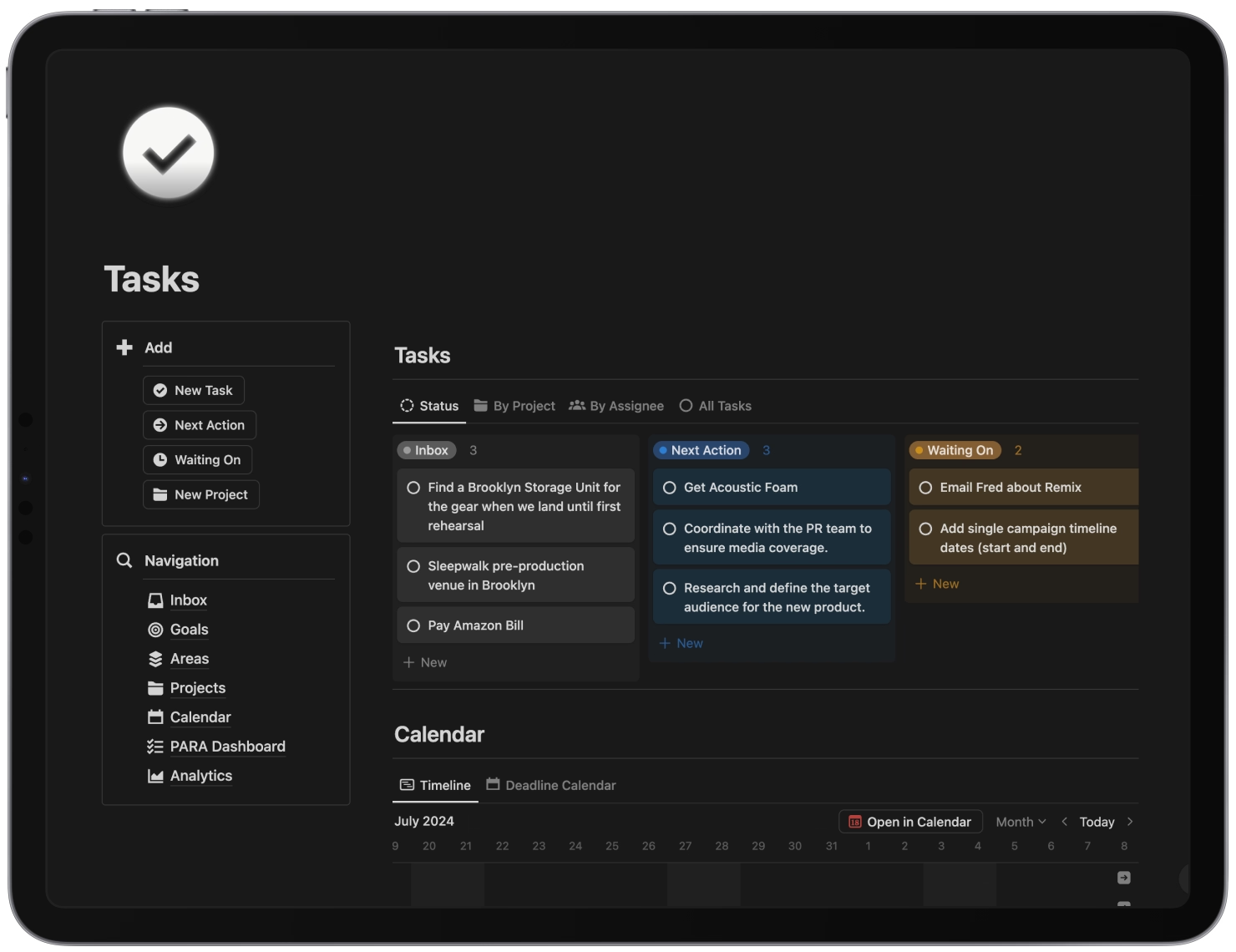
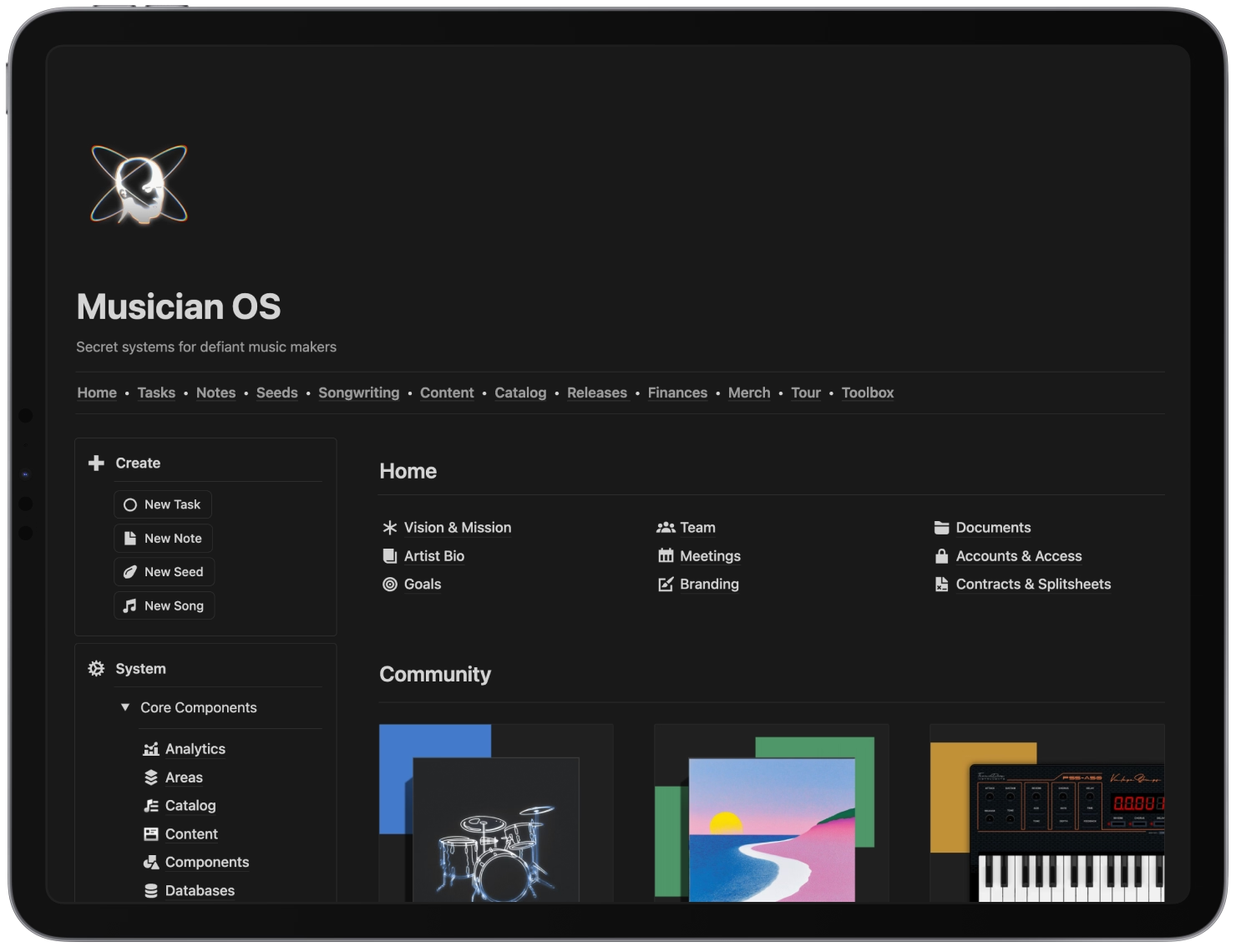
Keep the blocks somewhere you can see them beside the tasks that fill them. The Tasks template in Musician OS switches between calendar and list views for exactly this, and connects to the release and tour dates that generate most of the admin. A paper diary with four colours does the same job. The system matters less than the rule at the centre of it: the creative hours go on the calendar first, and they stay there.
Frequently asked questions
What is time blocking for musicians?
Putting the different kinds of work a music career needs into fixed blocks on the calendar, with the creative block placed first, in the hours you're actually best, and everything else fitted around it. Instead of a to-do list competing for whatever time is left, each kind of work has a home, and the creative one is protected.
How long should a creative session be?
Around ninety minutes of focused work, then a real break of ten to fifteen minutes away from screens, is a good default. Attention tends to run in cycles of roughly that length, and pushing through the dip produces worse work than stopping and coming back. Two such blocks in a day is a very productive day.
When should musicians do admin?
In the hours when you're alert but not at your creative peak, split into two kinds. High-focus admin (contracts, budgets, strategy) goes in a good non-creative hour. Low-focus admin (email, posting, filing) goes in the dips and gets a timer. Never in the golden hours.
Does time blocking work for musicians with unpredictable schedules?
Yes, if it's a template rather than a fixed timetable. Decide the shape of a good day (creative block, admin block, connection window, learning slot) and then place the blocks wherever the week allows. On a tour day the creative block might be an hour in the van. The point is that it exists somewhere, not that it's at 9am.