Platforms change every year. Algorithms change every month. What works on the feed today will be dead in three years. Yet the artists who last tend to be doing the same handful of things, whatever the tools happen to be.
This guide is those things: five principles of marketing that predate the internet and still decide who builds an audience on it. Each comes with the practical version for 2026, and the guide ends with a 90-day plan for putting them to work.
1. Being recognisably yourself
In a feed full of content that could have been made by anyone, the one thing people still trust is a specific person. Fans don’t follow music; they follow someone making it, with a way of seeing they recognise.
The most common mistake is bending towards whatever’s trending instead of leaning into what only you would do. Trends get attention for a week. A recognisable artist gets it for a career.
In practice:
- Document, don’t manufacture. Show the process, not just the polished result.
- Drop the filter. Imperfect performances and raw writing moments outperform produced content for almost every independent artist.
- Know what you stand for. People connect with conviction. Write it down; the free Artist DNA template is built for that.
You don’t need everyone to like you. You need the right people to believe you.
2. Consistency
Every overnight success is years of unseen work, and the artists who stay relevant aren’t the most talented. They’re the ones who kept showing up when the last post flopped and nobody seemed to be listening.
Consistency builds trust in the same way it does with a person: they said they’d be there, and they were.
In practice:
- Pick a rhythm you can keep for a year. Weekly if daily isn’t real. A single every six to eight weeks.
- Batch in the high-energy weeks. Record several videos, write several posts, and schedule ahead, so the low weeks are covered.
- Think in seasons. A writing season, a release season, a live season, a rest. Creating a Sustainable Release Calendar lays it out.
The artists who win aren’t the ones who went viral once. They’re the ones still there.
3. Value before the ask
You’re in direct contact with your listeners now, which is a privilege the artists of thirty years ago never had. It comes with a rule: attention isn’t free. People pay for it with their time, and if you’re not giving them something first, you haven’t earned it.
If the only things you post are “stream this” and “buy this”, you’re asking without giving. Fans don’t just support music. They support insight, access, experience and the relationship.
In practice:
- Give first. Process, knowledge, the story, the laugh, before any ask.
- Build in layers. Free content for everyone, closer access for the people who want it (early listens, a group, the demo), premium things for the core (limited merch, a session, a house show).
- Engage properly. Reply, remember names, show up in the comments. The smallest interactions make the biggest fans.
The most valuable thing anyone can give you is their time. Respect it and they’ll give you their money too.
4. A community you own
The biggest myth in music marketing is that success is follower count. A small, devoted audience will carry you further than a large indifferent one, and it will still be there when the platform that gave you the large one changes its rules.
Streaming numbers move. Social platforms rise and fall. The thing that lasts is a group of people who care enough to follow you somewhere else.
In practice:
- Get a direct line. An email list first; a group, a Discord or a text list if it suits. These are platform-independent, which is the point.
- Connect fans to each other, not just to you. The strongest communities have their own conversation.
- Make people feel seen. When someone supports you, say so. A reply, a name in the thanks, early access.
Your biggest asset isn’t the music. It’s the relationship with the people who believe in it.
5. The content ecosystem
Most artists burn out on content because they treat every post as a separate job. The efficient ones build ecosystems: one strong piece, broken into many, spread over weeks.
In practice:
- Start with a pillar piece. A song, a long video, a session, a big announcement.
- Break it down. A video becomes clips, snippets, stills and a thread. A session becomes a dozen behind-the-scenes moments.
- Spread it out. Stagger the pieces so one feeds the next, rather than dropping them all at once.
Content should work for you, not exhaust you. Make less; use it more. Building Creative Systems That Scale has the weekly rhythm for it.
The 90-day plan
Three months is enough to change how a career feels, if the principles are applied in order.
Days 1 to 30: foundation
- Write down what you stand for and what you look and sound like
- Choose a content rhythm you can keep for a year, and start it
- Reply to everyone, every day, as a habit
Days 31 to 60: engagement
- Launch the direct channel: an email list, at minimum, with a reason to join
- Shift the balance so most of what you post gives before it asks
- Set up the batching system so the rhythm survives a busy month
Days 61 to 90: scale
- Introduce the first premium layer: merch, an early-access tier, an experience
- Grow the list on purpose, with something worth signing up for
- Look at what worked across the ninety days and do more of it
The part that doesn’t change
Platforms will keep changing. These five won’t. An artist who is recognisably themselves, who shows up, who gives first, who owns their audience and who works in ecosystems will do well on whatever comes next, because the audience was never really on the platform. It was with the artist.
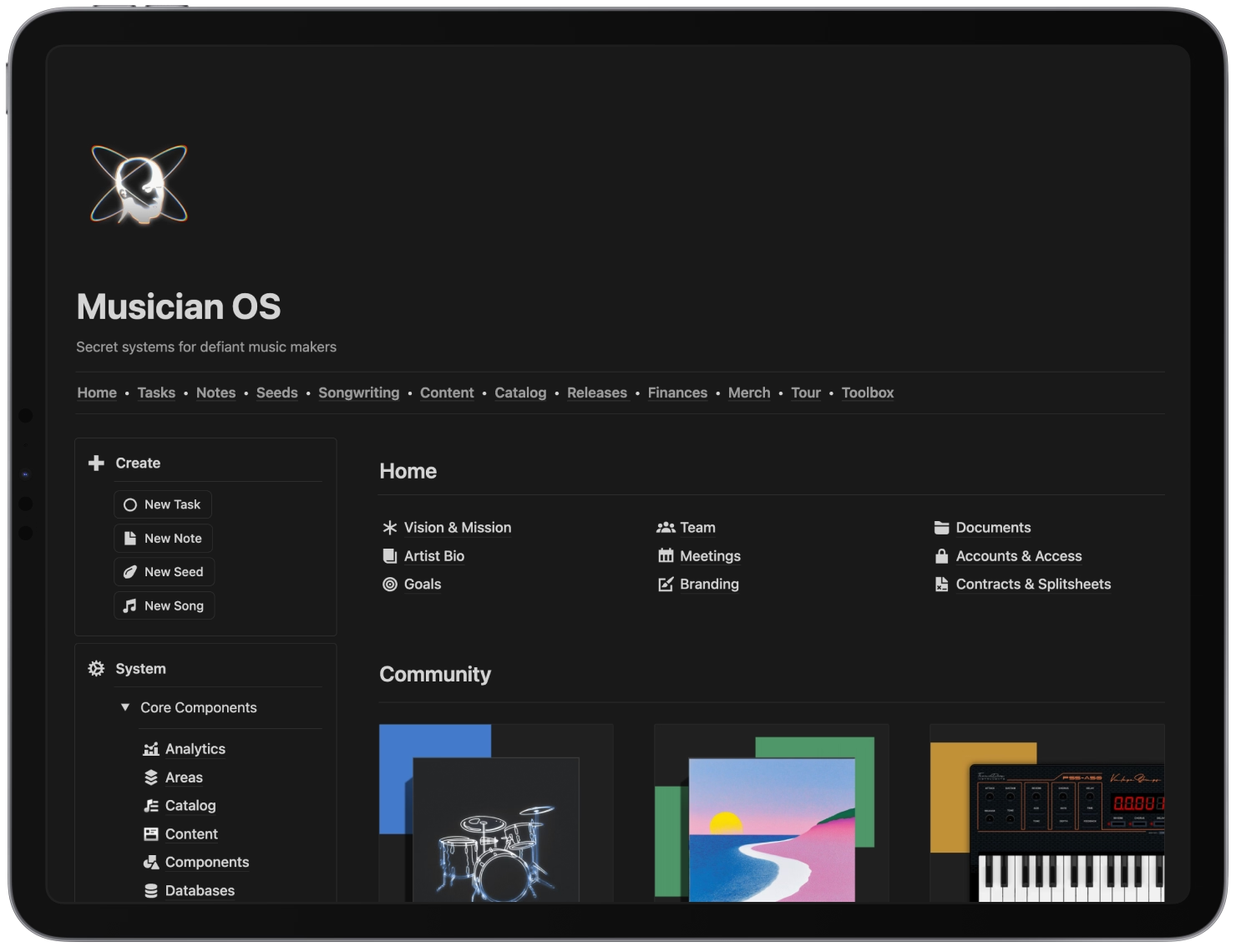
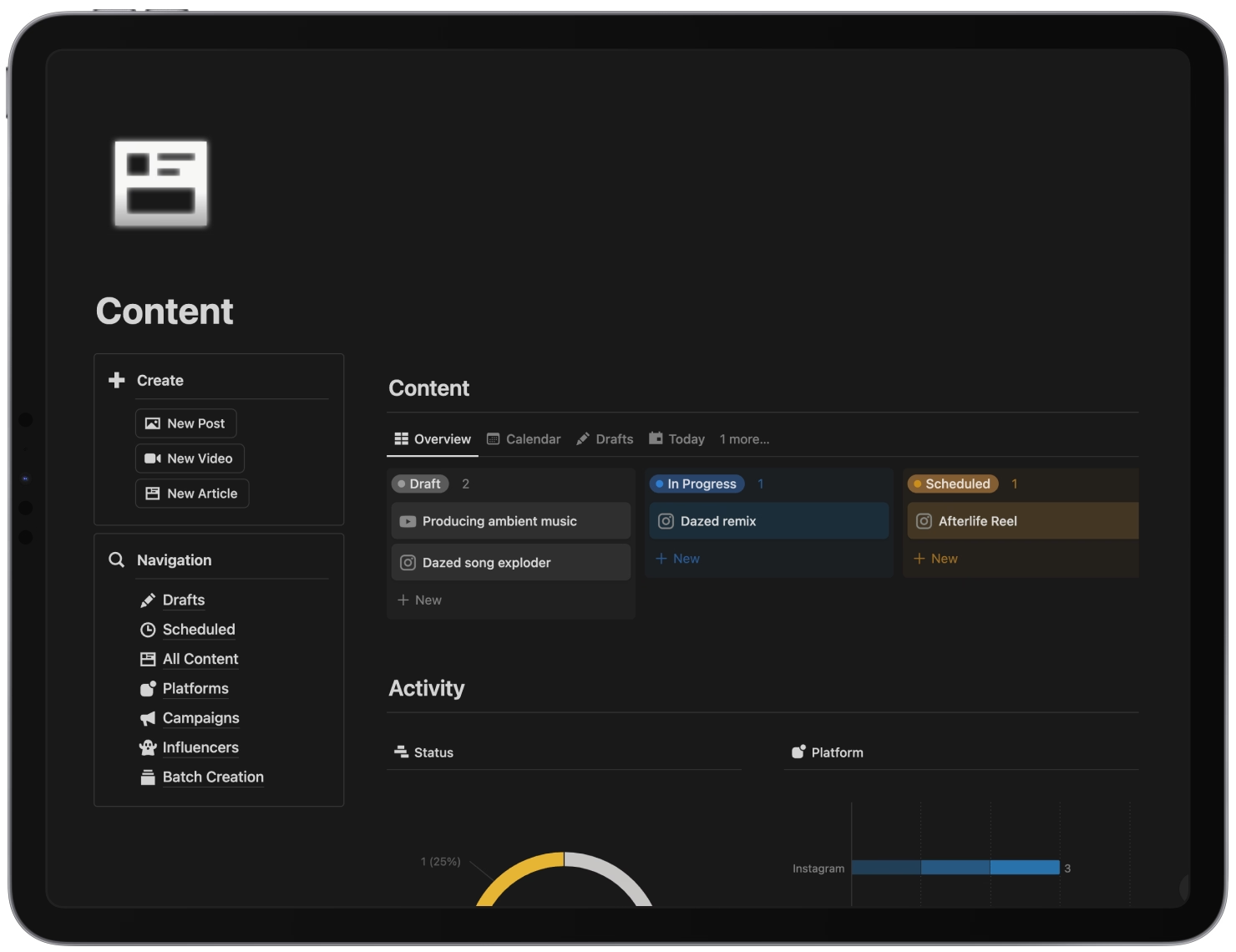
Keeping all of it running in one place helps: the content calendar, the list, the release dates, the offers. Musician OS is built for that, with the Content template as the calendar and results side. But the principles come first, and they work on a whiteboard. Start with one, this week, and build from there.
Frequently asked questions
What are the most important marketing principles for musicians?
Five that don't change when platforms do: be recognisably yourself, because it's the only thing that can't be copied; show up consistently, because trust is built by repetition; give value before asking for anything; build a community you own through email and direct channels; and work in content ecosystems, where one strong piece becomes many. Tactics sit on top of these and go out of date. The principles don't.
How do I market my music without feeling fake?
Document rather than manufacture, keep promotion to a small share of what you post, and only ask after you've given. A feed that mostly shows the work, the process and the conversation can announce a release in the same voice and it reads as news from a friend. What feels fake is speaking only when you want something, or in language that isn't yours.
How many fans does a musician need to make a living?
Fewer than most people think, if they're the right ones. A core of true fans who buy tickets, records and merch and tell their friends supports a career that a hundred thousand passive streamers wouldn't. The figure varies by genre and prices, but the strategy is the same: grow the core, keep a direct line to it, and give it reasons to stay.
What is a content ecosystem?
A way of working where one pillar piece of content, such as a song, a video or a session, is broken into many smaller pieces for different platforms and released over weeks. A music video becomes clips, a recording session becomes a series of behind-the-scenes posts, and the whole campaign comes from a few strong sources rather than daily invention.