Time is the resource a musician can’t make more of. Talent, connections and money all help, but how the hours get used decides whether the music stays a project or becomes a career. Most musicians feel the squeeze without seeing its shape: the sense that there’s never enough time, without knowing where it went.
This guide gives it a shape. A working musician’s time goes to four places, each with different demands, and mastery is mostly about giving each its own protected slot instead of letting them fight for the same hours. Creative Time Blocking for Musicians covers the calendar mechanics; this is the map of what goes on it.
The four places time goes
1. The creative sanctuary
Creative time is the reason for everything else, and it’s the first thing to get lost. Protecting it means more than blocking hours. It means building the conditions where the work starts on its own:
- The creative block in your peak energy hours, on the calendar first
- A dedicated space, or at least a dedicated corner and setup
- A ritual that signals the shift: the lamp, the playlist, the same warm-up
- Notifications off, phone elsewhere, a boundary the people around you know about
The Greeks had a word for time that isn’t clock time, the moment when everything lines up. That state is the sanctuary. You can’t schedule it, but you can schedule the conditions it arrives in.
2. The business engine
The starving-artist image persists, but the musicians whose work reaches people have always run the business side seriously. It’s not the enemy of the art. It’s what carries the art further than the room it was made in.
The business work:
- Relationships: with venues, curators, collaborators, the people who book and write about you
- Contracts, and understanding them before signing
- Money: budgets, cash flow, what each project actually made
- Strategy: where the career is going and what the next year needs
- The team, if there is one, and the roles if there isn’t
Give it a focused block each week and bring the same attention you’d bring to a session. Business done in scraps between creative moments goes badly and costs the creative moment too. The Artist’s Operating System is the place all of this lives.
3. The content ecosystem
Content is part of the job now, and it goes best when it’s treated as a creative activity rather than a chore. Storytelling around the work is how the work finds people.
The way to keep it from eating the calendar is batching. Two days a month for shooting photos and video, a weekly slot to cut and schedule, and a capture setup that runs during sessions so most of the raw material is free. Building Creative Systems That Scale is the full pipeline.
- Document the process
- Show the life around the work, from the inside
- Batch the making, so daily posting is just posting
- Reuse across platforms instead of making per platform
- Quality over volume
4. The administrative foundation
Email, files, gear maintenance, scheduling, bookkeeping. Far from the art, and the thing that derails it when neglected. Backups are the classic: I put off backing up project files for weeks once, lost several nearly finished tracks when a drive died, and have kept a weekly admin hour ever since.
The approach is containment:
- One fixed weekly hour, in a low-energy slot
- A running list that admin-shaped things go onto during the week, instead of being done the moment they appear
- Templates for the things that recur: invoices, riders, pitch emails
- Automation where a human isn’t needed: backups, scheduling, reminders
- A maintenance rhythm for gear and files
Admin expands to fill whatever time it’s allowed. The hour is the limit.
The integration method
The four places compete unless something decides between them. Three rituals do:
The weekly planning ritual
Half an hour, same time each week:
- Review the commitments coming up
- Block the creative time first, in the peak hours
- Place the business session
- Fit content and admin around those, never the other way round
The daily shape
- Start with the most important creative work
- High-energy business tasks in the alert hours
- Admin in the low-energy stretch
- Five minutes at the end of the day planning tomorrow. The 1-3-5 rule is a good shape for it.
The monthly review
An hour, once a month:
- How did each of the four places do?
- What needs adjusting in the system?
- What worked, and what didn’t?
- What is next month for?
Keeping it in one place
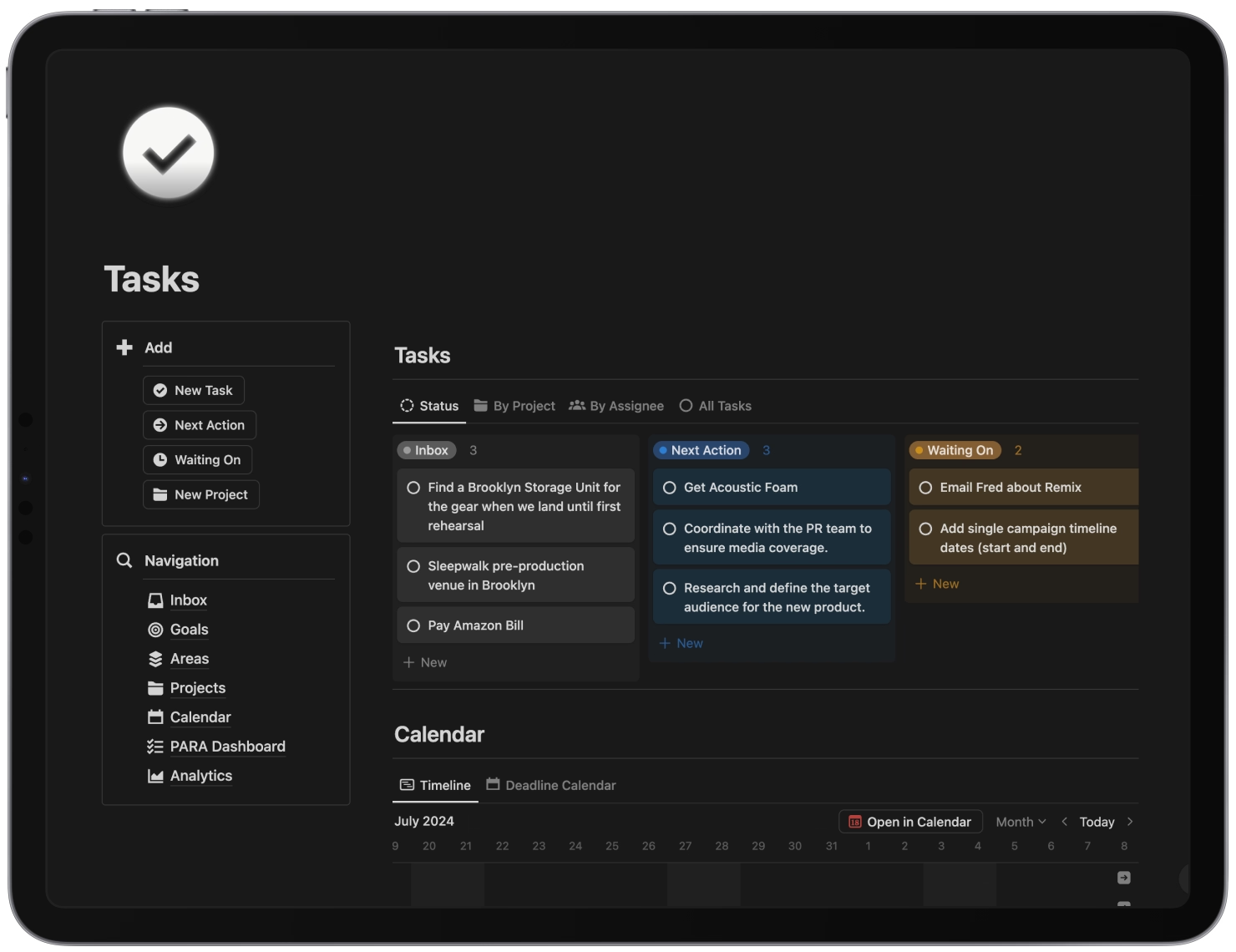
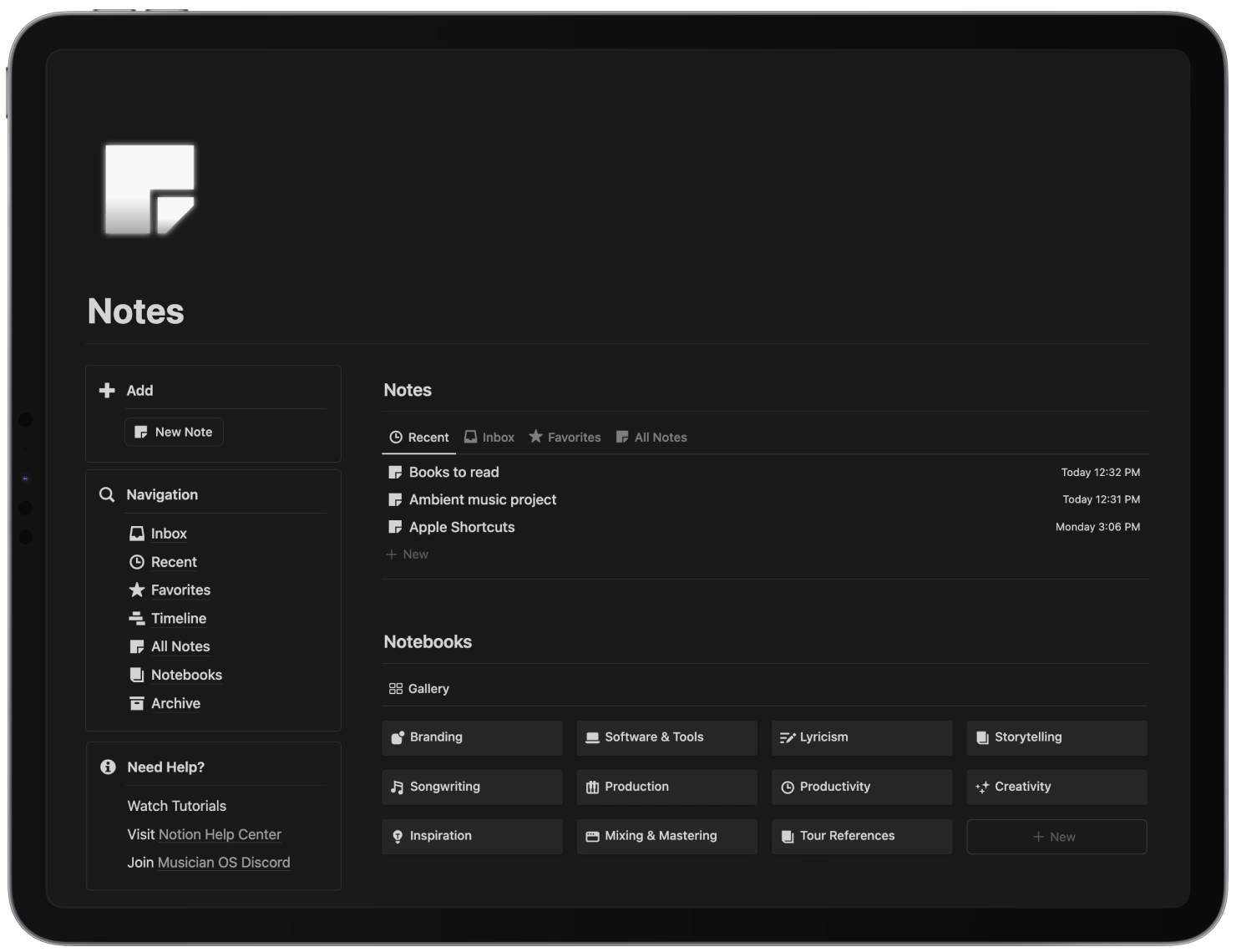
Four kinds of time, three rituals and a running list need somewhere to live that isn’t your head. The Tasks template in Musician OS holds the lists with calendar and list views, and the free Notes template is the running capture for everything admin-shaped and idea-shaped that turns up mid-session. A diary and a notebook do the job if they’re used every day.
Mastering time as a musician isn’t about becoming rigid or less artistic. It’s a structure that makes sure the creative work happens, the business gets run, the content gets made and the admin stays contained, without any of them stealing from the others. The artists who last aren’t only talented. They know where their hours go, and they decided.
Frequently asked questions
How should a musician manage their time?
By recognising that the job has four parts, not one: creating, running the business, making content and doing the admin. Each needs its own protected time, placed according to the energy it requires. Block the creative time first, give business tasks a focused slot, batch content into a couple of sessions a month, and give admin a fixed weekly hour so it never leaks into the rest.
How much time should musicians spend on business versus music?
More on business than feels comfortable and less than you fear. The business hours don't need to be many, but they need to be real: a focused block each week for planning, money, relationships and strategy, treated with the same seriousness as a recording session. The mistake is doing business in scraps between creative moments, which ruins both.
What is a weekly planning ritual for artists?
A fixed half hour, usually the start or end of the week, where you review commitments, block creative time first, place the business session, then fit content and admin around them. It's the one habit that keeps the four parts of the job from colliding, and it takes less time than the collisions do.
How do I stop admin eating my creative time?
Give it a container. A weekly admin hour, in a low-energy slot, with a list that everything admin-shaped goes onto during the week instead of being done immediately. Templates for the things that recur, automation for the things that don't need a human. Admin expands to fill whatever time it's allowed; the container is the limit.