Most artists think of an album cycle as a line: write until the writing is done, record until the recording is done, then switch to promotion and discover, too late, that anticipation should have started months ago. The line produces a spike of activity, a spike of spending, and a long silence, and it’s the reason so many talented people burn out after one record.
This guide replaces the line with a loop. Seven phases, deliberately overlapping, each one feeding the next, so that by the time the record is out you have the content, the audience, the money and the energy to keep going. It’s how I’d plan an album now, having done it the other way.
Why the straight line fails
The momentum gap. Creation and promotion treated as separate activities produce a stop-start energy that kills both. The emotional charge of a freshly written song is gone by the time anyone hears about it.
The cash-flow hole. A traditional cycle front-loads the cost (recording, production, launch) and back-loads the income (streaming, touring). The gap between them forces the next record early, before it’s ready, to pay for the last one.
Creation in a vacuum. Writing entirely alone, then wondering why the record didn’t connect. Connection happens in dialogue, and the dialogue can start earlier than release day without handing the audience the pen.
Feast and famine. Intense activity, then intense downtime. The downtime is when audiences drift and algorithms forget. An artist who disappears for eighteen months between records has effectively trained every platform to stop recommending them.
The integrated cycle: three principles
Overlap, don’t sequence. Start capturing for promotion while still creating. Use tour insights to shape the next writing phase. No phase fully ends before the next begins.
Bring the audience in early. Not to crowdsource decisions. To create moments of connection that build anticipation and tell you what’s landing.
Design for sustainability. Recovery periods on the calendar. Multiple products from the same creative work. Systems that run while you’re focused elsewhere.
The seven phases
Lengths are typical, not rules. The overlaps are the point.
Phase 1: creative foundation (three to six months)
Writing, and everything that sets the record up:
- Write a creative brief first. Themes, sonic palette, the thing the record is about. Every later decision refers back to it.
- Set up capture. Recording in the writing space from day one, so nothing is lost and there’s raw material to share later.
- Schedule the writing. Three to five sessions a week, on the calendar, rather than waiting. Momentum here prevents deadline panic later.
- Plan collaborators against the brief and book them across the phase rather than at the end.
- Build a small feedback circle: five to ten trusted listeners who hear rough demos.
The seed session. One day a month for starting ideas without finishing any. It leaves a bank of beginnings for the day the well runs dry.
Phase 2: production and capture (one to three months)
Recording, treated as a content and audience opportunity as well as a technical one:
- Mark capture opportunities on the recording plan, per session, alongside the technical notes.
- Get the studio filmed. A friend, a cheap camera on a stand, whatever it takes. This is the best footage you’ll ever have.
- Plan sharing moments: specific points in the process where a snippet or a story goes out.
- Document each session: setups, breakthroughs, the moment the take landed.
- Shoot the release assets in studio downtime: photos, short interviews, the story of each song.
Component recording. Capture stems and elements that can become remixes, acoustic versions, instrumentals or sync edits later. Several products for the cost of one session.
Phase 3: refinement and preparation (one to two months)
Mixing and mastering, and the beginning of the strategy:
- Build a reference library for the mix engineer, so the vision is clear and revisions are few.
- Decide how mixes get approved, with criteria, so it ends instead of iterating forever.
- Research while you wait: comparable releases, playlist targets, what’s worked in your genre this year.
- Refresh the digital ecosystem: site, streaming profiles, socials, aligned with the record’s look.
- Write the messaging document: the stories, themes and talking points every piece of promotion draws from.
Critical path. List the minimum steps that finish this phase. Everything else is scope creep, and scope creep is why records slip a year.
Phase 4: release architecture (two to three months)
Release planning as a structure, not a date:
- Per-platform plans, because each one rewards different things. Platform-Specific Music Release Strategies has the detail.
- A content calendar for the pre-release run that builds anticipation without spending everything early.
- A staged rollout: singles, videos, the record, possibly a waterfall, each stage with its own objective.
- Windowing decisions, if any: a fan-first release on Bandcamp, a timed exclusive.
- Measures beyond streams: audience growth, saves, list sign-ups, conversion to tickets and sales.
Three by three by three. For each song, find three themes or moments. Make three pieces of content from each. Spread them across three windows: pre-release, release week, the month after. Nine pieces per song, before anything’s improvised.
Phase 5: momentum marketing (three to six months, ongoing)
Promotion as a sustained arc rather than a launch:
- Work with the platforms’ rhythms: Friday releases, editorial deadlines, posting windows.
- Batch the content so output holds through touring and the next writing phase.
- Run a narrative across the whole cycle, not disconnected posts. The record is a story told over months.
- Adapt per platform instead of cross-posting one clip.
- Turn listeners into members: the list, the group, the early access.
Content multiplication. One high-quality core piece, a studio documentary or a long session, yields dozens of short clips, quotes, stills and audio snippets. Make one big thing and mine it.
Phase 6: live (six to twelve months)
Touring as audience development and content, not just promotion:
- A per-show capture routine that doesn’t touch the performance.
- Three goals per show: one for audience growth, one for content, one for revenue, beyond playing well.
- An audience journey: the touchpoints before, during and after a show that move someone from attendee to fan to member.
- A feedback loop: what the room taught you, applied to the next show and the next songs.
- Sustainability built in: off days, recovery weeks, a party size the budget can carry.
Twenty, thirty, fifty. Roughly a fifth of the touring effort on existing fans, a third on converting casual listeners, half on reaching new people. Otherwise a tour only preaches to the converted.
The Ultimate Independent Touring Guide covers the business of this phase.
Phase 7: assessment and evolution (ongoing)
The bridge between cycles, which most artists skip:
- A full cycle review: numbers and lessons, per phase.
- Catalogue activation: keeping the back catalogue working while the next record is written. Playlists, anniversaries, alternate versions.
- A minimum audience routine for the quiet months, so nobody forgets you.
- A recovery protocol for the shift from promotion back to creation. They’re different states and the switch takes deliberate effort.
- The bridge itself: the plan that keeps income, audience and creativity moving between records.
Trilogy planning. Sketch three records, not one. It gives the current cycle somewhere to point, and lets you plant things now that pay off two records later.
Where the overlaps live
Written out, the phases look sequential. They aren’t:
- Phase 2 is producing phase 5’s content
- Phase 3 is doing phase 4’s research
- Phase 4 starts before phase 3 ends
- Phase 6 is writing phase 1 of the next record in the van
- Phase 7 runs through all of it
The overlaps are what turn a line into a loop. They’re also why the cycle needs a system to hold it, because seven overlapping phases across eighteen months don’t fit in anyone’s head.
Building it
Ask four things about your current approach:
- Are you creating alone, or with touchpoints that build anticipation?
- Do your creative and promotional phases feed each other or fight?
- Have you built systems, or are you reinventing the cycle each record?
- Does the cycle energise you or empty you?
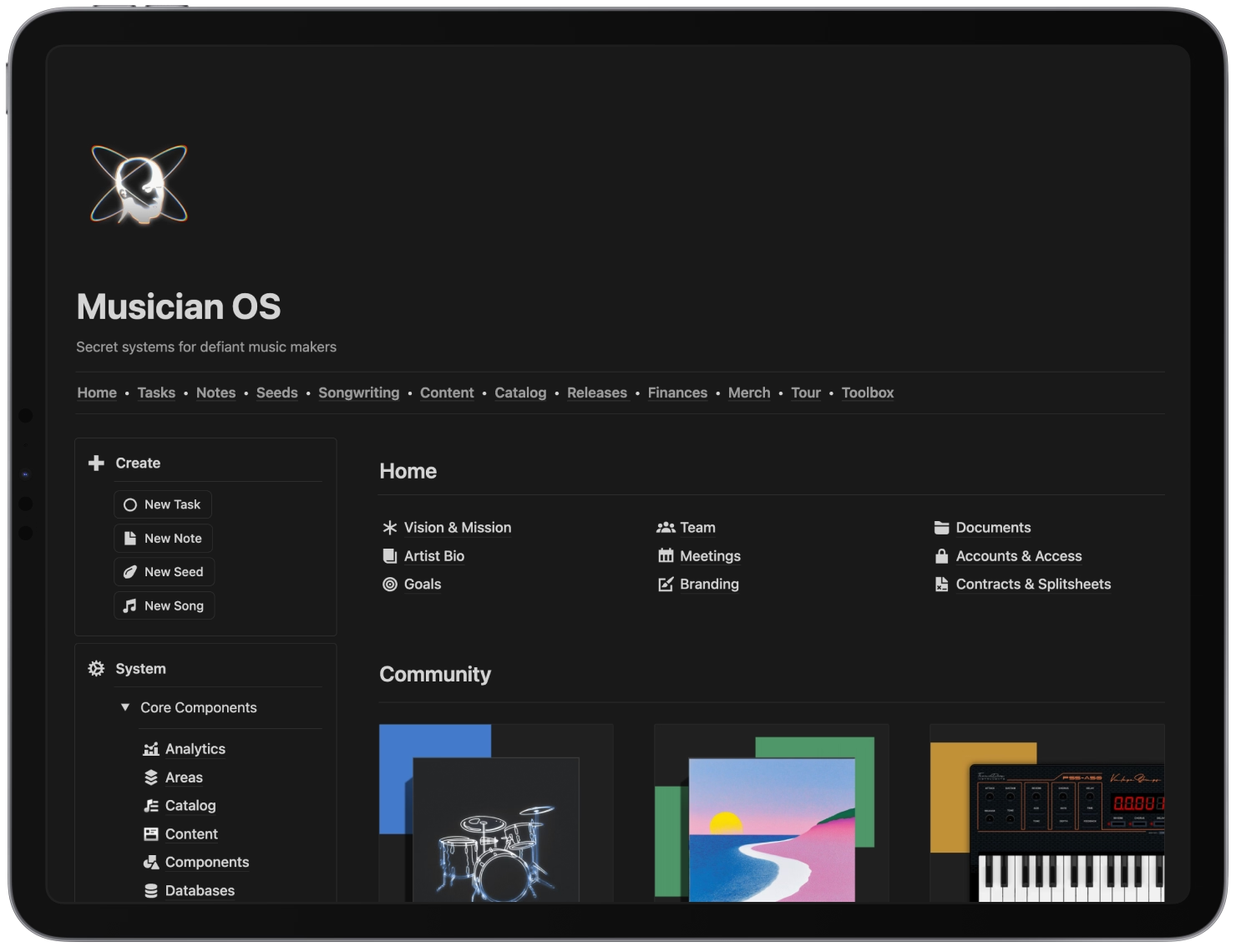
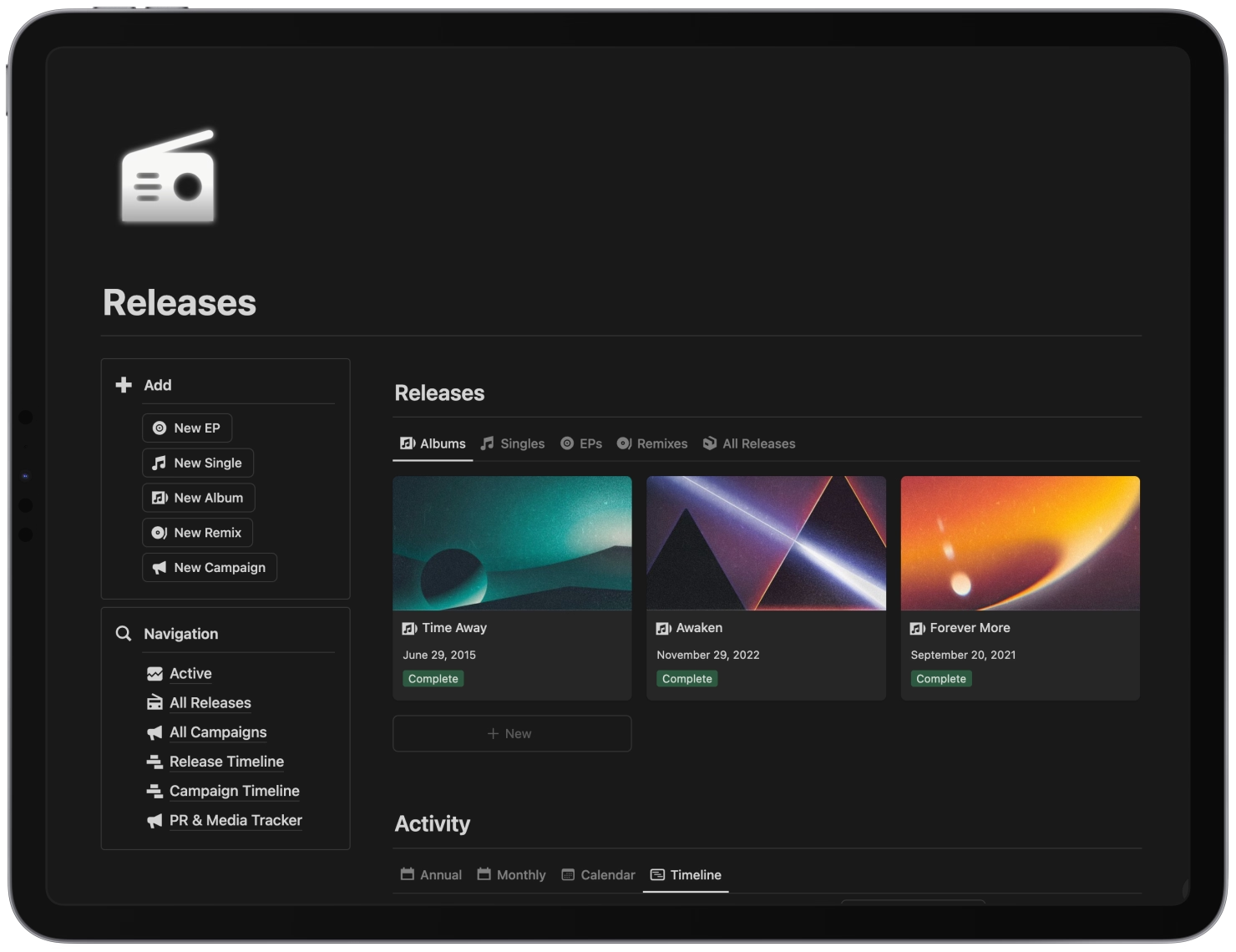
Then build the structure before the next record starts. Musician OS is designed for exactly this loop, with Songwriting feeding Releases, Releases feeding Content and Touring, and Finances tracking whether each phase paid. The Releases template on its own holds phases four and five as a timeline. A wall calendar and a set of templates work if they’re kept.
The cycle isn’t a hamster wheel unless you run it as one. Designed as a loop, with the overlaps and the recovery built in, it’s the engine of the career: each record finishing with the audience, the money and the energy the next one needs.
Frequently asked questions
What is an album cycle?
The full arc of a record: writing, recording, mixing and mastering, planning the release, promoting it, touring it, and the gap before the next one. For an independent artist it typically runs twelve to twenty-four months. Run as a straight line, with each phase finished before the next starts, it produces burnout and a cash-flow hole. Run with the phases overlapping, it produces momentum.
How long should an album cycle be?
Roughly: three to six months of writing, one to three of recording, one to two of mixing and mastering, two to three of release planning that overlaps with the last of those, then three to six months of active promotion and six to twelve of live work, with the next cycle's writing starting before the live phase ends. The exact lengths matter less than the overlaps.
How do independent artists avoid burnout during an album cycle?
Design the cycle with recovery in it rather than hoping to survive it: capture content during recording so the promotion phase isn't a second full-time job, spread the release across singles so there's no single crushing week, build off days into the tour, and plan the bridge to the next record before this one ends. Burnout comes from the feast-or-famine shape, and the shape is a choice.
When should I start promoting an album?
During recording. The studio is the best source of content you will ever have, and capturing it costs nothing extra. Public promotion starts six to eight weeks before the first single, but the assets, the story and the audience touchpoints should be building from the moment there are songs to talk about.