Touring is the part of a music career that can lose money fastest, and the part most artists plan least. That combination is why so many independent tours end with a good story and an empty account.
This guide is the plan. It covers how to know whether you’re ready, how to route a tour so the numbers can work, how to book it, how to promote it, how to run the days, and what to do when you get home. It’s written from the independent side of the table: no agent, no label float, a van and a spreadsheet.
I’ve done this both ways with TORA, over more than a decade of touring: runs that paid for the next record and runs that paid for a lesson. The lesson, every time, was the same. The tours that worked were planned as a business months out. The ones that didn’t were booked as a string of gigs and figured out in the van.
The three things that go wrong
Before the plan, the problems it’s built to avoid.
The maths doesn’t work and nobody checked. A club tour costs money every day, whether or not there’s a show. Guarantees for developing acts are small, and a “sold out” 150-cap room can still lose money once the van, the beds and the crew are paid. Artists are pushed towards playing as many dates as possible because activity looks like progress. It isn’t, if every date costs more than it makes.
Streams don’t turn into tickets by themselves. A large monthly listener count spread across the world is not an audience in any one city. Ticket buyers are concentrated, and you can see where, but most touring plans don’t look. They route by convenience and hope the listeners are there.
The logistics live in a group chat. Where are we staying tonight, who has the settlement sheet, did anyone confirm backline in Leeds. Without a system, the artist ends up managing a tour from the driver’s seat, and the show suffers, and the next booking suffers with it.
None of these are solved by playing better. They’re solved by planning.
When to tour: readiness signals
“Get out there and play shows” is the advice everyone gets. The better question is whether the shows will be in front of anyone. Look for three signals:
- Geographic concentration. Spotify for Artists, Apple Music for Artists, YouTube and your social insights all show where your listeners are. You want three to five cities, reachable in one run, where the numbers are real. Not “we have listeners in Germany”. A named city with a number you’d be happy to see as a room.
- A reason to come now. A release, a video, a support slot, a festival. Something that makes this month different from the last twelve. A tour with nothing to hang on is harder to sell in every city.
- The cash to cover it. Enough in the account to pay the whole run’s costs if every show pays nothing. If you’d need the door in Manchester to make it to Glasgow, you’re not ready, and one cancelled show ends the tour.
If you only have one of the three, do one-off shows in your best cities first. They cost a fraction of a tour, teach you what your live draw actually is, and produce the content and data that make the tour bookable later.
Route around anchor dates
The traditional model is to book as many shows as possible in a line on a map. The better model is to find three to five anchor dates first, then fill between them only where it makes sense.
An anchor date is any show that would be worth travelling for on its own:
- A festival slot, even a small regional one
- A support slot with a bigger act in a room you couldn’t headline
- A high-guarantee weekend headline in your strongest city
- A showcase, a brand event, a hometown release show
Anchors set the calendar and the geography. Once they’re confirmed, plot the route between them and look at the cities along it. Some are worth a headline show, some are worth a support slot with a local act, and some are worth an off day. A run of eight dates with three anchors will usually make more and cost less than fifteen dates booked in a line, because the average show is better and the drives are shorter.
Build in off days on purpose. One every four or five shows for content, laundry, sleep and the inevitable thing that goes wrong. A day off costs accommodation and food. A cancelled show from a lost voice costs the guarantee, the merch, and the room’s goodwill.
The budget, before a single email
Model the tour before you book anything. The point isn’t precision, it’s knowing what a show has to make before it’s worth playing.
A simple structure, per day on the road:
| Cost line | Notes |
|---|---|
| Vehicle | Hire or running costs, plus fuel and tolls. The biggest line for most van tours. |
| Accommodation | Per room per night. Off days count. |
| Per diems | A fixed daily food allowance per person is easier than receipts. |
| Crew | Wages for a driver, sound engineer, tour manager, if you have them. Bandmates on a share instead. |
| Backline hire | Anything you’re not carrying. Often cheaper than flying with it. |
| Insurance and visas | Travel and equipment insurance, plus work permits for international runs. Some countries also withhold tax from fees paid to foreign artists, so ask before you sign. |
| Merch stock | Paid up front, recovered per show. Budget the cash out, not the margin. |
| Contingency | Around 10 percent of everything above. Something will break. |
Multiply by every day from leaving home to getting back, including travel days. That’s the cost of the tour. Against it, estimate income conservatively:
- Guarantees as offered, not as hoped
- Door splits at a pessimistic attendance, usually half what you’d like
- Merch at a realistic per-head spend for your genre and audience
If the conservative estimate doesn’t at least break even, you have three choices: change the route, change the party size, or don’t go yet. All three are better than finding out in the last city.
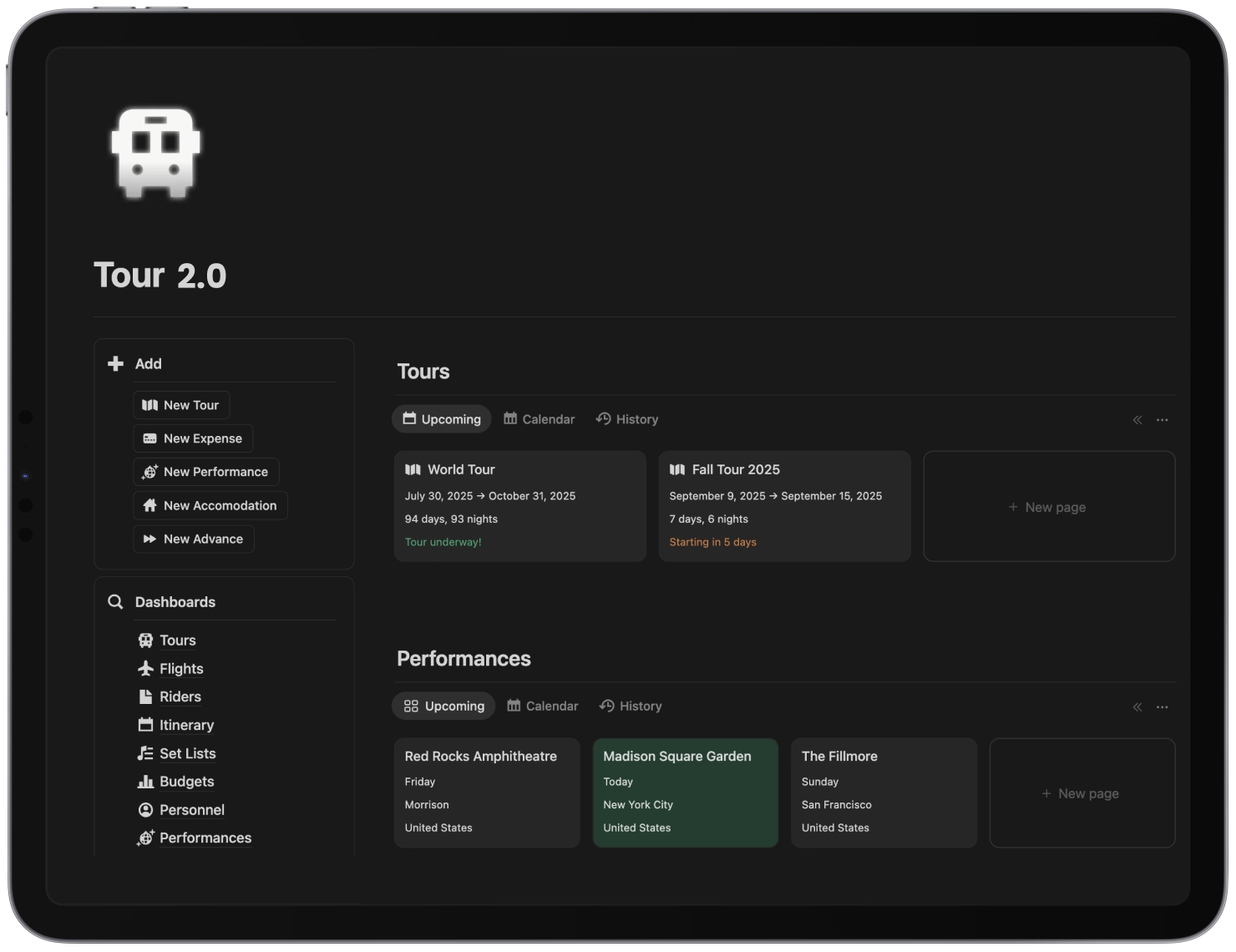
Track actual spend against the model every day on the road. It takes ten minutes and it’s the only way you’ll know by the halfway point whether the second half needs to change. The Tour 2.0 template holds the budget beside the dates and the crew payments for this reason, but the format matters less than the habit.
Booking: lead with what the venue gets
Most booking emails are a link to an EPK and a request. Venues get dozens of those a week and answer few of them. What gets answered is a proposal that makes the promoter’s decision easy:
- The date, or two or three options, with the anchor dates around it so the routing is obviously real
- Evidence of a local audience: listener numbers in their city, previous attendance if you’ve played there, a local support act who’ll bring people
- What you’ll do to sell it: a promotion plan with dates, ad spend, local press you’ll approach
- A deal structure that shares the risk: a lower guarantee with a better split, a door deal if you’re confident, a co-headline with a local act
Keep the email short and put the proposal in the first three lines. Follow up once, a week later. Then move on. Booking is a numbers game, and the reply rate rises sharply once you can reference confirmed anchors.
Start three to four months out for anchors and two to three months out for the fill dates. Festivals book much earlier, often the previous year.
Promotion: eight weeks, every week
Announce the whole tour on one day, eight to ten weeks before the first date, with the same assets everywhere: poster, dates, a video, a pre-sale link. A pre-sale in the first 48 hours turns your most engaged fans into the early ticket sales that make the venue and its own marketing take the show seriously.
Then keep going. The most common failure is announcing, going quiet, and posting “tonight!” from the venue. Instead, plan a weekly rhythm from announcement to the last show:
- Weeks eight to six: the announcement, the pre-sale, personal messages to fans in each city
- Weeks five to three: content per city (why you’re coming, who’s supporting, a clip from the last time), local press and radio in each market, a small ad spend aimed at your listeners in that city
- Weeks two to one: ticket reminders per show, support act cross-promotion, anything the venue will co-post
- On the road: daily content from the tour itself, which sells the next show better than anything made in advance
Ad spend goes where the sales data says. If a show is soft at four weeks, that’s where the budget goes. If it’s nearly sold, stop spending there.
Advancing: the call that prevents the problems
One to two weeks before each show, advance it. This is the conversation with the venue or promoter where everything gets confirmed in writing:
- Load-in, soundcheck and set times, and set lengths for every act
- What backline the venue provides and what you’re bringing
- Your technical rider, and whether they can meet it
- Hospitality, parking, load-in access, accommodation if it’s part of the deal
- The merch arrangement, including whether the venue takes a percentage (some larger rooms do; ask before, not after)
- Settlement: how and when you’re paid, who signs the sheet, whether tax is withheld
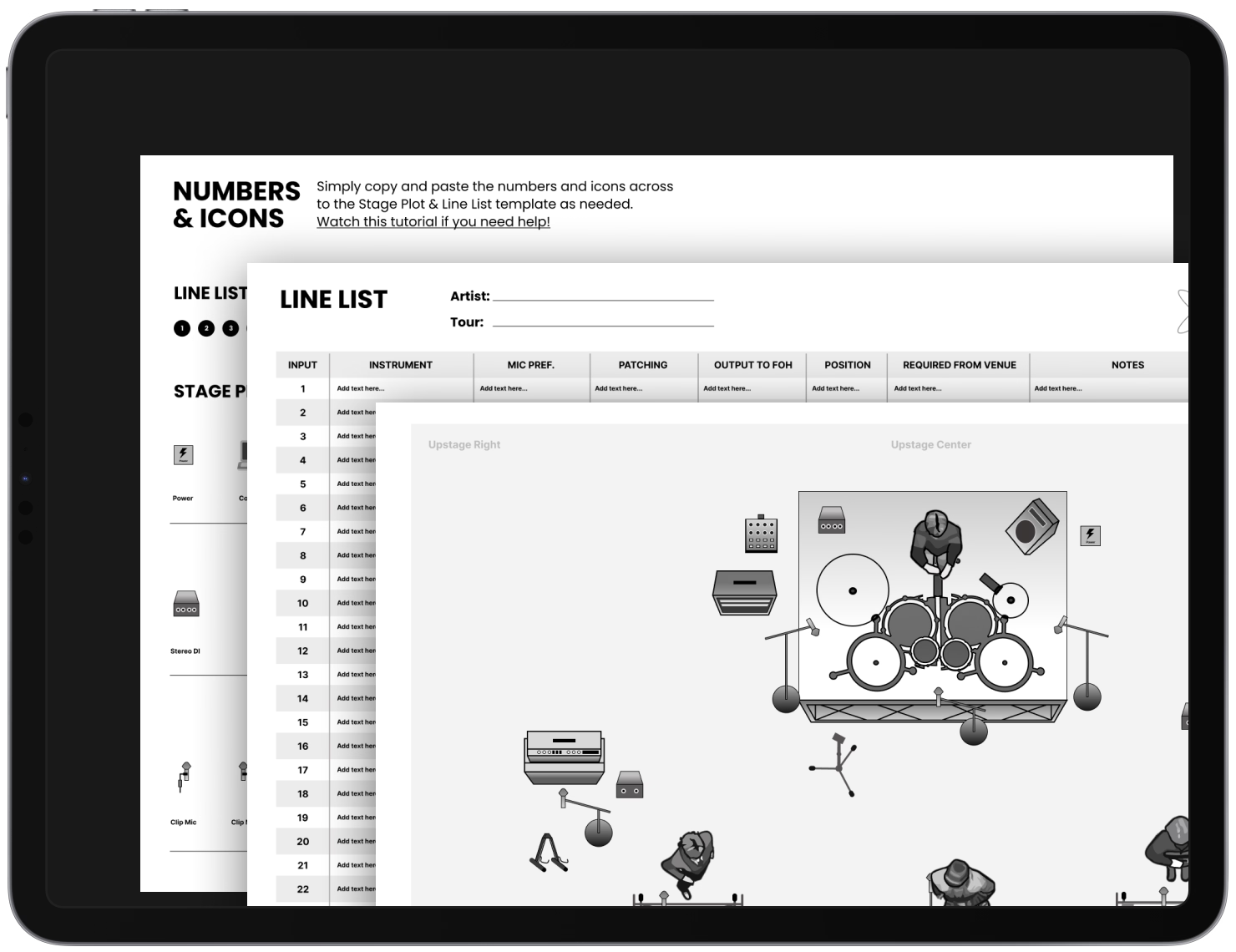
Send a technical rider an engineer can read in thirty seconds: an input list and a stage plot, not a paragraph. Keep the advance notes for every show in one document the whole party can read on their phones. On the day, that’s the source of truth, not a thread.
On the road: a daily shape
Tours are exhausting because every day is different. The fix is to make the parts you control the same:
- Morning: a ten-minute check-in. Today’s drive, load-in time, anything unresolved from the advance for tomorrow’s show.
- Drive: content from yesterday, replies, one admin task each. Not four.
- Arrival: load-in, soundcheck, then a proper break. Eat before the show, not after midnight.
- After the show: merch count, settlement signed and photographed, tomorrow’s route confirmed. Then stop.
Keep a short log per show: attendance, guarantee and door, merch sold and what sold, new followers, anything the room or the crowd taught you. By the fourth show you’ll see patterns (the merch item that sells, the set order that lands) and you can change things while the tour’s still running.
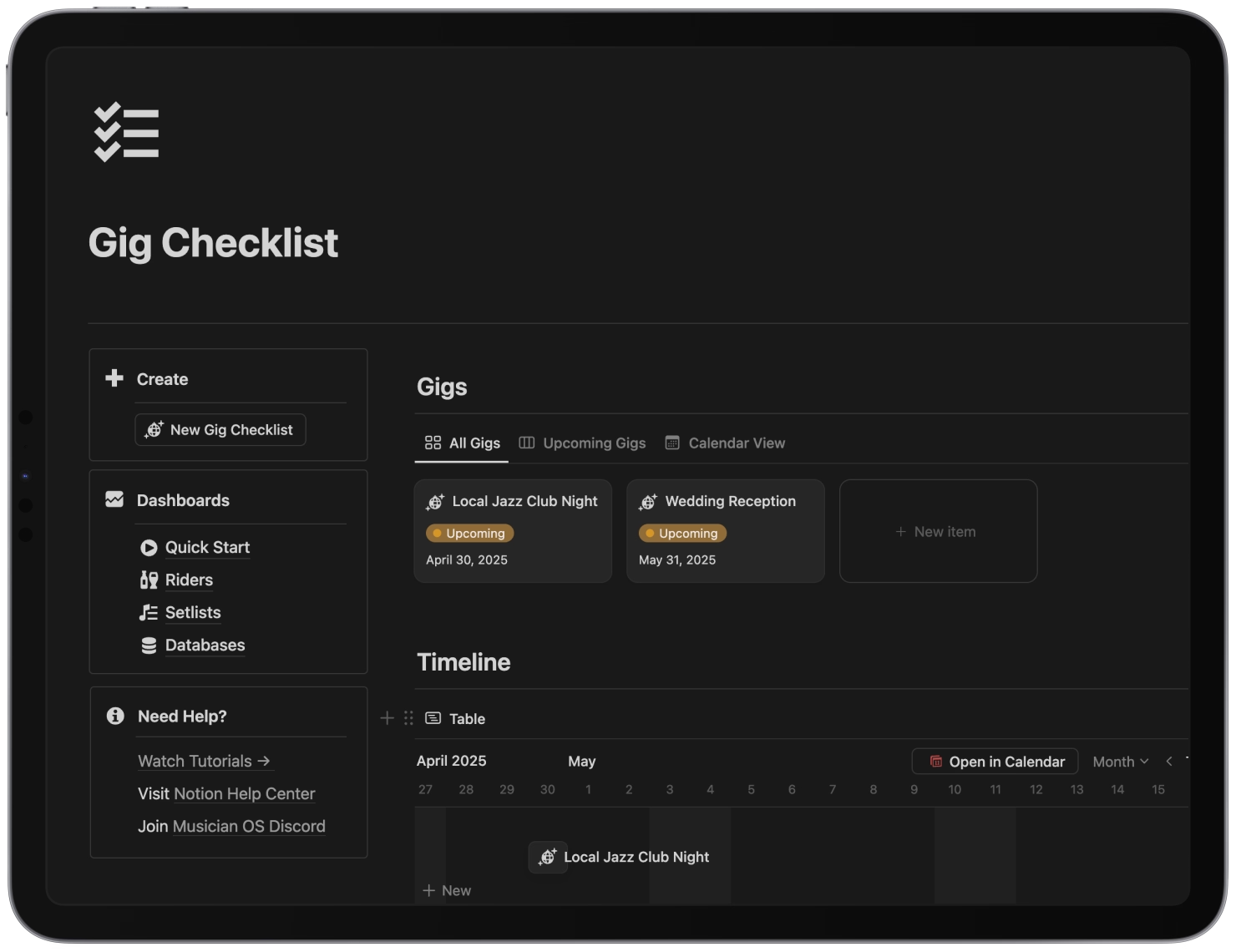
Two things worth protecting more than anything: the singer’s voice and everyone’s sleep. Most cancelled shows on small tours are one of those two. A gig checklist per show type keeps the DI box and the spare strings in the van; nothing replaces a decent night’s sleep.
Merch is the margin
For most independent tours, merch is the difference between losing and making money. Treat it as a business inside the tour:
- Stock what sells. T-shirts in a spread of sizes, one premium item, one cheap item. Vinyl if you have it. Don’t bring six designs.
- Price for the room, with card payment at the table, and make the table easy to find.
- Count in and count out every night. Stock shrinkage and untracked cash are how merch money disappears.
- Say it from the stage, once, near the end. It works and nobody minds.
- Collect emails at the table. A postcode-tagged list is the most valuable thing you’ll bring home.
After the tour: the part everyone skips
Within two weeks of getting home, while it’s fresh:
- Close the books. Actual against the model, per show and overall. Which cities made money, which lost, and why.
- Follow up with the fans. An email to the list, by city if you can, with the photos from their show and the next thing you’re doing.
- Thank the venues and supports individually. The reply you get to that is often the next booking.
- Write down what you’d change. Route, party size, merch, promotion. The next tour starts from this document, not from zero.
- Cut the tour into assets. A highlight reel for the EPK, per-city proof of attendance for the next round of booking emails.
A tour that lost money but produced a list, a reel, three venue relationships and a clear model for the next one was an investment. A tour that lost money and produced nothing was just a loss. The difference is this fortnight.
Where to start
If you’re a few months out from your first proper run:
- Pull your listener geography today, and write down your five best cities.
- Build the budget model for a hypothetical eight-date run between them, before any booking.
- Find your anchors. One festival, one support, one strong headline. Start those conversations now.
- Put the systems in place before the dates exist: the budget, the advance sheet, the merch count, the per-show log. Tour 2.0 in Musician OS is built to hold all four, and it’s what I’d use, but the point is that they exist somewhere the whole party can see.
The road doesn’t have to be a money pit. It has to be planned like the business it is, so the part of it that matters, the hour on stage in a room of people who came for you, is the part you actually get to enjoy.
Frequently asked questions
When is an independent artist ready to tour?
When three things line up: streaming and social data showing real listeners in at least three to five cities you can reach in one run, a release or moment that gives people a reason to come now, and enough cash to cover the whole tour's costs even if every show pays nothing. Readiness is about geography and money, not follower counts. If only one of the three is true, play one-off shows in your strongest cities instead.
How much does it cost to tour as an independent band?
It depends on the country, the vehicle and the size of the party, so build your own budget rather than trusting a figure. The main lines are the vehicle and fuel, accommodation, per diems for food, crew wages if you have crew, backline hire, insurance, visas and work permits, merch stock, and a contingency of around 10 percent. Add them up per day, multiply by the days on the road including travel days, and compare that against a conservative estimate of guarantees, door splits and merch.
What is advancing a show?
Advancing is the conversation with the venue one to two weeks before the show where you confirm everything: load-in and soundcheck times, set times and lengths, what backline is provided, your technical rider, hospitality, parking, the merch arrangement, and how settlement will be paid. It turns the booking email into a plan the venue and your team are both working from, and it is where most on-the-day problems are prevented.
How far ahead should I announce a tour?
Eight to ten weeks before the first date for a club run, with the announcement going out on a single day across every platform and a pre-sale in the first 48 hours. Then keep promoting every week until the last show. The most common mistake is announcing and going quiet until the week of each date.