Most musicians feel a tension between the reason they started making music and the pressure to keep posting about it. The feed wants constant attention; the work wants quiet. The usual result is a feed that’s all announcements, or no feed at all.
The three circles are a way through. They sort everything you could post into three kinds, from the most personal to the most public, and give you a proportion for each. It’s the framework I’ve found most useful for deciding what to post without becoming an advertisement for myself.
The inner circle: the art
The centre is the work itself and everything close to it. It’s where your voice comes from, and it’s the content that nobody else can make.
What lives here:
- Process. How a song gets written. The chord that changed it, the lyric that got cut, the arrangement argument.
- Practice and craft. What you’re working on technically. Routines, exercises, the thing you’re trying to get better at.
- Expertise. Breakdowns of your own songs, or of songs you love. What makes a bridge work. Why that mix decision.
- Ideas and philosophy. What you believe about music, what you’re chasing, what you refuse to do.
- Setup. The room, the gear, the tools, honestly.
- Growth. Milestones in the craft, lessons learned, what changed since last year.
- Breakthroughs and stuck days. Both. The stuck days are often the ones people relate to.
This is the largest share of what you post, and it’s the least effort to make if the capture system in Building Creative Systems That Scale is running: the content is a record of work you were doing anyway.
The middle circle: the community
The middle is where your voice meets the people who’ve gathered around it. It’s less about broadcasting and more about conversation.
What lives here:
- Replies and dialogue. Comments answered properly. Questions asked and taken seriously. Lives where people talk back.
- Collaboration. Other artists, on your feed and theirs. A collaboration is content for both audiences at once.
- Teaching. Tutorials, tips, what you’ve learnt about the industry. Giving knowledge away is the fastest way to build a following that trusts you.
- Shared moments. The show, the meet-up, the fan project, documented from the inside.
- Musical conversation. Influences, what you’re listening to, what you think of the thing everyone’s talking about.
- Spaces. A group, a Discord, a mailing list, somewhere the audience can meet each other and not just you.
The middle circle is where casual listeners become fans. It’s also the part most artists neglect, because it doesn’t feel like content. It’s the content that matters most for whether people stay.
The outer circle: the market
The outer circle is where the art meets commerce. It’s the smallest share and the one that gets misused, because it’s the only kind of post that asks for something.
What lives here:
- Releases. The single, the record, and the story behind them.
- Shows and tours. Dates, tickets, why that city.
- Milestones. The playlist add, the chart, the award, framed as a shared win.
- Press. Interviews and features, shared once.
- Partnerships. Brands and sponsors, only where they match what you already stand for.
- Industry. Conferences, festivals, the professional side, where it’s interesting.
None of this is selling out. It’s how the work gets paid for. The difference between promotion that works and promotion that grates is proportion and specificity: a release post that tells the story of the song, in the same voice as your process content, is part of the conversation. A feed that only speaks when it wants something isn’t.
The 60 / 30 / 10 rule
Over a month, aim for roughly:
- 60 percent inner circle. The art and the process.
- 30 percent middle circle. The community and the conversation.
- 10 percent outer circle. The releases, the shows, the asks.
The split shifts in a release week or on tour, which is fine. What matters is the average. The promotional ten percent works because the other ninety earned the attention. Flip the ratio and the audience learns to scroll past you.
Keeping the circles in balance
Schedule the focus. Mornings for the work and its capture, a daily window for replies, a weekly slot for planning the outer circle. Each circle gets time, and none gets all of it.
Check monthly. Look at what you actually posted and count the circles. Most artists find the outer circle crept up and the middle circle disappeared. Adjust.
Keep one voice. All three circles should sound like the same person. The thing that makes the outer circle tolerable is that it’s clearly the same artist who shared the stuck day last week. The free Artist DNA template is a way to write that voice down so it holds across all three.
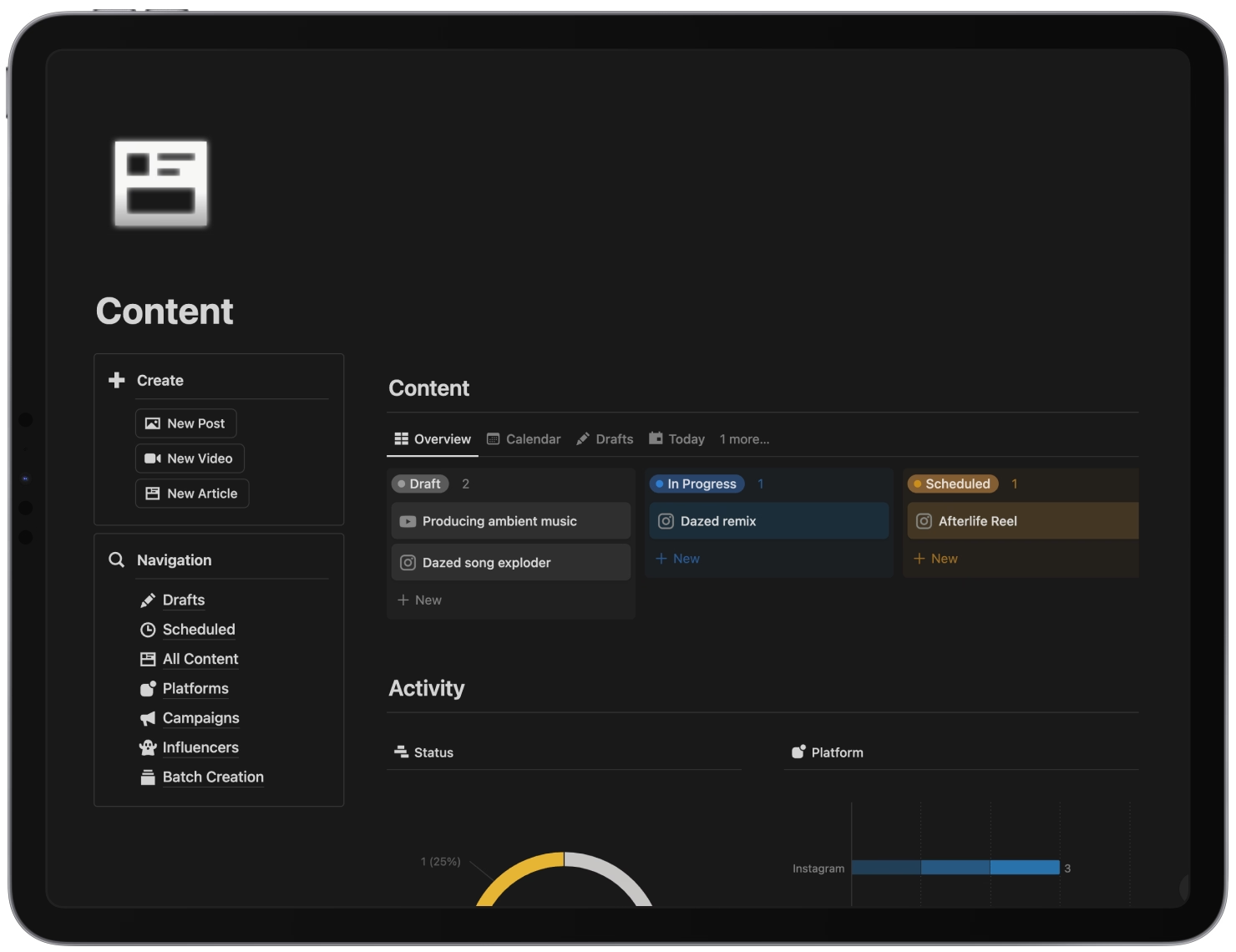
Plan it somewhere you can see. The Content template in Musician OS lets you tag posts by type and see the balance over a month, with results next to the posts. A calendar with three colours does the same thing.
Where to start
Strengthen the inner circle first. What can only you make? What do you know that you could show? Once that’s flowing, the middle circle mostly takes care of itself, because people who watched the work will want to talk about it. The outer circle then has an audience to speak to.
The three circles aren’t separate. They feed each other: the art draws the community, the community carries the market, the market funds the art. Get the proportion right and the feed stops being a tension and starts being a record of a career.
Frequently asked questions
What should musicians post on social media?
Three kinds of thing, in proportion. Most of it should be the craft: the process, the practice, the ideas, the sound being made. A third should be community: replies, collaborations, teaching, conversation with the people who follow you. A small share should be the market: releases, shows, press, partnerships. Feeds that are all promotion get ignored; feeds that are all process never sell a ticket.
How much of my content should be promotion?
About ten percent, as a rule of thumb. Sixty percent on your art and process, thirty on community and conversation, ten on releases, tours and announcements. The promotional posts work because the other ninety percent earned the attention. The split shifts in a release week, which is fine, as long as the average over a month holds.
How do I stay authentic while promoting my music?
Keep the promotion in proportion and make it specific. A release post that tells the story of the song, or a tour announcement that says why that city, is part of the same voice as the process content. What reads as inauthentic is a feed that only speaks when it wants something, or announcements written in someone else's language.
What is the inner circle of content for an artist?
The content closest to the work: how you write, what you practise, the ideas you're chasing, the gear and the setup, the breakthroughs and the stuck days, what you believe about your art. It's the most personal content and the most followed, because it's the part nobody else can make.