Talent gets you started. What keeps a creative career going is a practice that survives the weeks when nothing feels like working: the tour hangover, the day job crunch, the month after a release when the motivation has gone quiet.
This guide is about building that practice. Not an ambitious routine that lasts a fortnight, but a small, resilient set of habits, the triggers that start them without willpower, and a plan for layering more in over three months. It’s the daily-habit layer of The Artist’s Operating System, which covers the wider system; this is what you do every day inside it.
Think in channels, not floods
Creativity looks wild from the surface. Underneath, it tends to run in channels: the same time, the same chair, the same first five minutes. The channels don’t constrain the water. They’re what lets it keep flowing when there’s less of it.
The question isn’t how to be inspired more often. It’s how to build the channels so that inspiration, when it comes, has somewhere to go, and so that on the days it doesn’t come you still showed up.
The floor: your daily minimums
Start with the non-negotiables. Not goals. The smallest actions that keep the practice alive on your worst day:
- Thirty minutes of creation, however rough
- One small admin task
- A short practice routine
- One outreach action: a reply, a message, a pitch
Notice how modest that is. That’s deliberate. On the day you’re exhausted and uninspired, you should still be able to clear it. Clearing it keeps the thread unbroken, and an unbroken thread is what’s there when energy comes back. Ambitious days build on top of the floor. Bad days still clear it.
The most common way habits die is setting the daily target for the good days. Set it for the bad ones.
Energy, and where the floor goes
The floor is small, but where you put it matters. Creative energy isn’t infinite; it is renewable, and it has a shape across the day. A Guide to Peak Creative Performance covers mapping it. For habits, two rules:
- Put the creation minutes in the peak. Thirty minutes at your best beats two hours at your worst.
- Batch the admin into the dips. The tail of the day is for the tasks that don’t need you at your best.
And design the environment so the session starts itself: a dedicated space, or at least a dedicated corner, tools ready, decisions removed. A chef doesn’t spend creative energy deciding where the knives live. Neither should you.
Triggers: starting without willpower
A habit that depends on deciding to start will lose to any day with a good excuse. A habit with a trigger starts on its own:
- A playlist that only plays when you work
- A ritual object: a candle, a particular mug, the studio lamp on
- A place that means one thing
- A pre-work sequence: coffee, five minutes of tuning, then the session
Attach the new habit to something you already do without thinking. After the morning coffee, the thirty minutes. Before the evening shower, the outreach message. The existing habit becomes the cue, and you never have to remember.
Three months, in layers
Don’t overhaul everything at once. Layer it in:
Month one: the floor
- Establish a morning or evening routine with the creation minutes in it
- Clear the daily minimums every day, and tick them off somewhere visible
- Track your energy and what you made, roughly, so month two has data
Month two: structure
- Add time blocking around the peak: Creative Time Blocking for Musicians has the mechanics
- Batch the admin into one or two slots a week
- Build templates for the things that recur: a song file, a release checklist, a pitch email
Month three: refinement
- Tune the blocks to what the first two months taught you
- Add the next habit, only if the first ones feel automatic
- Fix the parts that broke under pressure, and expect some to have
By the end, the practice has survived a bad fortnight or two, which is the only test that counts.
Where habit systems fail
Perfectionism. Waiting for the right conditions to start. The system should be good enough to begin, then improved from real experience.
Complication. Elaborate routines break under pressure. Simple ones bend and survive. If you can’t describe the floor in one breath, it’s too big.
All or nothing. The habit will fail some days. A missed day is data, not a verdict. The habit that lasts is the one you restart the next morning without a speech about it.
Keeping it visible
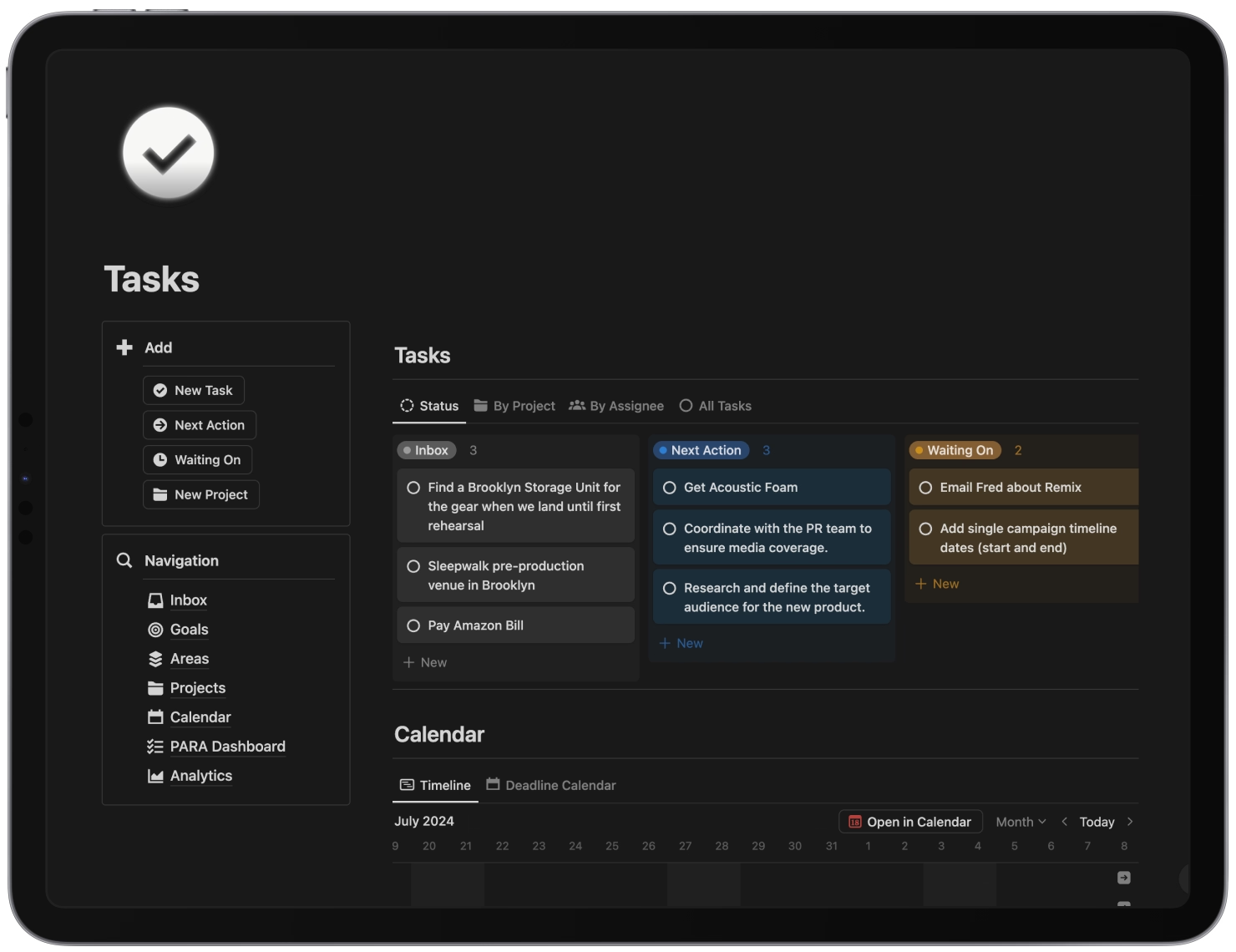
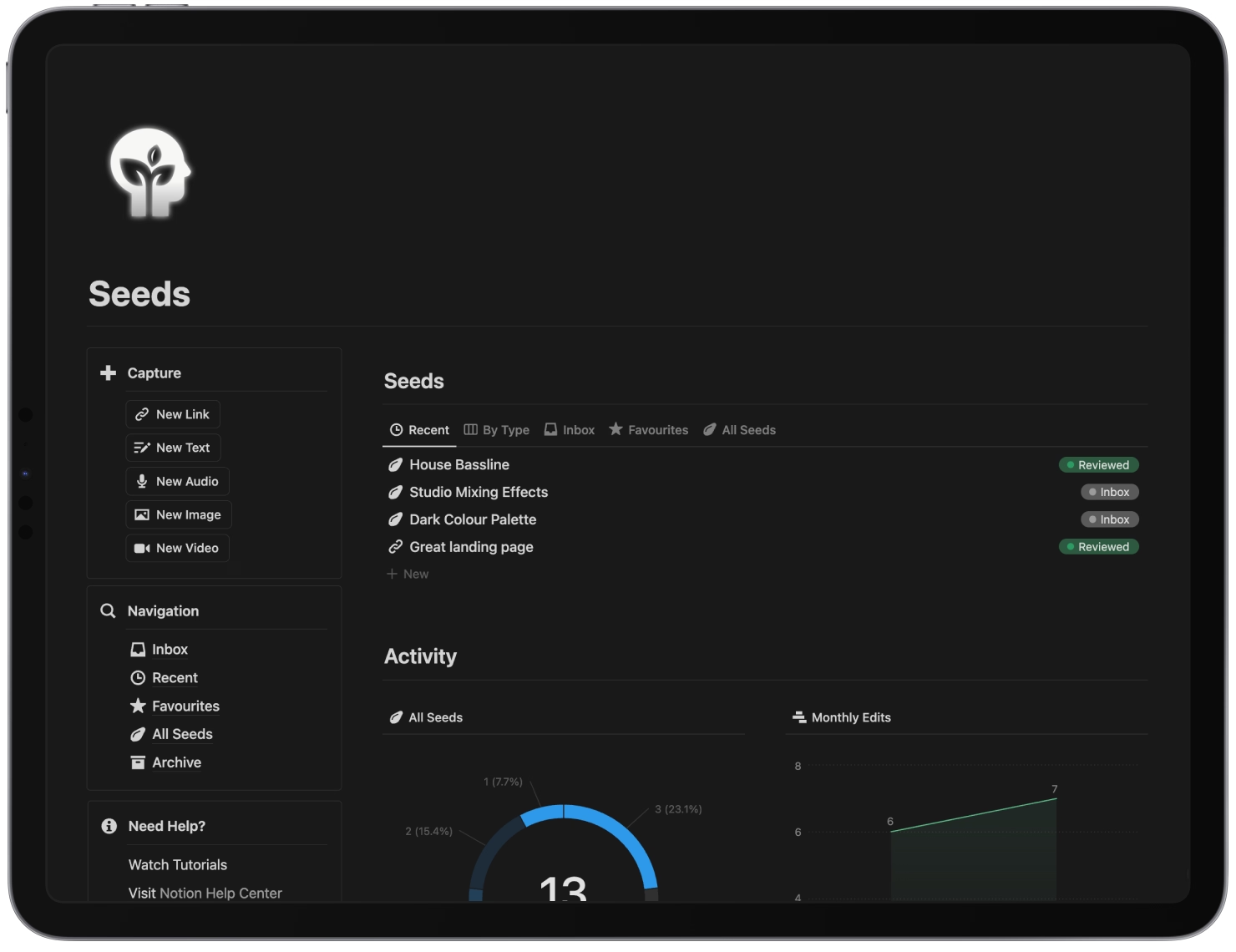
Habits survive on evidence. Somewhere you can see what you did today and this week: a paper tracker, a note, a task list with the four minimums recurring daily. The Tasks template in Musician OS handles recurring daily tasks like these alongside everything else, and the free Seeds template is a good home for the ideas the creation minutes produce, so a rough half-idea on a bad day isn’t lost by the good one.
Review it quarterly
Every three months, ask four things: what’s working, what creates friction, what new pressures have appeared, and what you’re missing. Change one thing. A creative practice that never changes stops fitting your life; one that changes every week never settles. Quarterly is the rhythm that holds.
The most durable creative careers aren’t built on motivation, which comes and goes, or talent, which doesn’t help on the days it’s hiding. They’re built on a small practice that runs whether or not either of them turned up. Start with the floor. Build slowly. Keep going.
Frequently asked questions
How do musicians build a daily creative habit?
Set a minimum small enough to do on your worst day, attach it to something you already do, and track it. Thirty minutes of creation, one admin task, a short practice and one outreach message is a realistic daily floor. The point of the floor is not the output; it's that the practice never breaks, so it's still there when motivation comes back.
What is a minimum viable creative practice?
The smallest set of actions that keeps your creative life alive on a day with no energy or inspiration. It should feel almost too easy. A ten-minute write, a scale, one email. Ambitious days build on top of it; bad days still clear it. Habits fail when the daily target is set for the good days.
How long does it take to build a creative habit?
Longer than the popular figures suggest, and it depends on the habit. A useful frame is three months: the first to establish the floor and learn your energy patterns, the second to add structure like time blocking and batching, the third to refine. Judge it by whether the practice survived a bad fortnight, not by a day count.
Does routine kill creativity?
No. Routine handles the decisions that don't matter (when, where, with what) so attention is free for the ones that do. A chef doesn't spend creative energy deciding where the knives live. Structure that removes friction from the start of a session makes spontaneity more likely, not less, because you're in the room more often.