Every musician knows the hour. You sit down, the session opens, the timeline blinks, and nothing happens. The longer you stare, the louder the nothing gets.
Blocks aren’t a sign that the ability has gone. They’re a lost connection to it, and connections can be rebuilt, usually faster than the panic suggests. This guide has two halves: what to do in the stuck hour, and how to set up the practice so the hour comes round less often.
What a block actually is
Creativity isn’t a tap. It’s closer to a river: sometimes strong, sometimes a trickle, always moving. A block is the moment you can’t find where it went, not the moment it dried up.
Stravinsky’s line on this is the useful one, and it’s real: “Just as appetite comes from eating, so work brings inspiration.” Inspiration mostly arrives while you’re already working. It rarely arrives while you’re waiting for it. Almost everything below is a way of starting work when you don’t feel like it, so it has somewhere to land.
The stuck hour: a reset protocol
When you’re stuck, run this in order. It takes about an hour and it works more often than not:
- Twenty minutes outside, no phone. Walk. Don’t think about the song on purpose. It’ll come with you anyway.
- Change the room. A different chair, the kitchen table, the car. The block lives partly in the place.
- Change the instrument or the tool. Guitar instead of piano. Pen instead of the session. Voice instead of anything.
- Fifteen minutes of pure experiment, timer on, with the explicit rule that nothing made in this window counts. Rusty water first, then clear.
Most of the time, something in step four is worth keeping. The rule that it doesn’t count is what lets it happen.
Rules for the head
How you think about a block changes how long it lasts:
- The first ideas don’t count. Let them through without judging them. Judging before there’s anything to judge is the most common block of all.
- You’re a gardener, not a factory. Some days the soil needs a rest. That’s not failure. That’s the process.
- Resistance is shaping the work. A sculptor works against the stone. The difficulty is part of what gives the piece its form.
Modes: don’t do everything in the same chair
A lot of blocks are mode confusion: trying to write in the state you use for mixing, or answering emails in the room where you compose. Set up distinct modes with distinct cues:
- Writing mode: natural light, a comfortable seat, notebook or voice memo only, no screen, silence.
- Production mode: the studio, low or coloured light, standing, phone out of sight, a reference playlist.
- Business mode: the desk, background music, devices allowed.
The cue tells your brain which job it’s doing. Switching modes deliberately is often enough to unstick a session that was in the wrong one.
Constraints
Infinite choice is paralysing. A rule turns the session into a puzzle, which is a far easier state to begin from:
- A song with three chords
- A track from five samples
- A melody on three notes
- A finished song in two hours
- Only the instrument you’re worst at
Set one, honour it, and notice how quickly ideas arrive when the options are small.
Other people
Sometimes the fastest way through is out of the room:
- A production challenge or a writing circle with a deadline
- Sharing a work-in-progress with two people you trust, with one specific question
- A remote collaboration, where someone else’s decision breaks your loop
- A co-write, where you’re responsible for half and the other half surprises you
Rituals that make blocks rarer
The stuck hour is easier to escape than to prevent. Prevention is about conditions:
Morning pages. Julia Cameron’s practice from The Artist’s Way: three pages of longhand, stream of consciousness, first thing. It empties the mental clutter before you try to make something in it.
Timed blocks. Twenty-five minutes on, five off, notifications dead. The Pomodoro technique, applied to a session, stops the drift that turns into a block.
Genre switching. Listen to something as far from your work as you can find. A producer studies string quartets; a metal guitarist listens to jazz. Different inputs make different outputs.
The environment. Light, if you can get it, and a clear surface. Sound treated for the mode you’re in. A place for every tool, so the session starts with making instead of looking.
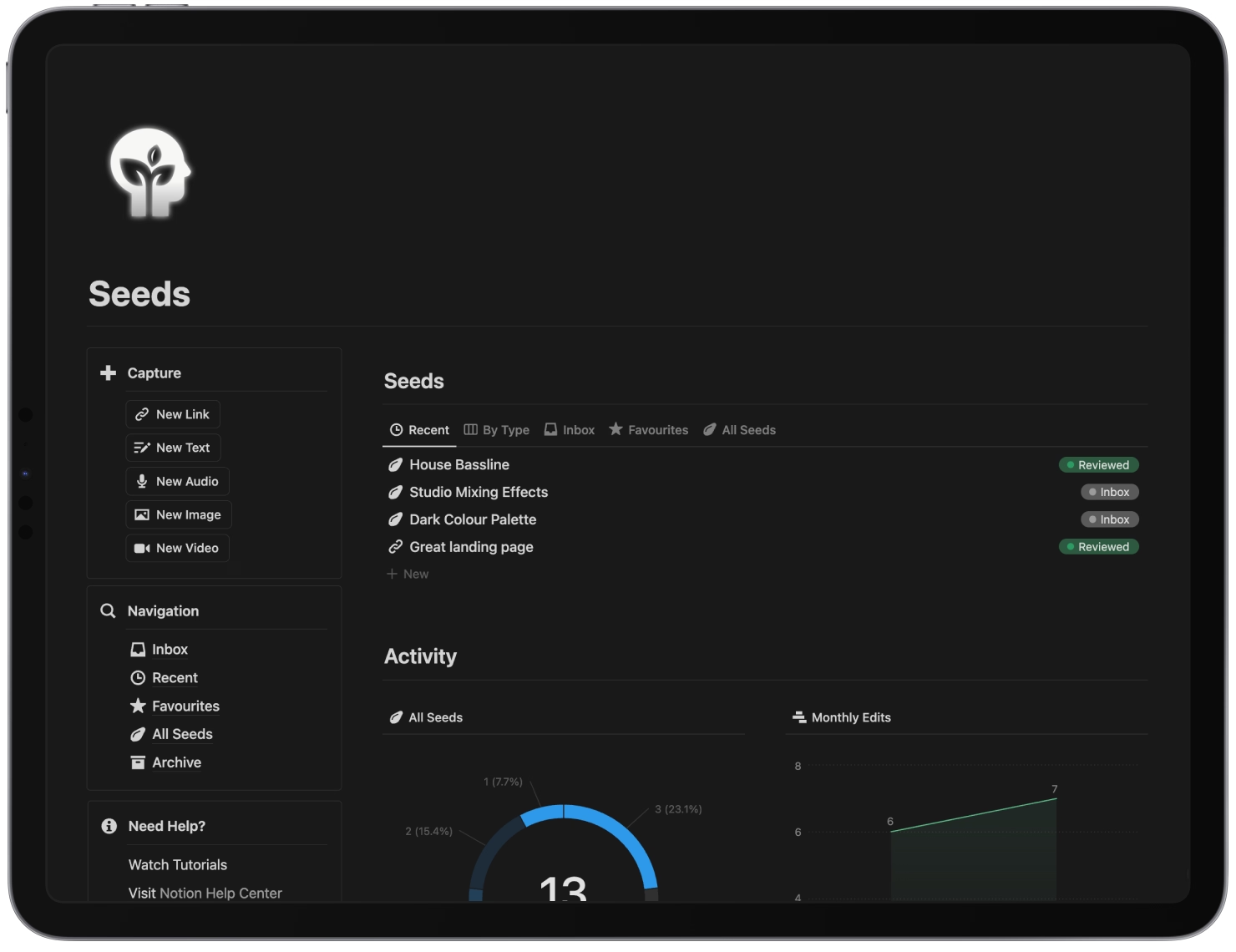
A capture system, so ideas from the good days are waiting on the bad ones. The free Seeds template is built for exactly that: fast capture by type, tagged, with views for going looking for something to work on when the well feels dry.
The study and create cycle
The deepest blocks come from running out of input. Alternate on purpose:
- Study, one to two weeks. Analyse songs you love, learn a technique, study a genre you don’t work in. Make nothing.
- Create, two to three weeks. Apply it without judgement. Quantity over quality. Finish things.
Then repeat. Each cycle brings new material to the next, and the create weeks rarely stall because they start full.
When it’s not a block
Two things get called blocks and aren’t. Exhaustion needs rest, not technique; a walk and a timer won’t fix a month without a day off. And fear, of the song not being as good as the last one or of what it’s about, needs a small, unjudged attempt more than any tool: the fifteen-minute experiment where nothing counts is the treatment for that too.
Keeping the songs moving
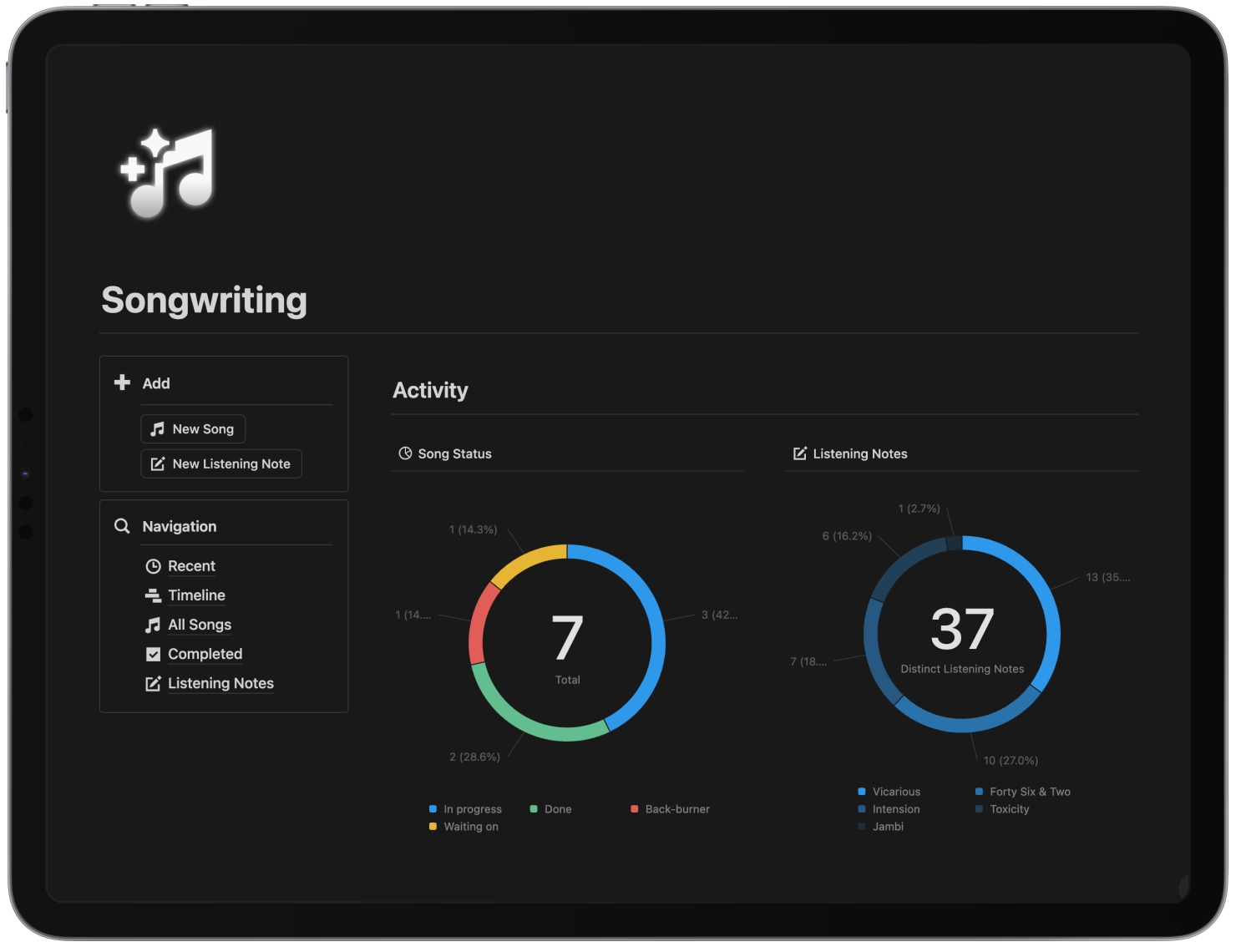
A block often hides in a pile: eleven half-songs with no idea which one is closest to done. Somewhere that shows each song’s stage, with the lyrics and listening notes attached, makes it obvious where to put the next good hour. The Songwriting template in Musician OS is built for that, from first idea to finished master, fed by Seeds. A folder with a status in each file name works too.
Blocks aren’t walls. They’re the resistance that gives the work its shape, and every artist you admire has sat in the same silent hour. What separates the ones who keep making things isn’t that the hour never comes. It’s that they have somewhere to go when it does.
Frequently asked questions
How do musicians get over writer's block?
By working, in a different way, rather than waiting. A twenty-minute walk without the phone, a change of room, a different instrument, then fifteen minutes of pure experiment with no intention of keeping anything. Blocks are usually a lost connection to the work rather than a loss of ability, and the connection comes back through doing something small and low-stakes.
What causes creative block?
Most often: judging the output before there is any, too many options, exhaustion, or too long since you last learnt something new. Each has a different fix. Judging needs a rule that the first ideas don't count. Too many options need a constraint. Exhaustion needs rest, not technique. Staleness needs input: study, listening outside your genre, other people.
Do constraints help creativity?
Yes, reliably. Three chords, five samples, a melody on three notes, a song in two hours. A constraint removes the paralysis of infinite choice and turns the session into a puzzle, which is a much easier state to start from. Most producers and writers who work fast are working inside rules they set themselves.
Should I take a break when I'm creatively blocked?
A short one, on purpose, and then come back. A walk, a change of space, a different task for twenty minutes. Long breaks that turn into avoidance make the block bigger. If the block is really exhaustion, rest properly and don't call it a block; if it's fear or overwhelm, the way through is a small, unjudged attempt.