There’s a myth that real artists thrive in chaos: the scattered genius, the crumpled pages, waiting for lightning. It’s a nice image and it describes almost nobody who finishes things. The musicians who consistently make their best work aren’t running from structure. They’ve built a kind that fits how creative work actually happens.
That’s the problem with most productivity advice for musicians. It was written for people building spreadsheets, and we’re not. We’re channelling something, capturing it, shaping it. The system has to serve that or it gets abandoned within a month. This framework is built for it.
The two minds
You have two distinct modes, and most productivity problems come from mixing them.
The Artist is the creative self: the part that gets lost in a session, knows when a melody needs to shift, feels a lyric isn’t right before knowing why. It works in intuition, feeling and flow. It hates being interrupted and it can’t be scheduled into a fifteen-minute slot.
The Architect is the inner producer: the part that books the studio, plans the release, manages the collaborators, runs the business. It works in systems, calendars and decisions. It’s good at things the Artist is bad at, and it ruins a session if it’s allowed in the room.
The framework isn’t about choosing one. It’s about letting each do what it’s good at, at the right time, without the other interfering.
1. The protected space
The Artist needs a time and a place where nothing else happens. Not necessarily a studio. A set of conditions your brain learns to associate with one thing:
- A specific room, corner or setup
- A time of day, ideally when your creative energy peaks
- A ritual that signals the start: the lamp, the playlist, the first five minutes of the same warm-up
- Rules: no phone in the room, no email, no “quick” admin
The value is consistency. When you enter the space, your brain should already be shifting into creative mode, because it’s learnt that nothing else ever happens there.
2. The two-tier capture system
Ideas don’t respect the schedule. They arrive in the van, in the shower, halfway through someone else’s set. Two tiers catch them without breaking the flow:
Quick capture, for when inspiration strikes anywhere:
- Voice memos for melodies
- A small notebook or a notes app for lyrics
- A photo of the thing that sparked it
Deep capture, for the protected sessions:
- Proper recordings of everything, not just the keeper
- A song document per idea, with lyrics and versions
- Session notes: what worked, what to try next
- Arrangement sketches
The goal is friction so low that capturing is easier than losing. Quick capture is caught, not sorted. Sorting happens in the weekly hour, which is the Architect’s job, not the Artist’s.
3. The weekly alignment hour
This is where the Architect earns its keep. Once a week, at a fixed time, an hour in four parts:
Review and archive, fifteen minutes. Go through the week’s quick captures. Sort into projects or archive. Tidy the workspace.
Plan and prepare, fifteen minutes. Schedule the protected sessions for the week. Confirm collaborations. Pick the main creative priorities, and the one big thing per day if you use the 1-3-5 rule.
System check, fifteen minutes. Tools working, templates current, anything blocking a project cleared.
Direction, fifteen minutes. Longer-term goals against this week’s plan. Skills or resources you need. Whether the work is pointed where you want it.
Skip this hour for a month and every other part of the framework quietly stops working.
4. The daily rhythm
The artists who last have found their natural rhythm and built the day around it rather than around a template. To find yours:
Map your energy for two weeks. When are you most creative? Most physically alert? Clearest for business? A Guide to Peak Creative Performance has the method.
Block by the map. Creative work in the creative peak. Business tasks in the alert, non-creative stretch. Simple tasks and rest in the dips.
Ritualise the switch. A playlist that only plays for creative work. A short walk before business. A different desk for each mode. The Artist and the Architect shouldn’t share a chair.
The breathing principle
Breakthroughs rarely come from grinding. They come from the meeting of consistent practice and deliberate rest. Think of the cycle as breathing:
- Inhale: gather. Listen, learn, observe, fill up.
- Hold: let ideas sit and connect. Don’t force them.
- Exhale: create, produce, share.
- Rest: reflect, recover, reset.
A system that only exhales burns out. One that only inhales never finishes. Build the rhythm into the weeks and months, not just the days: a study fortnight before a writing month, a quiet week after a release.
Starting small
Don’t build all of it at once.
- Identify the protected space. The minimum conditions you need for reliable creative work. Set them up this week.
- Pick one quick capture method and one deep capture method that feel natural. Ignore the rest for now.
- Book the weekly hour, starting at thirty minutes, on the two things that matter most right now.
Add the daily rhythm once those feel normal.
What it looks like when it works
The best systems are invisible. You notice them by their results: more finished, more consistent, less scattered, more energy for the parts that matter. The Architect’s work happens in its hour and stays there. The Artist’s sessions start on time and aren’t interrupted. Ideas stop being lost.
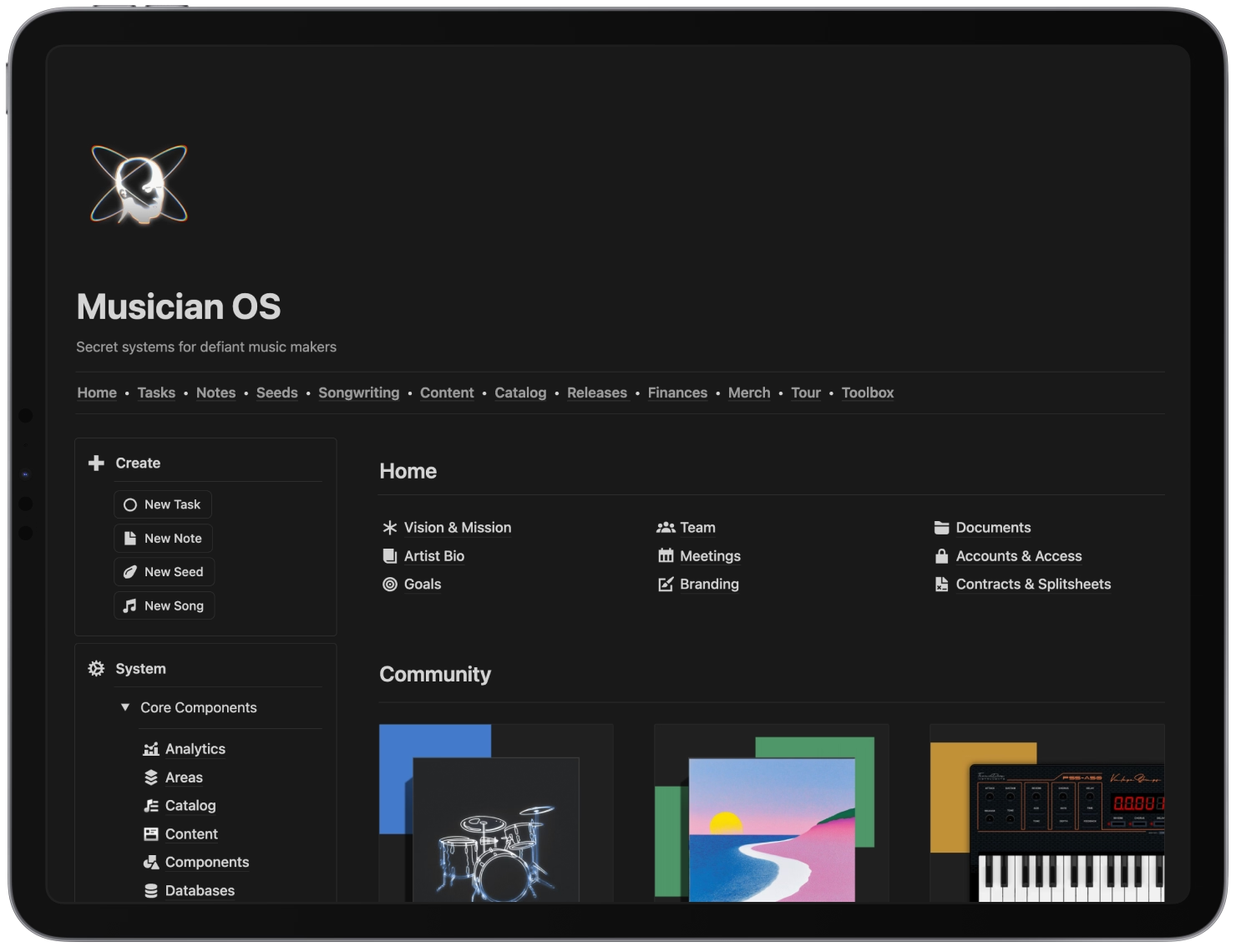
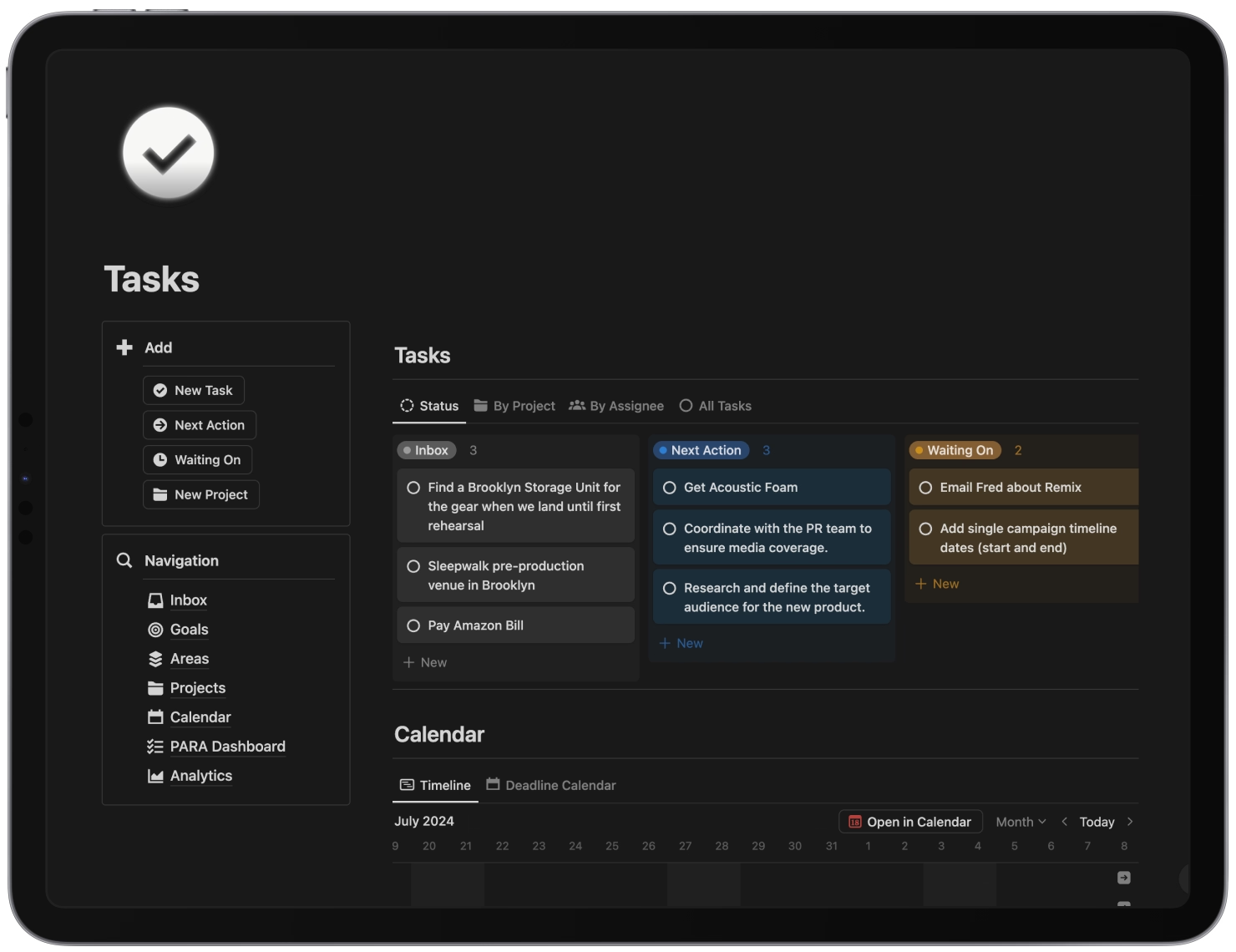
Musician OS is the built version of this framework: a Tasks component for the Architect’s lists, Notes and Seeds for capture, Songwriting for the deep sessions, all connected so the weekly hour is a review rather than a rebuild. The Tasks template on its own covers the planning half. But the framework is the thing, and it works on paper. Start small, adjust as you go, and stop when it feels like a natural extension of how you already work. That’s the only system anyone keeps.
Frequently asked questions
What is the best productivity system for musicians?
One that separates the creative work from the organising work instead of mixing them. Give the Artist a protected space and time where nothing else happens, give the Architect a weekly hour to review, plan and fix the systems, and build the day around when each is strongest. Generic productivity systems fail musicians because they treat inspiration like a task; this one gives it room.
What is the Artist and Architect framework?
A way of describing two modes every working musician switches between: the Artist, who writes, plays and feels the music, and the Architect, who schedules, plans releases and runs the business. Neither is more important. The framework is about letting each do its job at the right time, with rituals for switching, so the Architect isn't interrupting the session and the Artist isn't ignoring the release date.
How often should a musician review their plans?
Once a week, for about an hour, at a fixed time. Fifteen minutes to sort the week's captured ideas, fifteen to schedule creative time and priorities, fifteen to check the tools and templates, fifteen on longer-term direction. Skipping it is how systems quietly become graveyards.
How do I switch between creative work and business tasks?
With a small ritual and, ideally, a change of place. A playlist that only plays for creative work, a short walk before admin, a different room or desk for each. The ritual tells your brain which mode it's in, and the change of place stops one mode's residue leaking into the other.