Most independent releases don’t fail for lack of money. They fail because the money was spent in the wrong week. A campaign that puts everything into release day gets a spike and then has nothing left for the month when platforms are actually deciding what the song is.
This guide is about timing money, not finding it. It gives a split across the three phases of a release, says what each phase’s money should buy, shows three budgets at different sizes, and ends with the spending rules that make a small budget go further than a large one spent badly.
The split: 40 / 30 / 30
Think of a release as three acts, and give each a share of whatever you have:
| Phase | Share | What it’s for |
|---|---|---|
| Pre-release (6 weeks before) | 40% | Building the audience and the assets the launch will use |
| Launch (release week) | 30% | Converting attention into day-one saves, follows and coverage |
| Sustain (the month after) | 30% | Keeping the song growing while platforms are watching |
The proportions are a starting point, not a law. The principle underneath them is fixed: the pre-release phase decides the ceiling, the launch spends against it, and the sustain phase is where most artists have already run out. Don’t run out.
Pre-release: 40 percent
This is the largest share because it’s the least visible and the most decisive. Money here buys:
- Content. The teasers, the process clips, the visualiser, the artwork in every size. If you’re paying anyone for anything, pay for the content bank, because the whole campaign draws from it.
- Profile work. Photos, a refreshed bio, a website that’s ready for the listeners the release will send there.
- Audience warming. A small ad spend behind the first snippets, aimed at people who look like your existing listeners, so there’s a warm audience to retarget at launch.
- Early outreach. A publicist for a single campaign if you can afford one, or the time to pitch blogs, curators and radio yourself, weeks before the date so they can plan coverage.
Launch: 30 percent
The release week is where artists empty the account. Resist it. Money here buys:
- Ads that convert. Retarget the people who watched the snippets. They’re the cheapest listeners you’ll ever reach.
- Staggered spend. Across the week, not the day. Day one is loud on its own; days three to seven need the help.
- Creator partnerships. A few creators whose audience fits, paid or traded, making something with the sound. One that lands is worth more than a dozen shout-outs.
- PR follow-through. The first week is when the pitches you sent earlier get answered. Have the assets ready.
Sustain: 30 percent
The share almost nobody keeps. Money here buys:
- Ads that run for weeks. A modest daily spend for the month after release, aimed at the audiences that converted in launch week, keeps the song accumulating saves while platforms are still deciding.
- New content from the same song. An acoustic version, a remix, a live clip, the story of a lyric. Each one is a new reason to press play.
- Community. Time more than money: replying, reposting fan clips, sending something to the people who showed up.
- Fuel for anything that catches. If a clip or a playlist add starts moving, this is the reserve you double down with. Without it, you watch the moment pass.
Three budgets
Hypothetical, clearly. The point is the shape, not the figures.
Nothing. All time, no money. Pre-release: a content bank shot on a phone, profiles tidied, thirty personal pitches to curators and writers. Launch: the list, the comments, every platform’s free tools, the pre-save and the pitch. Sustain: one new piece of content a week for a month, and every reply answered. This works, slowly, if it’s done completely.
Five hundred. Pre-release, two hundred: a few hours of an editor for the clips, or artwork, plus a small warm-up spend. Launch, one hundred and fifty: retargeting ads across the week. Sustain, one hundred and fifty: five dollars a day for a month behind the best-performing clip.
Two thousand. Pre-release, eight hundred: a proper content shoot, artwork and photos, a warm-up spend, maybe a short PR campaign. Launch, six hundred: ads staggered over the week, one or two creator partnerships. Sustain, six hundred: sustained ads for six weeks, a remix or a live session, and a reserve for anything that catches.
Notice the sustain line never disappears. That’s the whole art.
Spending rules
Split by category as well as by phase. Content, advertising and PR each get their own line inside each phase. One line can’t quietly swallow the rest, and a constraint in each makes you inventive in each.
Little and long beats big and short. A hundred a week for a month gives you four chances to learn and adjust. Four hundred in one day gives you one.
Test before you scale. Run the first fortnight of ads as an experiment. Keep what produces saves and follows. Stop what produces plays and nothing else.
Spend on things that keep working. Photos, a good video, artwork, a skill you learn: those earn for years. A boosted post earns for a day. Weight the budget towards the first kind.
Never buy placement. Playlist placement services break the platforms’ rules and mostly sell bots. It’s the one line item that can cost you the song.
Set a deadline before the deadline. Plan as if the release were a week earlier than it is. The week you gain is where the sustain phase gets built.
Knowing what it made
A budget only teaches you something if you close it. Six months after release, put the income beside the spend: streaming, direct sales, sync, whatever the song brought in, against what each phase cost. Most first releases lose money on paper and earn it back in followers, list growth and the next release’s head start. That’s fine, as long as you can see it. Three releases tracked this way tell you more about where your money should go than any guide, including this one.
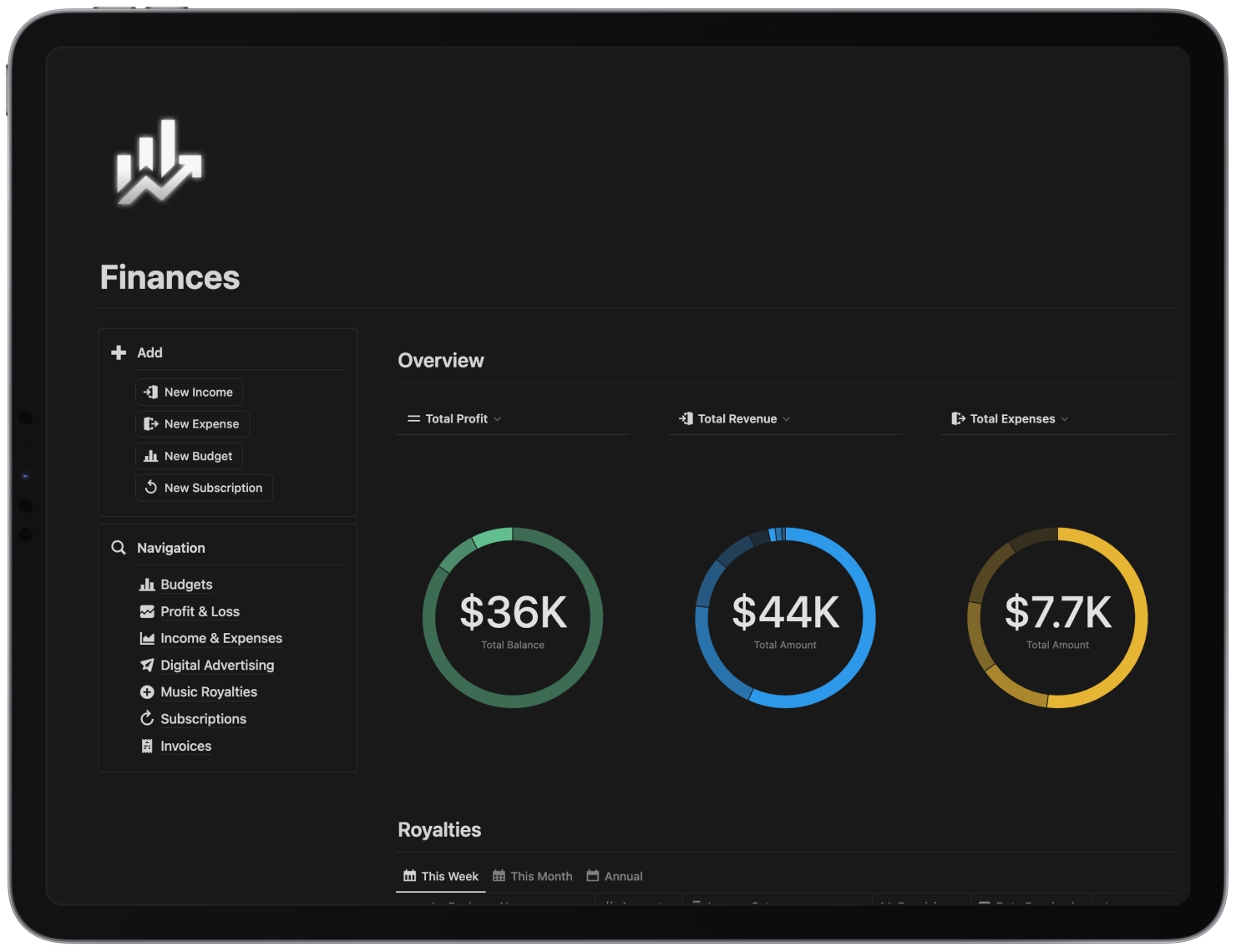
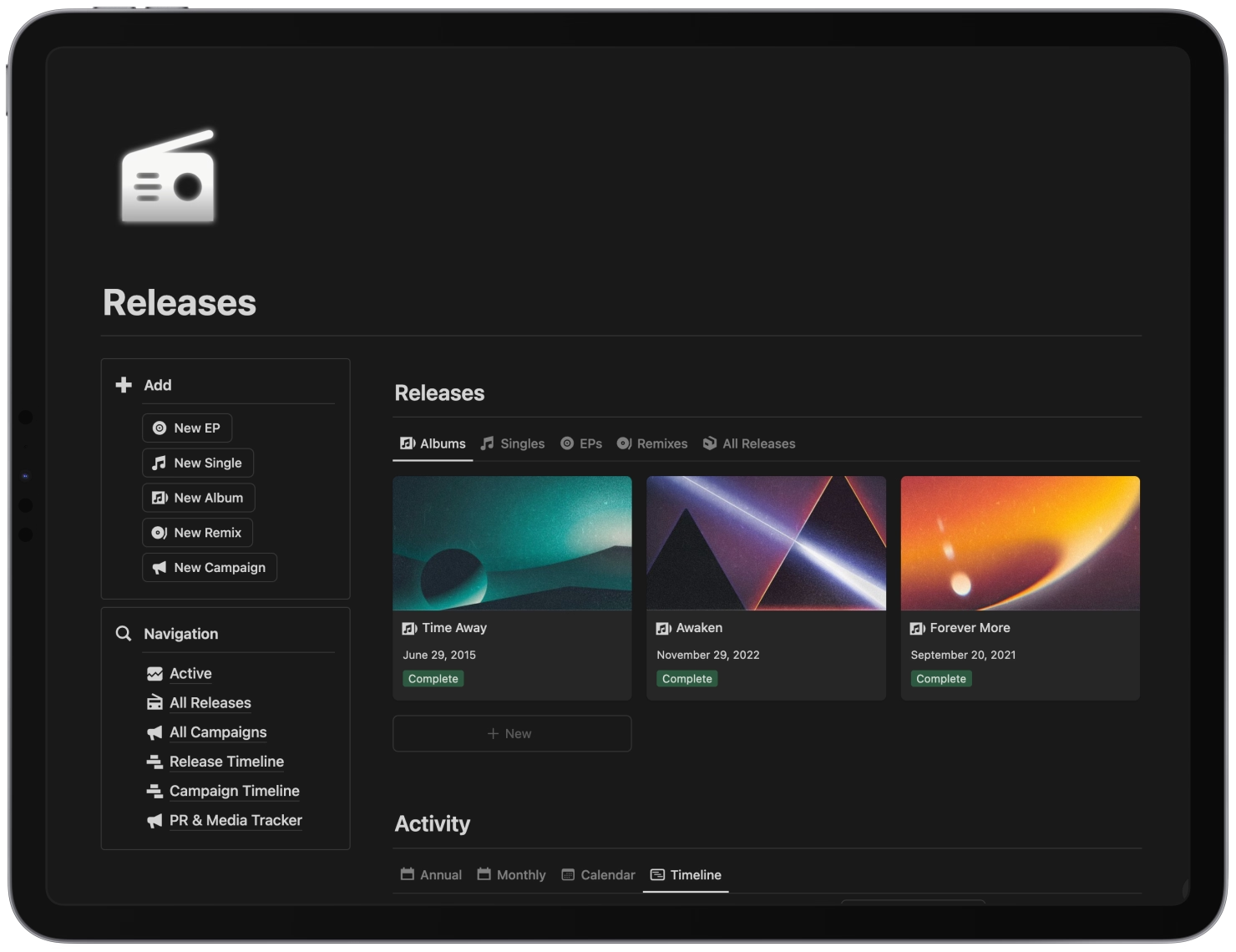
The Finances template in Musician OS breaks income and cost down by project, so a release’s budget and its return sit on the same page, and the Releases template holds the phases the budget was spent in. A spreadsheet with a column per phase does the same job. What matters is that the next release starts with the last one’s numbers in front of you, and thirty percent set aside for the month nobody plans for.
Frequently asked questions
How much should an independent artist spend on a release?
Whatever you can afford to lose across three releases, not one. Most independent singles are promoted on anywhere from nothing to a few thousand dollars, and the amount matters less than how it's spread: roughly 40 percent before release, 30 percent in release week and 30 percent across the month after. A small budget spread across three phases outperforms a large one spent on release day.
How should I split a music marketing budget?
By phase and by category. Across time, about 40 percent pre-release for content, profile work and early outreach, 30 percent in the launch window for ads, curator work and PR, and 30 percent in the weeks after for sustained ads and new content. Within each phase, give content, advertising and PR their own lines so one can't quietly swallow the others.
Should I pay for playlist placement?
No. Paid placement breaks Spotify's rules and the playlists that sell it are usually bot-driven, which can get streams removed or your music taken down. Spend the money on ads aimed at your own listeners, on content, or on a publicist for a single campaign. Pitch real playlists for free through Spotify for Artists and by building relationships with curators.
Are ads worth it for independent musicians?
Yes, in small amounts run over weeks rather than in one burst. A modest daily spend aimed at people who already engaged with your snippets, kept running for the month after release, tends to outperform the same total spent in a day. Treat the first fortnight as a test, keep what converts to saves and follows, and stop what doesn't.